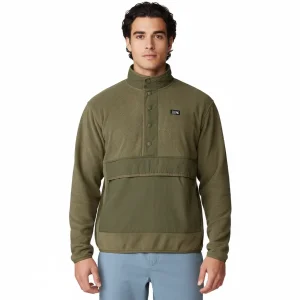
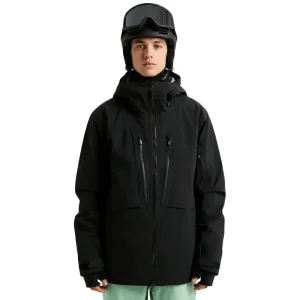
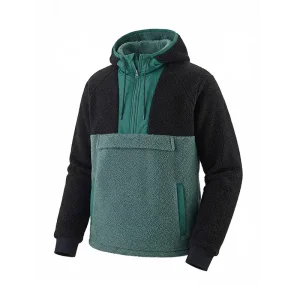
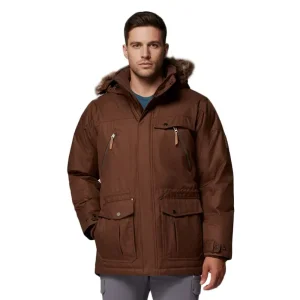
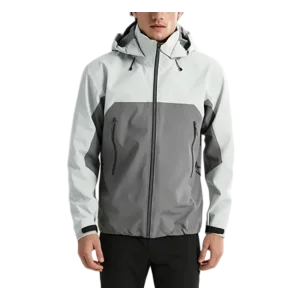
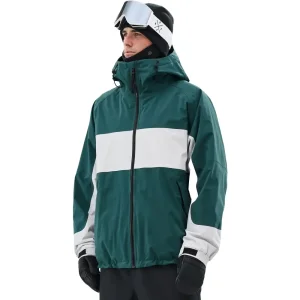
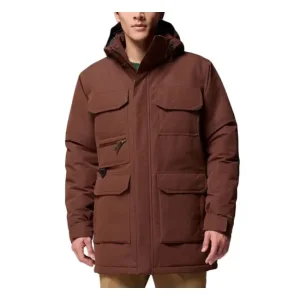
Explore our core export-grade modular jacket inventory, certified to European and North American performance thresholds with low MOQ flexibility.
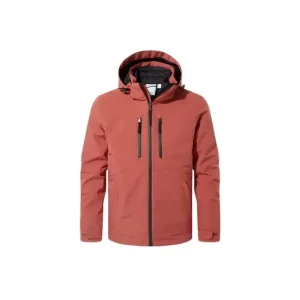
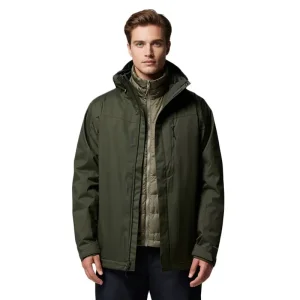
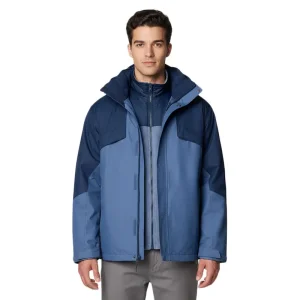
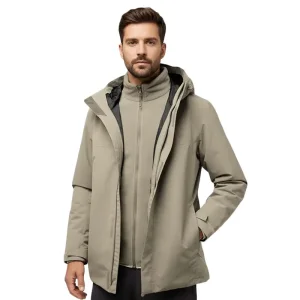
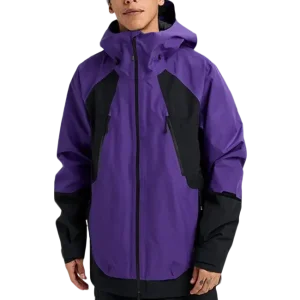
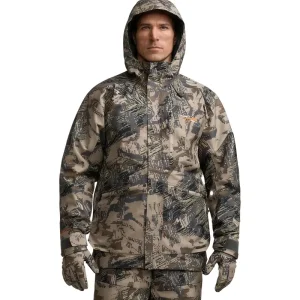
Analyzing B2B procurement vectors, intent dynamics, and macroeconomic shifts driving demand for 3-in-1 modular outerwear systems across tier-1 retail channels.
The global market for technical outdoor apparel has undergone a structural pivot. Modern consumers and enterprise procurement buyers no longer evaluate garments strictly on single-environment utility. Instead, the market demands modular, multi-climate versatility—a trend that positions the 3-in-1 Outdoor Jacket as the anchor SKU for premium outerwear brands, tactical gear suppliers, and industrial workwear distributors worldwide.
A standard 3-in-1 system integrates an independent, weatherproof outer shell (engineered with 2L, 2.5L, or 3L laminated membranes) with a detachable thermal inner liner (ranging from high-loft polar fleece to RDS-certified 800 FP down or hydrophobic synthetic polyfill). By operating as three distinct functional configurations—standalone rain shell, standalone thermal insulator, and combined arctic barrier—this product architecture maximizes utility value per garment unit while simplifying retail inventory management.
Driven by unpredictable mountain weather and growing interest in outdoor recreation, buyers require high breathability (MVTR ≥ 10,000 g/m²/24h) combined with fully taped seams and PFC-free DWR finishes to satisfy stringent environmental state mandates.
EU importers mandate strict REACH chemical adherence, OEKO-TEX Standard 100 certification, and GRS (Global Recycled Standard) verified face fabrics to align with modern corporate sustainability goals and circular economy legislation.
Rapid urban-to-mountain lifestyle crossover has fueled exponential demand for sleek, technical urban 3-in-1 jackets that seamlessly transition from metropolitan commuting to high-altitude ski slopes.
A rigorous breakdown of fabric lamination, membrane chemistry, thermal insulation metrics, and seam-sealing protocols executed at our Foshan facility.
At Guangdong Ruiniu Garment Manufacturing Co., Ltd., engineering a high-performance 3-in-1 jacket requires precise coordination between material science and structural assembly. The system's utility depends on two distinct layers performing both independently and as a unified thermal barrier.
The primary barrier utilizes advanced 2-Layer (2L) or 3-Layer (3L) laminated structures. Our face fabrics—typically high-tenacity 75D or 150D mechanical stretch polyester and ripstop nylon 6,6—are permanently bonded to microporous polyurethane (PU) or expanded polytetrafluoroethylene (ePTFE) membranes.
| Performance Standard | Test Method | Standard Tier | Pro/Alpine Tier | Technical Impact |
|---|---|---|---|---|
| Hydrostatic Pressure (Waterproofness) | ISO 811 / JIS L1092 | 10,000 mm H₂O | 20,000 mm H₂O | Prevents water ingress under heavy downpours and pack-strap compression. |
| Water Vapor Transmission (Breathability) | JIS L1099 B1 / ASTM E96 | 8,000 g/m²/24h | 15,000 g/m²/24h | Evacuates internal perspiration during high-exertion alpine ascents. |
| Seam Integrity & Hydrostatic Sealing | GB/T 4744 / ISO 13936 | 13mm PU Tape | 3-Layer Hot-Melt Tape | Zero water penetration along needle punctures using heated pneumatic seamers. |
| Durable Water Repellency (DWR) | AATCC 22 Spray Test | 90 Points (Initial) | 80 Points after 20 Washes | Causes surface moisture to bead up, preventing face-fabric saturation ("wet-out"). |
The internal layer connects to the shell using standard anchor points: a continuous reversing front zipper track, snap-button collar loops, and dual elastic wrist-cuff attachments. We manufacture three main liner configurations:
Constructed from 280g/m² to 320g/m² anti-pilling GRS-certified recycled polyester fleece. Features a brushed interior that traps dead air to maintain warmth while promoting passive moisture transport.
Utilizes Responsible Down Standard (RDS) certified 600 to 800 Fill Power goose or duck down. Built with stitch-through or micro-baffle chambers that prevent fill migration and cold spots.
Engineered with 60g/m² to 120g/m² continuous-filament synthetic insulation (PrimaLoft or 3M Thinsulate equivalent), offering high thermal efficiency even when wet.
Tailoring garment construction, trims, and ergonomic fits to meet specific regional environmental demands and user requirements.
Regional Focus: North American Rockies, European Alps, Nordic Territories.
Technical Configuration: 3-Layer 20D Ripstop Nylon face fabric with an ePTFE membrane (20,000mm hydrostatic head). Includes helmet-compatible 3-way storm hood, YKK AquaGuard® waterproof zippers, underarm pit-zips for temperature regulation, and an 800 FP RDS down inner liner.
Regional Focus: Metropolitan Western Europe, East Asian Tech Hubs.
Technical Configuration: Matte-finish 75D polyester soft-touch shell with a PFC-free DWR coating. Features a clean, tailored silhouette, magnetic storm-flap closures, internal media pockets with cord ports, and a lightweight 200g micro-fleece inner liner.
Regional Focus: Hokkaido (Japan), British Columbia (Canada), Swiss Alps.
Technical Configuration: 2-Layer stretch shell with an integrated stretch powder skirt, RFID pass pocket on the forearm, mesh-lined goggle stash pockets, RECCO® Rescue Reflectors, and a body-mapped synthetic insulated liner.
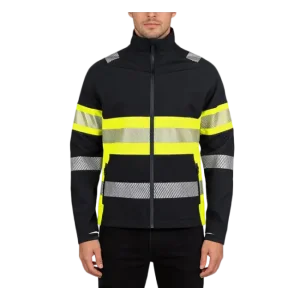
For municipal, utility, and infrastructure clients, we re-engineer our 3-in-1 pattern blocks using fluorescent yellow/orange high-visibility fabrics equipped with 3M™ Scotchlite™ retro-reflective tape. These variants feature flame-retardant outer shell coatings and anti-static liners that meet international safety standards.
Leveraging Foshan's industrial cluster to optimize raw material sourcing, sample prototyping, and bulk throughput efficiency.
Located in Nanhai District, Foshan, Guangdong, Guangdong Ruiniu Garment Manufacturing Co., Ltd. operates at the center of the world's most dense technical textile manufacturing ecosystem. This proximity provides significant structural advantages over decentralized overseas manufacturing hubs:
Our facility is situated within a 2-hour logistics radius of premier lamination mills, dye houses, and trim suppliers (including YKK, SBS, and Bemis). This allows us to source custom lab-dips, technical membrane swatches, and custom trim hardware in 3 to 5 business days.
We utilize 3D CLO virtual garment simulation software to convert brand tech packs into accurate pattern blocks. This digital workflow reduces physical sampling iterations from weeks to days while optimizing marker consumption to achieve over 88% fabric yield.
Every production run passes through three distinct quality gates: raw material roll inspection using the 4-Point System, hourly in-line seam hydrostatic pressure verification, and 100% finished garment AQL 2.5 final audits prior to export packaging.
Pioneering sustainable materials, smart garment heating integrations, and zero-chemical DWR formulations for next-generation outerwear.
Phase out long-chain perfluorinated chemicals (C8/C6) in favor of bio-based silicone and plant-derived DWR agents (C0) that achieve 80+ spray ratings without releasing persistent organic pollutants (POPs).
Developing 100% Polyester jackets—where the face fabric, laminated membrane, sewing threads, zippers, and thermal liner consist of identical PET polymers—simplifying future garment-to-garment chemical recycling.
Integrating ultra-thin graphene heating pads into the inner liner chest and kidney zones. Controlled via Bluetooth mobile apps or integrated tactile push-buttons, powered by standard 5V USB power banks.
Direct technical guidance on common engineering, logistics, and quality assurance inquiries from international apparel procurement teams.
Our baseline Minimum Order Quantity is 100 pieces per style, which can be divided across two colorways and a standard size spectrum (S through 3XL). For emerging brands or market validation tests, we offer a 50-piece pilot production protocol on selected stock fabric colors.
We utilize programmable hot-air seam-sealing machinery calibrated to precise temperature, pressure, and speed profiles suited to each specific lamination type. Taped seams undergo ISO 6330 washing machine cycle testing at 40°C followed by hydrostatic pressure re-testing to ensure zero tape delamination or water ingress.
RDS down offers superior warmth-to-weight ratios and high compressibility, making it ideal for packable alpine garments. Synthetic micro-fiber insulation maintains thermal resistance even when saturated with water, making it better suited for humid environments or heavy workwear applications. Both meet global traceabilty and animal welfare standards.
Initial 3D digital patterns and proto samples are produced in 7 to 10 working days. Following PP sample sign-off and lab-dip approval, bulk production runs take 30 to 45 days depending on component complexity and membrane lamination schedules.
Yes. All raw materials sourced for export orders—including face fabrics, membranes, lining meshes, zippers, snaps, and drawcords—comply with EU REACH regulations and US CPSIA requirements. Third-party testing reports from SGS, Intertek, or TÜV are available upon request.
We offer comprehensive OEM service (manufacturing directly from buyer patterns and tech packs) as well as end-to-end ODM support. Our internal design team can develop technical concepts from reference sketches, recommend fabric packages, and supply custom branded trims, hangtags, and packaging.
Browse our extended production lines, including hardshell jackets, softshells, expedition parkas, and high-visibility workwear safety apparel.