Explore our export-ready winter apparel constructions engineered for extreme weather, commercial workwear, and alpine retail environments.
B2B outerwear sourcing requires absolute clarity on textile performance metrics, ethical down traceability, and structured quality assurance gates.
Modern global brands require verified 2-Layer, 2.5-Layer, and 3-Layer micro-porous membrane laminates. Our export parkas are tested against rigorous hydrostatic head (ISO 811) and Moisture Vapor Transmission Rate (MVTR JIS L1099 B1) thresholds.
Thermal insulation architecture must balance warmth-to-weight ratios with strict global compliance standards. We export Responsible Down Standard (RDS) certified natural down and GRS-certified post-consumer recycled synthetic insulation.
Translating initial brand concepts into flawless physical garments demands sophisticated pattern grading, 3D digital sampling via CLO3D, and rigid Bill of Materials (BOM) management to eliminate pre-production friction.
Based in the Guangdong textile ecosystem, our smart factory integrates automated laser cutting, robotic down-injection, and IoT telemetry to maximize throughput and ensure zero-defect quality.
By leveraging automated continuous spreading machines and ultra-precise computerized laser cutters, we achieve fabric yield utilization exceeding 88%. This material efficiency directly translates to cost savings on premium imported 3L laminates for our enterprise buying partners.
| Workflow Stage | Traditional Factory | Ruiniu Smart Factory 4.0 |
|---|---|---|
| Fabric Cutting Yield | 78% - 82% | 88.5% - 92% (CAD Optimized) |
| Down Injection Accuracy | ± 1.5g per baffle | ± 0.05g Automated Digital Scale |
| Seam Taping Speed | 1.2m / minute | 3.5m / minute Ultrasonic Sealed |
| Final Quality Defect Rate | > 2.5% | < 0.4% (AQL 1.0 Tightened) |
Situated at the heart of Southern China's premium garment manufacturing cluster, our Foshan facility coordinates seamless raw material logistics. From technical functional trims (YKK AquaGuard® zippers, Cohaesive® cord locks) to specialized woven face fabrics, our direct mill relationships guarantee raw material lead times of under 14 days.
Parkas serve diverse commercial roles—from high-altitude polar scientific expeditions to heavy industrial cold-chain logistics and fashion-forward urban technical wear.
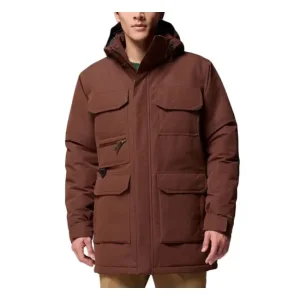
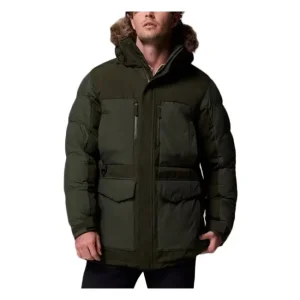
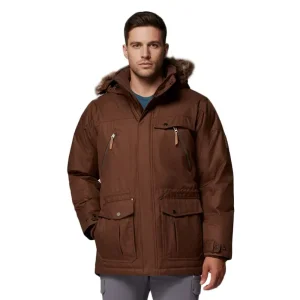
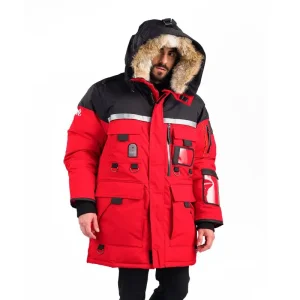
Built for survival at -40°C. Features heavy-duty 500D Cordura® abrasion zones, extended storm hood ruffs with synthetic or real fur trims, internal thermal bibs, and double storm flap closures.
High-visibility EN ISO 20471 Class 3 reflective parkas engineered for sub-zero freezer warehouses and maritime port operations, featuring grease-resistant face fabrics and heavy-duty 2-way resin zips.
Sleek, ergonomic 3-in-1 modular parkas designed for premium retail channels. Incorporates zip-out liner fleece/puffer systems, magnetic pocket flaps, and clean bonded pocket frames.
Rugged, low-profile matte nylon shells with concealed carry pocket layouts, side-zip quick access tabs, and microphone loops tailored for security personnel and government uniform tenders.
As global climate regulations tighten and consumers demand zero-impact performance, our R&D roadmap focuses on circular economy textiles and smart thermal management.
Transitioning from complex blended outerwear to 100% Monomaterial Polyester parkas (face fabric, membrane, insulation, and thread). This allows end-of-life garments to be mechanically shredded and recycled into new virgin-grade yarn without chemical separation.
Integrating microencapsulated PCM linings that absorb excess body heat during exertion and release stored heat during static periods in cold weather. Combining ultra-thin Aerogel insulation in core chest panels reduces parka volume by 35% while maintaining thermal resistance.
Next-generation OEM export parkas feature flexible, ultra-thin carbon fiber heating pads powered by 5V/9V USB power banks. Internal micro-controllers provide three adjustable heat zones (back, chest, pockets) with automatic thermal shut-off protection.
Exporting high-value outerwear to North America, the European Union, Australia, and Japan requires absolute adherence to strict regional safety, environmental, and chemical regulations.
Our exported parkas strictly comply with EU REACH Annex XVII regulations, guaranteeing zero forbidden azo dyes, phthalates, or heavy metals. For the North American market, garments meet US CPSIA safety standards and California Proposition 65 requirements.
Quality assurance is embedded directly into production rather than checked at the end. We execute a 100% fabric roll inspection using the 4-Point System, in-line hourly quality patrol on stitch density and seam sealing, and final pre-shipment AQL 1.0 or 2.5 audits.
We streamline international trade with complete documentation packages including GSP Certificates of Origin (Form A, Form E, RCEP), accurate HS Code classification (e.g., HS 6201.13 for synthetic parkas), and full DDP/FOB shipping logistics.
Direct technical insights for enterprise procurement managers, brand founders, and workwear buyers exploring custom parka manufacturing.
Our standard Minimum Order Quantity (MOQ) is 100 pieces per style, which can be split across up to 2-3 colorways and a full standard size run (e.g., S to 3XL). For custom sample development or pilot market testing programs, we can accommodate 50-piece low-MOQ trial orders utilizing available stock high-performance functional face fabrics.
Proto pattern samples and 3D digital renderings are typically completed within 7 to 10 working days after receiving your tech pack or reference garment. Once pre-production (PP) samples are approved and lab dips are signed off, bulk manufacturing requires 30 to 45 calendar days depending on membrane lamination complexity, seam-taping requirements, and down-filling volume.
Down feather leakage is mitigated through a 4-layer construction strategy: (1) Applying high-density down-proof acrylic coatings or TPU membranes to inner lining fabrics; (2) Utilizing non-woven down-proof baffle interlinings; (3) Employing specialized German Schmetz anti-friction ball-point needles; and (4) Calibrating stitch density between 12-14 SPI to prevent needle-hole stretch.
Yes. All natural duck and goose down used in our facilities holds 100% Responsible Down Standard (RDS) certification with full lot traceability. Furthermore, we maintain direct partnerships with Bluesign® and GRS (Global Recycled Standard) certified mills to provide 100% recycled nylon and polyester face fabrics with PFC-free (C0) water-repellent finishes.
We execute strict AQL 1.0 (Major) and AQL 2.5 (Minor) inspection thresholds. Our in-house quality control includes 100% fabric roll inspection, hydrostatic head water-column testing on seam tapes, stitch tension testing, zipper endurance cycles, and 100% passage through automated dual-head needle detector machines before export cartoning.
Absolutely. Our in-house design engineering team can transform simple sketches, mood boards, or competitor samples into fully realizable tech packs, digital 3D fitting renders, 2D graded patterns, and complete Bill of Materials (BOM) detailing hardware, trims, and functional fabric recommendations.
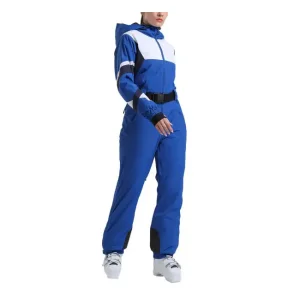
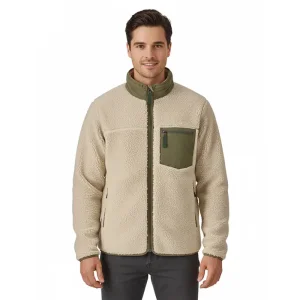
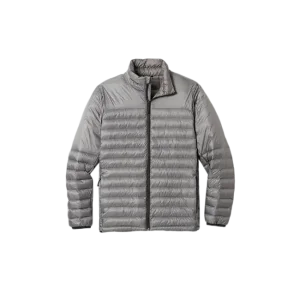
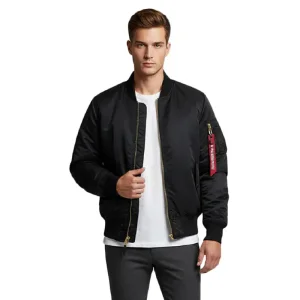
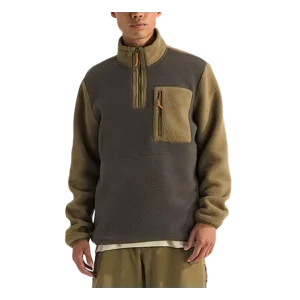
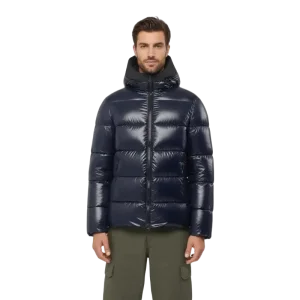
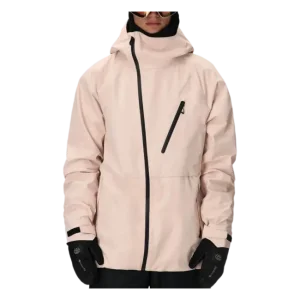
Discover our broader OEM/ODM product catalog, spanning polar expedition parkas, packable puffer jackets, ski shells, and fleece mid-layers.