Explore our certified export-grade winter apparel series engineered for harsh climates, urban lifestyle, and extreme expedition environments.
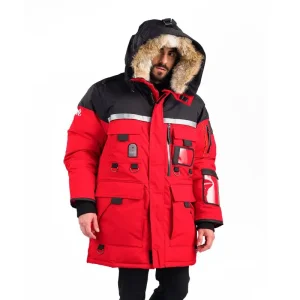
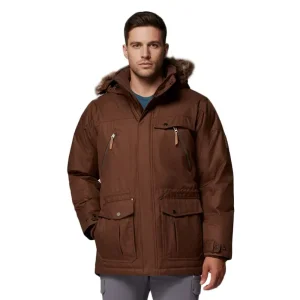
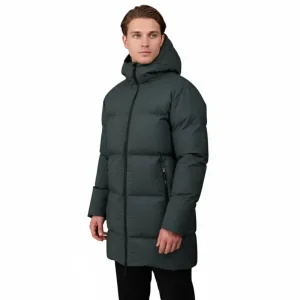
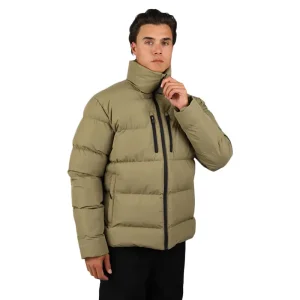
The global technical outerwear market is undergoing a seismic shift. Modern consumers and commercial procurers no longer accept a trade-off between thermal efficiency, environmental ethics, and structural aesthetic finesse.
Compliance with the Responsible Down Standard (RDS) and Downpass certification has migrated from a luxury marketing feature to an absolute mandatory import baseline across North America and Europe. Supply chain auditability requires zero-tolerance verification against live-plucking and force-feeding.
Traditional needle-stitched baffles create thousands of micro-perforations through which cold air penetrates and down clusters leak. Modern down jacket factories utilize ultrasonic welding and thermal bonding to create stitchless chambers, boosting windproofing by up to 40%.
With tightening global environmental regulations (such as EU REACH restrictions on PFAS), manufacturers must deploy C0 fluorocarbon-free Durable Water Repellent (DWR) coatings combined with ultra-dense 10D-30D micro-ripstop down-proof fabrics.
A deep comparative breakdown of insulation specs, fabric shell densities, and construction methodologies used across our export-grade down manufacturing lines.
| Insulation Grade | Fill Power (CUIN) | Composition | Best Application | Thermal Efficiency (CLO Value) |
|---|---|---|---|---|
| Expedition Grade Goose Down | 800 – 850 FP | 95/5 White Goose Down | Extreme Cold (-30°C to -40°C), Polar Mountaineering | 4.5 – 5.2 CLO / oz |
| Alpine Performance Goose Down | 700 – 750 FP | 90/10 Goose Down | Backcountry Skiing, Technical Winter Parkas | 3.8 – 4.3 CLO / oz |
| Urban Commercial Duck Down | 600 – 650 FP | 80/20 White Duck Down | Retail Winter Puffer Jackets, Daily Outerwear | 2.9 – 3.4 CLO / oz |
| Hydrophobic Down Blend | 650 – 750 FP | DWR-Treated Down + Synthetic Microfiber | High-Humidity Cold Climates, Marine & Rain Environments | 3.2 – 3.7 CLO / oz |
| Recycled Eco-Down (GRS) | 600 – 700 FP | 100% Post-Consumer Reclaimed Down | Sustainable ESG Brand Collections | 3.0 – 3.5 CLO / oz |
To guarantee absolute down retention without adding unnecessary garment weight, our factory employs high-temperature roller calendering (cire finish) on 20D, 30D, and 40D nylon/polyester fabrics. Heat and mechanical pressure melt micro-fibers at the surface level, reducing air permeability to between 0.5 to 1.5 cm³/cm²/s—completely blocking feather shaft migration.
International apparel buyers face immense friction when scaling down jacket lines: inconsistent fill weights, shipping delays, strict customs import testing, and unexpected down migration after retail distribution.
Manual down stuffing leads to erratic weight distribution and cold spots. Our facility utilizes multi-nozzle automated down-blowing machines equipped with high-precision digital scales accurate to ±0.1 grams per baffle chamber.
Raw down material undergoes a rigorous 14-stage washing, degreasing, and high-temperature sterilization cycle at 120°C. This ensures turbidity ratings exceeding 1000mm+ and eliminates organic odor issues during international freight storage.
We provide comprehensive COO (Country of Origin) optimization, GSP documentation, transparent FOB/DDP shipping options, and structured fabric reservation programs to shield buyers from seasonal peak-period cost spikes.
Navigating regional product compliance is crucial for retail survival. We manufacture strictly according to target country import frameworks across North America, the European Union, the United Kingdom, and East Asia.
| Target Region | Mandatory Compliance Framework | Key Testing Parameters | Factory Certification Status |
|---|---|---|---|
| European Union (EU) | EU REACH Annex XVII, OEKO-TEX Standard 100, EN 342 | Azo Dyes, Lead/Cadmium content, Thermal Insulation Resistance, PFC-free DWR | Certified Partner Mill Supply Chain |
| United States & Canada | FTC Feather & Down Products Guide, CPSIA, ASTM D6193 | Species Testing (Goose vs Duck), Down Content Accuracy, Seam Strength | RDS 3.0 & Downpass Audit Verified |
| Japan & East Asia | JIS L 1903 Down & Feather Testing Standard | Transparency (Turbidity ≥ 1000mm), Oxygen Number, Fat & Oil Content (≤ 1.0%) | Third-Party Laboratory (SGS / Intertek) Approved |
| Global Wholesale / Corporate | BSCI, ISO 9001, ISO 14001, GRS 4.0 | Factory Social Audit, Workplace Safety, Environmental Management System | Fully Certified Manufacturing Premises |
Our ongoing investment into cutting-edge apparel automation ensures that our OEM/ODM client partners stay ahead of market expectations through advanced materials and Smart Manufacturing.
By leveraging CLO 3D CAD simulation and AI marker nesting algorithms, we push fabric utilization rates beyond 88.5%, significantly reducing fabric waste and lowering piece costs on expensive 3-layer laminates.
Integrating graphene nano-coatings into down jacket inner linings enables rapid thermal distribution, reducing cold spots and boosting perceived user warmth by up to 3°C without adding any down weight.
Developing 100% Polyester and 100% Nylon mono-material constructions (where face fabric, thread, zippers, and interior scrim are all chemically identical), streamlining circular garment recycling at end-of-life.
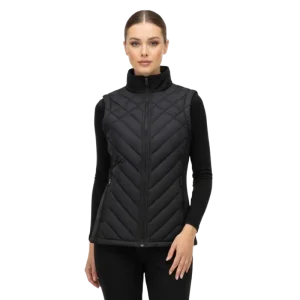
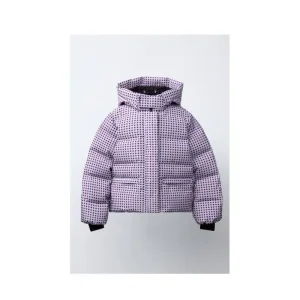
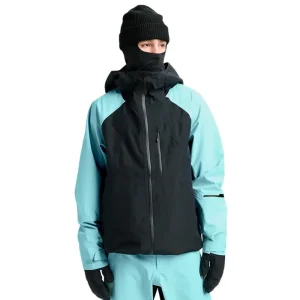
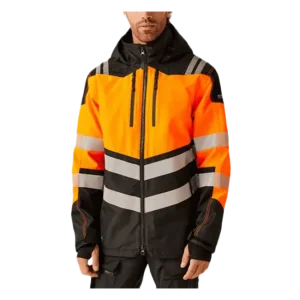
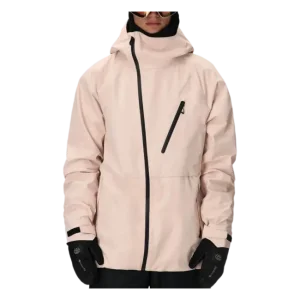
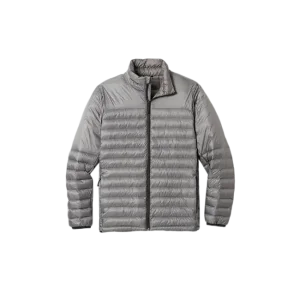
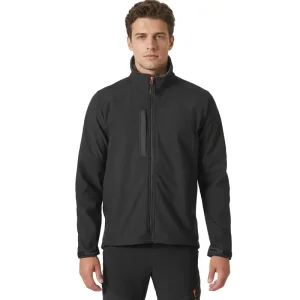
Discover our specialized product lines including 3L alpine ski jackets, hi-vis waterproof safety shells, and multi-functional puffer vests.
Expert answers to key technical, logistical, and commercial inquiries from international brand managers and apparel buyers.
Our standard production MOQ is 100 pieces per style, which can be distributed across multiple colorways and a standard size run (S to 3XL). For brand testing programs or limited capsule drops, we offer pilot development runs on selected in-stock RDS down-proof shell fabrics starting at 50 pieces.
We employ a 4-layer construction system: 2-layer calendared down-proof interior scrim liners (300T/400T density) wrapping the down cluster, sandwiched inside the outer shell and inner lining. Furthermore, we use specialized round-point German needles (Groz-Beckert) and anti-friction sewing threads with seam-sealing tape over stress points to prevent needle-hole down leakage.
Proto samples and 3D virtual fittings are delivered in 7 to 10 working days. Once the pre-production sample (PPS) and lab dips are signed off, bulk manufacturing requires 30 to 45 calendar days depending on fabric lamination complexity and custom hardware trim sourcing.
We provide end-to-end OEM and ODM services. Our in-house technical design team can translate simple mood boards or competitor reference samples into complete graded tech packs, bill of materials (BOM), 3D CLO digital renders, and production-ready pattern markers.