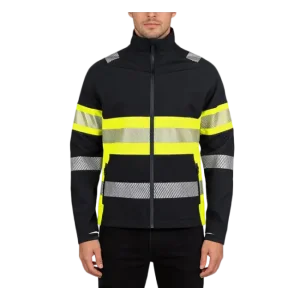
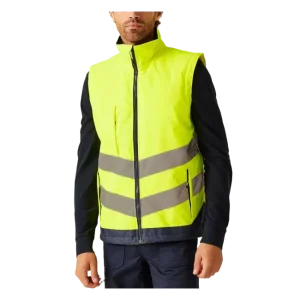
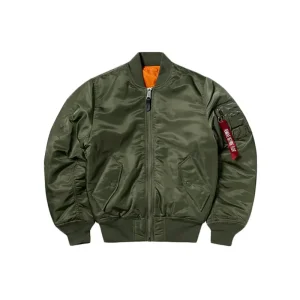
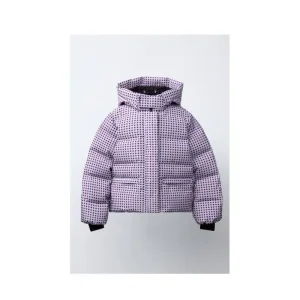
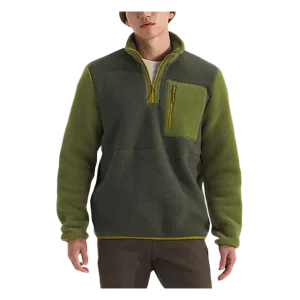
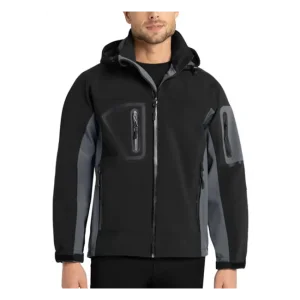
Explore our certified OEM/ODM high-visibility jackets, thermal insulated vests, and technical shell systems configured for extreme industrial environments.
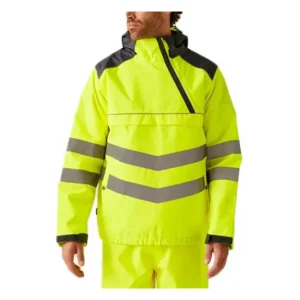
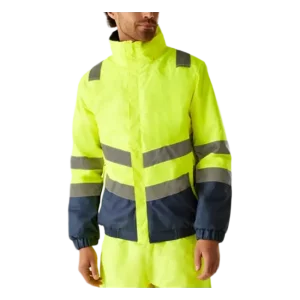
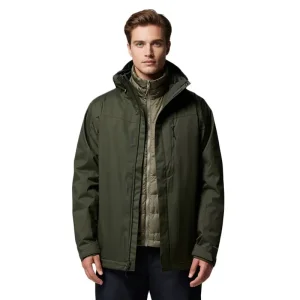
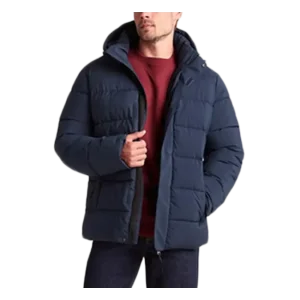
An in-depth technical breakdown of retro-reflective physics, chromaticity thresholds, and material substrate durability for modern industrial safety workwear.
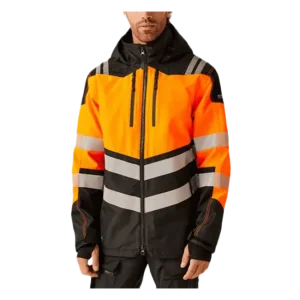
In high-risk industrial, construction, and transportation environments, personal protective equipment (PPE) serves as the fundamental barrier between human workers and occupational hazards. As premier Reflective Safety Uniform Exporters & Supplier, Guangdong Ruiniu Garment Manufacturing Co., Ltd. approaches high-visibility workwear development not merely as cut-and-sew apparel assembly, but as a discipline of life-critical safety engineering. Modern high-visibility uniforms operate on two essential optical principles: fluorescence for daytime conspicuity and retro-reflection for low-light, nighttime illumination.
Retro-reflection occurs when light rays are returned in the exact direction from which they originated. Unlike specular reflection (mirror-like) or diffuse reflection (scattered light), retro-reflective materials utilize either enclosed glass beads or micro-prismatic structures to direct vehicle headlight illumination directly back to the driver's eye-level optics.
Utilizes millions of high-refractive-index ($n \ge 1.90$) microscopic glass spheres embedded in a durable polymer layer with a silver-reflective backing. Ideal for extreme flexibility, flame-retardant applications, and softshell jacket integration.
Formed by precision-molded microscopic three-sided pyramids (corner-cube optics). Provides ultra-high intensity photometric returns ($R_A > 500 \text{ cd/lx}\cdot\text{m}^2$) and superior performance under heavy rain conditions.
Our engineering laboratory verifies every production lot against international photometric coefficients. Standard high-visibility tape must maintain a minimum coefficient of retro-reflection ($R_A$) of $330 \text{ cd/(lx}\cdot\text{m}^2)$ at an observation angle of $12'$ and entrance angle of $+5^\circ$. Through advanced TPU membrane encapsulation, Ruiniu reflective tapes retain over 85% of their initial luminance even after 50 intensive industrial wash cycles at $60^\circ\text{C}$.
A comparative engineering benchmark across North American, European, Australian, and Canadian high-visibility workwear regulatory frameworks.
| Standard | Geographic Region | Primary Classification | Min. Fluorescent Base Fabric | Min. Retro-Reflective Tape | Target Industry / Hazards |
|---|---|---|---|---|---|
| EN ISO 20471 | European Union / UK (UKCA) | Class 1, Class 2, Class 3 | 0.80 m² (Class 3) | 0.20 m² (Class 3) | Highways, Airports, Rail Infrastructure, Logistics |
| ANSI / ISEA 107-2020 | United States / North America | Type O, Type R, Type P (Class 1-3) | 1,240 sq. in. (Class 3) | 310 sq. in. (Class 3) | Roadway Construction, Emergency Responders, Utilities |
| AS / NZS 1906.4 & 4602.1 | Australia / New Zealand | Class D, Class N, Class D/N | 0.40 m² (Day/Night) | 50mm Band Width | Mining Operations, Port Terminals, Agriculture |
| CSA Z96-15 | Canada | Class 1, Class 2, Class 3 | Full Torso & Limb Coverage | X-Back Configuration Required | Oil & Gas, Cold-Climate Infrastructure, Forestry |
Fluorescent materials absorb invisible ultraviolet radiation from daylight and re-emit it as visible light of a longer wavelength. This quantum shift produces intense brightness during twilight, overcast weather, and dawn. As an experienced Reflective Safety Uniform Supplier, Ruiniu enforces strict laboratory spectro-colorimetry tests to guarantee that base fabrics hit exact chromaticity coordinates $(x,y)$ inside the standardized color boxes defined by ISO 20471:
Leveraging 23+ years of technical outerwear heritage, automated lean assembly lines, and flexible OEM/ODM contract terms for global enterprise buyers.
Automated spreading equipment and computerized laser nesting achieve over 88% fabric utilization efficiency. Eliminates manual cutting variance and ensures perfect pattern alignment across S to 6XL size runs.
For high-vis waterproof shells and bomber jackets, hot-melt seam-taping machines apply 100% waterproof polyurethane tape over every stitch line, guaranteeing hydrostatic resistance exceeding 15,000mm H2O.
4-point fabric roll inspection before cutting, in-line patrol audits every 2 hours during stitching, and final 100% waterproof pressure spot testing alongside AQL 2.5 general inspection protocols.
Guangdong province represents the pinnacle of global textile technology, housing complete upstream and downstream industrial clusters. From specialized fluorescent dye houses holding OEKO-TEX Standard 100 certificates to high-tenacity Oxford fabric weavers (300D, 600D, 1000D Cordura® equivalents), Ruiniu integrates every phase of production under unified quality management.
Furthermore, our flexible MOQ structure—starting at just 100 pieces per style—allows international brand managers, safety equipment distributors, and industrial suppliers to pilot new high-visibility uniform lines without suffering excessive working capital lockup.
Customizing protective uniform functional features for specialized operational hazards, weather extremes, and chemical risks.
Primary Standard: EN ISO 20471 Class 3 / ANSI Type R Class 3.
Required Features: 360-degree continuous retro-reflective bands across torso, arms, and legs. Durable 300D Polyester Oxford outer shell with stain-resistant DWR coating.
Primary Standard: NFPA 2112 / EN 11612 (Flame Retardant) & EN 1149 (Anti-Static).
Required Features: Inherent FR Aramid/Modacrylic blend fabrics, non-sparking brass zippers, and flame-retardant retro-reflective glass-bead tape.
Primary Standard: EN 342 (Thermal Insulation) & CSA Z96 Class 3.
Required Features: RDS-certified 700-fill-power down or 160g-200g 3M Thinsulate insulation, fleece-lined storm hoods, and internal snow skirts with rubberized grip elastic.
Primary Standard: EN ISO 20471 Class 2 / ANSI Class 2.
Required Features: Lightweight 4-way stretch softshell outer laminates, radio harness loops, mic tabs, clear ID badge holders, and dual side zipper access for tool belts.
Exploring next-generation active illumination, bio-based retro-reflective polymers, and Global Recycled Standard (GRS) fabric platforms.
The protective safety apparel industry is undergoing a structural transition driven by two powerful forces: digital technology integration and ESG (Environmental, Social, and Governance) compliance. As an industry-leading Reflective Safety Uniform Exporter, Ruiniu is actively investing in sustainable product design and smart PPE R&D.
Passive retro-reflective tape relies entirely on external light sources. In complete pitch-black darkness without direct vehicle headlights, passive tape remains unlit. Our next-generation smart safety jackets integrate flexible, washable LED light strips powered by rechargeable lithium polymer battery packs. Operating in steady or flashing modes, active illumination raises worker visibility distances to over 500 meters, even in zero-ambient-light tunnels and dense fog.
Enterprise procurement departments are increasingly mandated to reduce scope 3 carbon emissions. Ruiniu offers 100% GRS (Global Recycled Standard) recycled polyester face fabrics derived from post-consumer plastic bottles. Combined with PFC-free DWR (Durable Water Repellent) coatings, these eco-friendly safety uniforms deliver identical tear strength, color fastness, and water tightness as virgin synthetics while lowering carbon footprints by up to 42% per garment.
Direct answers from our senior textile engineers regarding customization, certifications, sampling, lead times, and quality guarantees.
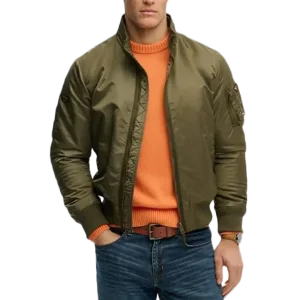
Explore additional waterproof shells, tactical bomber jackets, softshell mid-layers, and multi-functional thermal outer wear from Ruiniu.