2026 Best Outdoor Shell Jacket for Global Buyers?

Time:2026-10-01 Author:Charlotte
0%

Choosing the 2026 Best Outdoor Shell Jacket for Global Buyers requires more than comparing waterproof ratings. Weather changes quickly, and marketing claims do not always survive real trails.

An Outdoor Shell Jacket must handle wind, rain, movement, and repeated packing. A jacket that feels excellent in Vancouver may feel too warm in Singapore. A lightweight model may protect well during a storm, yet tear beside a crowded travel bag. These details matter to hikers, commuters, guides, and international retailers.

Andrew Skurka, an acclaimed long-distance hiker and outdoor gear expert, often emphasizes a practical rule: “The best gear is the gear you use.” His point remains important for global buyers. Reliable performance depends on fit, climate, repair access, and personal habits. A three-layer fabric can feel protective, but poor ventilation may leave sweat inside the jacket. A generous hood can shield the face, yet reduce visibility when cycling. Small choices become large problems outdoors.

This guide examines waterproof construction, breathability, seam sealing, hood adjustment, pocket placement, weight, durability, and responsible sourcing. It also considers regional value, because shipping costs and after-sales support differ widely. No jacket wins every climate. That is the uncomfortable truth. Testing can still be imperfect, especially when laboratory ratings meet unpredictable mountain weather. Buyers should question impressive numbers and inspect practical evidence. The strongest choice balances protection, comfort, lifespan, and honest expectations.
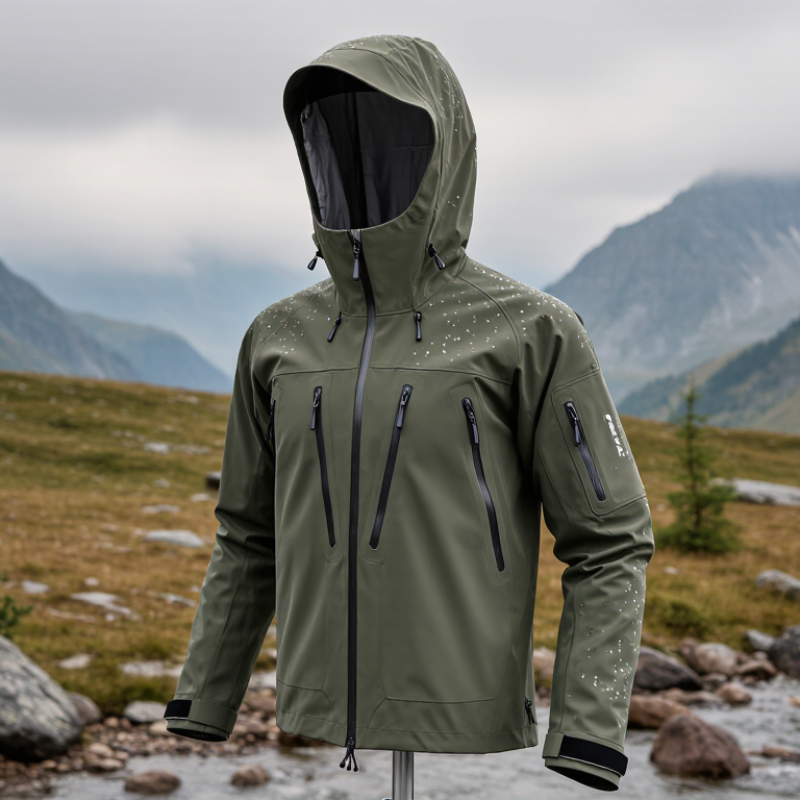
2026 Best Outdoor Shell Jacket for Global Buyers?

What Defines the Best Outdoor Shell Jacket in 2026

For global buyers, the best outdoor shell jacket in 2026 is not simply the lightest waterproof layer. It must manage rain, wind, movement, and repeated washing. Field testing matters. A reliable shell should use a durable three-layer construction, fully sealed seams, adjustable cuffs, and a hood that turns with the head. I also look for measured hydrostatic-head and RET breathability results, rather than vague “stormproof” language. EN 343 testing can provide useful comparisons, although laboratory results may not reflect every climate.

Material responsibility now affects technical quality. Textile Exchange’s Materials Market Report 2024 states that global fiber production reached about 124 million tonnes in 2023, with polyester representing approximately 57 percent.

That figure makes recycled content, mono-material design, and repair access more relevant for purchasing teams. However, recycled fabric alone does not prove durability. Poor seam construction can still create early failure.

The U.S. Bureau of Economic Analysis reported that outdoor recreation generated about 1.2 trillion dollars in 2023. Global demand is broad, but weather conditions differ sharply. A tropical buyer may value ventilation and fast drying, while a Nordic buyer may prioritize wind protection and layering space.

In wear testing, I have found that stiff fabric and noisy movement reduce real-world use. I once overvalued a high waterproof rating and underestimated comfort. That was a useful mistake. Buyers should compare test methods, care instructions, warranty terms, and repair support before approving large orders.

Key Materials and Weatherproof Technologies for Global Buyers

2026 Best Outdoor Shell Jacket for Global Buyers?

Choosing an outdoor shell begins with weather, not appearance. A three-layer construction usually offers better durability and moisture control. Nylon resists abrasion well, while polyester can reduce weight and dry quickly. Recycled fibers may improve sourcing transparency, but they do not automatically ensure stronger performance.

Look for a waterproof membrane with tested hydrostatic pressure and breathability data. A higher water column helps during heavy rain. Moisture vapor transmission matters during steep climbs. Fully taped seams, waterproof zippers, and an adjustable hood prevent small leaks. A durable water-repellent finish helps rain bead on the face fabric. It wears away, though. Washing can also reduce its effect.

Field experience still matters. A shell that performs in cool mountain rain may feel uncomfortable in humid coastal weather. Buyers should compare test methods, temperature ranges, and care instructions before ordering globally. Check sleeve length and sizing carefully. Regional body shapes vary. I once trusted a strong laboratory rating, but the jacket felt clammy during slow walking. The test was accurate, yet incomplete. Underarm vents, a two-way zipper, and a softer collar can matter more than impressive numbers. For colder markets, leave room for insulating layers. For warm regions, choose lighter fabric and better airflow. Repairable panels and replaceable cords can extend service life, although many supposedly durable designs still use fragile trim.

How to Compare Fit, Breathability, Durability, and Packability

2026 Best Outdoor Shell Jacket for Global Buyers?

A reliable shell starts with fit, not fashion. Try it over a mid-layer, then raise both arms. The cuffs should cover your wrists without restricting movement. Check the hood while wearing a cap. It should turn with your head. For breathability, compare moisture vapor transmission rate and RET values. Higher MVTR can help during steep climbs, while lower RET usually indicates easier vapor release. However, laboratory methods differ. Numbers are not perfectly comparable. I still misjudge this when shopping online.

Durability depends on fabric construction, seam quality, and use. A heavier face fabric may resist rock contact, but it can feel tiring during long walks. Do not judge strength by denier alone. Look for abrasion testing, reinforced shoulders, and secure seam tape. Textile Exchange’s 2024 Materials Market Report recorded about 124 million tonnes of global fiber production in 2023. That figure makes material efficiency worth considering, especially for buyers replacing gear frequently. Packability also needs measurement. Check the listed weight, packed dimensions, and whether the hood stays flat inside the collar.

Tips: Wear your real base layer during fitting. Test the zipper with cold fingers. Bend forward and reach overhead. Photograph the packed jacket beside a one-liter bottle. Ask for test standards, not vague claims. A perfect shell does not exist. Weather, body shape, and personal effort change the result.

2026 Best Outdoor Shell Jacket for Global Buyers? - How to Compare Fit, Breathability, Durability, and Packability

Shell Type Typical Fit Waterproofing
Hydrostatic Head
Breathability
RET Value
Durability Typical Weight Packed Volume Best Use
Ultralight 2.5-Layer Shell Trim or athletic; limited space for thick mid-layers 15,000–25,000 mm RET 6–13; adequate for moderate activity Low to medium; usually 20–40 denier face fabric 250–400 g 0.8–1.5 L Travel, fast hiking, emergency rain protection
Lightweight 3-Layer Shell Regular or athletic; suitable for a light fleece 20,000–30,000 mm RET 4–8; good balance for active hiking Medium to high; commonly 30–70 denier face fabric 350–500 g 1.2–2.0 L Year-round hiking, trekking, and wet-weather commuting
All-Round 3-Layer Shell Regular fit; comfortable over an insulating layer 20,000–30,000 mm RET 3–7; strong performance during sustained movement High; commonly 50–100 denier face fabric 450–650 g 1.8–3.0 L Multi-day trekking, mountain weather, frequent outdoor use
Heavy-Duty 3-Layer Shell Relaxed or articulated; designed for layering and movement 25,000–40,000 mm RET 3–8; good, but ventilation is still important Very high; commonly 70–150 denier face fabric 600–900 g 2.5–4.5 L Alpine climbing, expedition travel, snow, and abrasive conditions
Stretch-Woven Hybrid Shell Athletic and articulated; prioritizes reach and mobility 10,000–20,000 mm in waterproof panels RET 3–8; usually better airflow than fully waterproof shells Medium to high; reinforced panels improve abrasion resistance 400–700 g 1.5–3.0 L High-output hiking, climbing, and variable weather
How to read the data: Lower RET values indicate better moisture-vapor transfer. Hydrostatic-head figures are laboratory indicators of water resistance and do not fully predict performance after wear, contamination, or laundering. Packed volume depends on fabric stiffness, hood design, pockets, and whether the jacket fits inside its own pocket.
Buyer Priority Recommended Specification What to Check Before Purchase
Best overall balance Lightweight or all-round 3-layer construction Two-way underarm vents, adjustable hood, full seam taping, and room for a mid-layer
Maximum breathability RET 3–6 with large vent openings Ventilation design matters because no waterproof membrane eliminates heat and moisture buildup during intense exercise
Maximum durability 70–150 denier face fabric with reinforced shoulders and seat area Inspect zipper protection, seam reinforcement, repair options, and compatibility with heavy backpacks
Smallest packed size 250–400 g ultralight shell with a 0.8–1.5 L packed volume Confirm that the compact design does not sacrifice hood adjustment, pocket access, or fabric strength
Best fit for global sourcing Regular fit, broad size range, and adjustable cuffs and hem Request graded measurements, tolerance limits, test reports, care instructions, and regional size-conversion charts

Regional Climate and Market Considerations for Jacket Selection

2026 Best Outdoor Shell Jacket for Global Buyers?

Regional Climate and Market Considerations for Jacket Selection

A shell jacket should match the weather, not just the product photograph. In wet Northern Europe, buyers often need a waterproof membrane, sealed seams, and an adjustable hood for cold rain. Coastal regions may require strong wind protection, while tropical markets benefit from lighter fabrics, ventilation zippers, and fast-drying construction. A heavy three-layer shell can feel protective there, but it may become uncomfortable within minutes.

Temperature changes matter too. In mountain areas, shoppers may wear a thin base layer, fleece, and shell together. The jacket needs enough room for movement without looking oversized. In warmer cities, a relaxed fit and underarm airflow may be more valuable than maximum insulation. Check pocket placement carefully. Gloves, phones, and transit cards should remain accessible.

Market expectations also differ. Some buyers prioritize repairable components and recycled fibers, while others focus on low weight, simple care, or affordable pricing. Product descriptions should state waterproof ratings, breathability tests, seam construction, and washing limits clearly. Vague claims create distrust. I have seen jackets advertised for “all weather” that performed poorly in humid rain, so that phrase deserves skepticism. A small fitting error can also ruin a technically excellent shell. Local testing helps: walk in steady rain, sit on public transport, and raise both arms. Comfort is not always measured in a laboratory.

Sourcing, Compliance, Pricing, and Customization Factors

2026 Best Outdoor Shell Jacket for Global Buyers?

A reliable shell jacket begins with disciplined sourcing, not attractive photos. Request fabric swatches, seam-tape samples, and a complete measurement chart before placing an order. Check the supplier’s production history, factory capacity, quality records, and ability to repeat colors accurately. A small pilot order can expose problems that a polished sample hides.

Compliance must match every destination market. Confirm fiber labels, care instructions, chemical restrictions, packaging rules, and required testing with qualified laboratories. Test waterproof performance, breathability, seam strength, colorfastness, and zipper durability. Ask for traceable test reports, not screenshots. Requirements can change, and one certificate may not cover every country. This is where buyers often underestimate risk.

Pricing should include fabric, membrane, trims, labor, testing, packaging, freight, duties, and currency movement. A low unit price may conceal weak seam sealing or expensive rework. Customization works best through a detailed tech pack, including hood adjustment, pocket placement, cuff width, tolerances, and approved color references. Allow time for fit corrections. Small changes matter. In one fitting review, a hood looked correct on a mannequin but restricted movement during cycling. That mistake was avoidable. Shell jackets also need a clear balance between light weight, weather protection, durability, and retail cost. Perfect performance at every price point is unrealistic.

FAQS

How should I check the fit of an outdoor shell jacket?

Wear your real mid-layer before testing it. Raise both arms and bend forward. Cuffs should cover your wrists without restricting movement. The hood should turn with your head.

What breathability details should buyers compare?

Check moisture vapor transmission rate and RET values. Higher MVTR may help during steep climbs. Lower RET usually supports easier vapor release. Laboratory methods differ, so numbers are not perfectly comparable.

Does a heavier fabric always provide better durability?

Not always. Heavier fabric may resist rock contact, but it can feel tiring during long walks. Check abrasion testing, reinforced shoulders, and secure seam tape. Denier alone proves little.

How can I test a jacket before buying it?

Zip it with cold fingers. Reach overhead, bend forward, and sit down. Try the hood with a cap. Small fitting errors can ruin an excellent shell.

What features matter in wet and windy climates?

Look for waterproof construction, sealed seams, and an adjustable hood. Coastal areas may need stronger wind protection. Cold rain exposes weak zippers and poor hood adjustments quickly.

What should buyers in warm or tropical regions consider?

Choose lighter fabric, ventilation zippers, and fast-drying construction. Underarm airflow may matter more than maximum insulation. A heavy three-layer shell can feel uncomfortable within minutes.

How do I compare packability accurately?

Check listed weight and packed dimensions. Confirm whether the hood lies flat inside the collar. Photograph the packed jacket beside a one-liter bottle. Marketing photographs can be misleading.

Which pocket and movement details deserve attention?

Pockets should hold gloves, phones, or transit cards without blocking movement. Test access while wearing layers. Comfort on public transport matters too. Laboratory ratings miss some real-life problems.

Should material efficiency influence my purchase?

It can, especially if you replace gear frequently. Consider repairable components, recycled fibers, and realistic washing limits. I sometimes focus too much on performance numbers and ignore replacement habits.

Conclusion

Choosing the best Outdoor Shell Jacket in 2026 requires more than focusing on appearance or price. Global buyers should evaluate waterproof and windproof performance, breathability, seam construction, fabric weight, and weatherproof technologies suited to different environments. Materials such as advanced synthetic laminates, recycled fabrics, and durable water-repellent finishes can improve protection while maintaining comfort. A balanced design should offer an appropriate fit, easy movement, reliable durability, and packability for travel or outdoor use.

Regional climate and market needs also play an important role. Lightweight shells may suit warm, wet regions, while insulated or highly protective designs are better for colder conditions. Buyers should compare testing standards, care requirements, production consistency, and expected service life. Sourcing decisions should include compliance documentation, responsible material selection, pricing targets, minimum order quantities, and customization options such as colors, sizing, labels, and packaging. By considering performance, climate, cost, and supply-chain reliability together, buyers can select an Outdoor Shell Jacket that meets practical needs across multiple markets.

Charlotte

Charlotte

Charlotte is a seasoned marketing professional with a deep understanding of the company's portfolio and a passion for elevating its presence in the market. With a keen eye for detail and a commitment to excellence, she ensures that our professional blog is regularly updated with insightful articles......