Choosing a Light Outdoor Jacket in 2026 requires more than checking its weight. Weather patterns are less predictable, and outdoor users increasingly expect one jacket to handle commuting, hiking, and travel. The Outdoor Industry Association’s 2024 Outdoor Participation Trends Report recorded 175.8 million Americans participating in outdoor recreation in 2023. That scale reflects a wider demand for practical, adaptable clothing. Grand View Research also identifies outdoor apparel as a steadily expanding global market, supported by performance fabrics and growing recreational activity.
A useful principle comes from Patagonia founder Yvon Chouinard: “The more you know, the less you need.” It applies directly to jacket selection. A lighter shell may reduce pack weight, but it can sacrifice warmth, abrasion resistance, or pocket space. A thoughtful buyer should examine fabric denier, waterproof ratings, breathability, seam construction, hood adjustment, and repair options. Small details matter. A stiff zipper can frustrate cold fingers. A loose hood can ruin a windy ridge walk.
No jacket wins every condition.
This guide compares insulation, weather protection, mobility, durability, and responsible materials. It also considers real situations, from damp city streets to exposed mountain trails. Laboratory figures help, but they do not tell the whole story. Brand testing may use controlled rain, while your trip may involve sweat, dust, and repeated packing. That gap deserves attention. The best Light Outdoor Jacket is not always the thinnest model or the most expensive one. It is the jacket whose limitations match your planned use, climate, and tolerance for compromise.
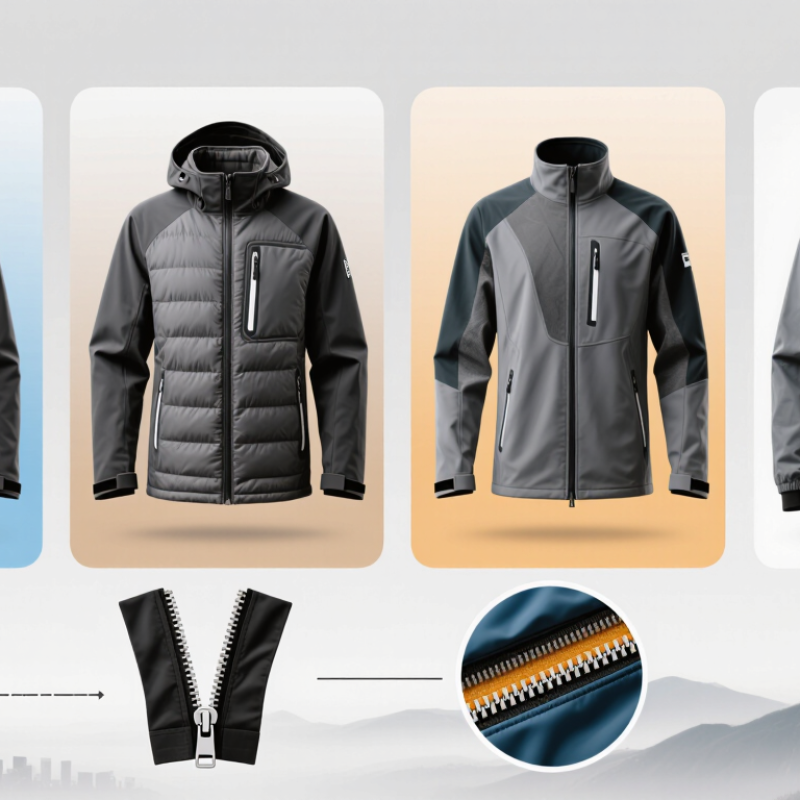
Define the activity before judging the jacket. A city commute needs quiet fabric, light rain protection, and easy packing. A fast hike demands stretch, ventilation, and low weight. For exposed ridgelines, wind resistance matters more than softness. A climbing shell also needs helmet-compatible hoods and durable shoulders. These details change the correct choice.
The Outdoor Industry Association reported 175.8 million U.S. outdoor participants in 2023. That figure shows how widely outdoor needs differ. Do not treat one jacket as universal. Check local weather, trip length, pace, and pack weight. The World Meteorological Organization recorded 2024 as the warmest year measured, at about 1.55°C above the preindustrial average. Unstable conditions make adjustable ventilation valuable. Zippered vents can prevent a damp base layer during steep climbs.
Look for tested performance, not impressive wording. EN 343 ratings indicate protection against rain and breathability. Textile Exchange reported global fiber production reached 124 million tonnes in 2023. A lighter fabric can reduce material use, but it may sacrifice abrasion resistance. I once chose an ultralight shell for rough trails. The fabric packed beautifully, then showed shoulder wear within weeks. That mistake still matters. A few extra grams may buy better reliability. Check seam construction, cuff adjustment, hood movement, and repair options before purchasing.
A light outdoor jacket should block rain without trapping body heat. In practical testing, tightly woven nylon and polyester often resist wind effectively. However, fabric choice alone does not guarantee comfort. Look for a waterproof rating, sealed seams, and a breathable construction. A jacket can feel dry outside but clammy inside.
Waterproof membranes help move vapor away from your skin. Their performance depends on humidity, movement, and ventilation openings. Underarm zippers can improve airflow during steep climbs. A water-repellent finish also helps rain bead on the surface, but it may weaken after repeated washing. I once trusted a highly water-resistant shell during a warm hike. It protected me from drizzle, yet moisture built up inside. That experience changed how I judge breathability.
Tips: Check the fabric label before buying. Choose a lightweight shell for changing weather. Select a soft, breathable fabric for active use. Test the hood and cuffs for gaps. Avoid assuming a higher waterproof rating means better comfort. Breathability remains limited during intense exercise, even with advanced fabric. Wash the jacket according to its care instructions, because harsh cleaners can reduce performance. Feel the inner lining against your skin. Small details matter.
A light outdoor jacket should match your movement, weather, and travel habits. Compare insulation before comparing colors or pocket designs. Down usually offers excellent warmth for its weight. Synthetic insulation handles damp conditions more reliably. However, synthetic fill often feels bulkier inside a small pack.
Weight matters during long walks and repeated climbs. A jacket weighing 250 grams can feel noticeably easier than one above 500 grams. Check the packed size, not only the listed weight. Some jackets compress into an internal pocket. Others need a separate storage bag. Test the packed shape beside your water bottle. It should not consume half your daypack.
Tips: Wear a thin base layer when testing fit. Raise your arms and bend forward. The hem should stay below your waist. Check whether the hood turns with your head. For changing seasons, choose adjustable cuffs and a two-way zipper. They improve comfort during windy mornings and mild afternoons. Avoid excessive insulation if you walk actively. You may overheat quickly.
My field experience suggests that breathability is often underestimated. A warm jacket can become uncomfortable after ten minutes uphill. I once chose the lightest option and regretted its narrow sleeves. That mistake still influences my measurements. Try the jacket with gloves and a small backpack. Also inspect the stitching and zipper movement carefully. Small failures become frustrating outdoors. A perfect jacket does not exist. Your usual route matters more than a technical rating.
How to Choose Light Outdoor Jackets in 2026?
A light outdoor jacket should fit your movement, not merely your shoulders. The 2024 Outdoor Participation Trends Report recorded 175.8 million U.S. participants in outdoor recreation during 2023. That audience needs adaptable clothing for commuting, hiking, and sudden weather changes. Try the jacket with a thin base layer and a mid-layer. You should close the zipper without chest pressure. Excess fabric, however, can catch wind and reduce warmth. Check the sleeve length with your arms extended. The cuffs should cover your wrists without blocking hand movement.
Test it loaded. Place a phone, keys, and gloves in the pockets. Then raise both arms, bend forward, and rotate your torso. A useful jacket should not pull across the back or ride above your waist. I once chose a very trim shell that looked excellent indoors. It became restrictive after ten minutes of climbing. That mistake still influences my fitting checks. Mobility often matters more than a polished silhouette.
Essential features depend on conditions. Look for a dependable hood adjustment, secure zippers, breathable panels, and a hem that limits drafts. For wet climates, verify waterproof ratings and fully taped seams rather than trusting “water-resistant” wording. The Outdoor Industry Association’s 2024 report also showed continued growth in casual outdoor participation, making versatile construction increasingly practical. Still, laboratory figures cannot predict every user’s comfort. Try the jacket over your real layers, preferably while carrying your usual pack. Small details matter.
| Evaluation Dimension | Recommended Target | How to Check | Why It Matters Outdoors |
|---|---|---|---|
| Jacket Category | Light shell, windbreaker, or lightweight insulated jacket | Match the category to expected wind, rain, temperature, and activity level. | A windbreaker is not automatically waterproof, while an insulated jacket may be too warm for high-output activities. |
| Shoulder and Chest Fit | Close enough to reduce drafts, with room for the intended base or mid-layer | Zip the jacket over your planned layers. Check that the chest does not pull or create tight horizontal wrinkles. | Correct fit supports warmth and prevents fabric restriction when reaching, climbing, or carrying a pack. |
| Layering Space | Allow approximately 5–10 cm of extra chest circumference over the base layer, or more for a thick mid-layer | Wear the actual layers you plan to use and raise both arms without the hem riding excessively upward. | Extra space helps preserve insulation loft and makes temperature management easier. |
| Sleeve Length | Cuffs should reach the wrist bones and overlap the wrists when arms are extended | Bend your elbows and extend both arms forward as if using trekking poles or a bicycle handlebar. | Adequate coverage reduces exposed skin and prevents sleeves from pulling back during movement. |
| Hem Length and Adjustment | Hem should cover the lower back while seated or reaching; adjustable drawcords are useful | Reach overhead, bend forward, and sit down. Check whether the jacket exposes the waist or bunches up. | A stable hem limits heat loss and helps keep rain and wind from entering from below. |
| Mobility | Full overhead reach, comfortable arm rotation, and no binding across the back | Perform arm circles, reach across the body, and simulate stepping over uneven ground. | Mobility is essential for hiking, scrambling, paddling, cycling, and other activities requiring a broad range of motion. |
| Garment Weight | About 150–350 g for many lightweight shells; insulation and features can increase weight | Compare the listed garment weight in the correct size and consider packed volume as well. | Lower weight reduces pack load, but extreme weight savings may reduce durability, pockets, or weather protection. |
| Water Resistance | For sustained rain, choose a waterproof construction with sealed or taped seams; for light showers, a water-repellent shell may be sufficient | Look for a stated waterproof rating, hood adjustment, and seam treatment rather than relying only on the term “water-resistant.” | Water protection depends on fabric, seams, zippers, hood design, and the condition of the surface treatment. |
| Waterproof Rating | A higher hydrostatic-head value generally indicates greater resistance to water pressure; specifications should identify the test method | Compare ratings only when the testing method and garment construction are reasonably comparable. | Laboratory ratings do not fully predict performance under pack straps, movement, abrasion, or prolonged rain. |
| Breathability | Select a more breathable or ventilated design for high-output activity; prioritize weather protection for exposed conditions | Check for pit zips, mesh-lined pockets, two-way ventilation, or a fabric moisture-vapor specification. | Breathability helps reduce condensation, but no waterproof jacket eliminates sweat during intense exertion. |
| Wind Protection | Tightly woven fabric, a full front closure, adjustable cuffs, and a secure hem | Stand in moving air or test the jacket while walking. Check for gaps around the collar, cuffs, and hem. | Blocking wind can substantially improve comfort, especially when clothing is damp or activity levels are low. |
| Hood Design | Adjustable hood with adequate head coverage and peripheral visibility | Turn your head, wear a cap or helmet if relevant, and check whether the hood moves with you. | A well-shaped hood improves rain and wind protection without severely limiting sight lines. |
| Zippers and Closures | Smooth-running main zipper, secure storm flap or water-resistant zipper, and usable pull tabs | Operate the zipper with one hand and test it while wearing gloves or using cold, wet fingers. | Reliable closures improve ventilation, weather protection, and ease of use in changing conditions. |
| Pocket Placement | Pockets should remain accessible above a backpack hip belt and should not interfere with harnesses | Wear your pack or climbing harness and check access, capacity, drainage, and zipper operation. | Poorly placed pockets become difficult to use and may create pressure points under pack straps. |
| Fabric Durability | Choose fabric strength according to abrasion exposure, pack use, and frequency of wear | Review fabric denier or construction details where provided, and inspect high-wear areas such as shoulders and elbows. | Lighter fabrics reduce weight but may be less resistant to rock, branches, and repeated pack friction. |
| Packability | Should compress easily without permanently damaging the fabric or insulation | Place the jacket in a small pack compartment and check packed size, snag risk, and recovery after unpacking. | A packable jacket is more likely to be carried and available when weather changes unexpectedly. |
| Temperature Strategy | Use a breathable base layer, insulating mid-layer, and weather-resistant outer layer when conditions vary | Choose the jacket based on the complete clothing system rather than the jacket alone. | Layering provides more flexibility than relying on one heavy garment across changing activity and weather conditions. |
Practical rule: prioritize fit and mobility first, then balance weather protection, breathability, durability, weight, and packability for the activity and climate.
A light outdoor jacket should survive more than a product photo suggests. I inspect seams, zipper tracks, cuff stitching, and fabric recovery before buying. A durable shell should resist abrasion from shoulder straps and repeated packing. It should retain its shape after being stuffed into a daypack. Ten minutes of checking can reveal weak construction. Yet no jacket lasts forever. My own mistake was treating thin fabric as automatically fragile. Some lightweight weaves handle rough trails surprisingly well.
Sustainability depends on use, not only recycled content. Choose a jacket you will wear across seasons, rather than one with unused features. Look for repairable components, traceable materials, and clear care instructions. A replaceable cord or simple patch can extend service for years. Wash only when needed. Airing the jacket often removes trail odors. Cold washing and low-heat drying protect coatings, although care instructions should control. I once used excessive detergent and reduced water resistance. That was avoidable.
Compare total cost with expected use. A cheaper jacket may need earlier replacement, while an expensive one may include unnecessary technology. Check pocket placement, hood adjustment, ventilation, and layering room. Test these details while wearing a pack. Comfort matters on a wet bus ride home, too. Keep receipts and care records. They make defects easier to assess. Durability claims still deserve skepticism. Field performance matters more than polished advertising.
Tightly woven nylon or polyester can resist wind and light rain. Check waterproof ratings and sealed seams. Fabric alone cannot ensure comfort.
Choose a breathable membrane, ventilation openings, and underarm zippers. Moisture can still build up during intense exercise. Small details matter.
No. A higher rating may improve rain protection but limit breathability. I once stayed dry outside and damp inside.
Check the hood, cuffs, zipper tracks, pocket placement, and inner lining. Wear a backpack during testing. Gaps become obvious.
Some thin fabrics resist abrasion surprisingly well. Inspect shoulder areas, seams, and cuff stitching. I wrongly assumed thin meant fragile.
Follow the care label carefully. Use cold washing and low heat when allowed. Harsh cleaners may weaken water resistance. Air it first.
Wash only when necessary and repair small tears quickly. Replaceable cords and simple patches can extend service. No jacket lasts forever.
Compare expected use, durability, comfort, and repairability. A cheaper jacket may need earlier replacement. Expensive features are not always useful.
Select a lightweight shell with room for layers. Check ventilation for steep climbs and comfort for wet rides home. I sometimes overlook that final detail.
Choosing the right Light Outdoor Jacket in 2026 begins with understanding your activity, climate, and performance expectations. Hiking, commuting, travel, and high-intensity adventures may require different levels of waterproofing, wind resistance, ventilation, and mobility. Consider fabrics that balance weather protection with breathability, then compare insulation, overall weight, packability, and seasonal comfort. A lightweight shell may suit mild or wet conditions, while a lightly insulated option can provide greater warmth in cooler environments.
Fit is equally important. The jacket should allow comfortable layering without feeling bulky and should support natural movement during outdoor activities. Useful features may include an adjustable hood, secure pockets, ventilation openings, and reliable closures. Finally, assess fabric durability, repairability, care requirements, and long-term value rather than focusing only on the initial price. A thoughtful choice will provide dependable protection, easy storage, comfortable movement, and practical performance across changing outdoor conditions.