Choosing Womens Outdoor Winter Jackets in 2026 starts with a simple question: where will you wear one? A windy commute, snowy trail, and damp school run place different demands on a coat. “Warm” on a product label cannot tell you everything. Check the insulation, weather-resistant shell, hood coverage, cuffs, and room for a mid-layer. Small details matter. A loose cuff can let cold air in; a bulky fit can restrict movement. A jacket that feels cozy in a shop may feel different after an hour outside.
Yvon Chouinard, Patagonia’s founder and an influential outdoor-industry figure, has said, “The more you know, the less you need.” That idea suits jacket shopping: understand your conditions before paying for features you may rarely use. Consider the lowest temperatures you actually face, how much you walk, and whether rain or dry snow is more common. Then compare warmth, breathability, fit, weight, and care instructions. There is no perfect coat for everyone. Even careful shoppers can overvalue a sleek look or underestimate a damp, cold wind. This guide will help you weigh practical trade-offs, read product claims with care, and choose a jacket suited to your routine—not just a product photo. One honest caveat: fit and warmth are personal, so try layers together when possible.
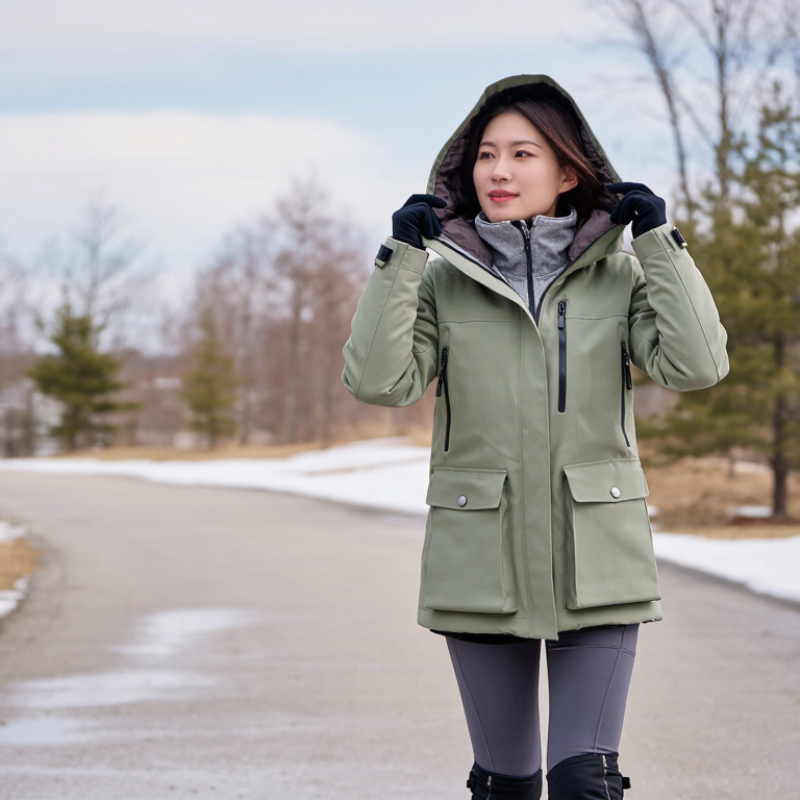
When choosing a women’s outdoor winter jacket in 2026, use ASTM F2732 temperature ratings as a reference, not a promise. The standard provides a framework for estimating the cold-weather performance of clothing ensembles. Check whether a rating applies to the jacket alone or to a specific layered setup. Activity matters: waiting at a bus stop can feel colder than briskly walking the same route. Numbers need context.
Compare the stated rating with your usual winter conditions and how you spend time outside. Consider wind, dampness, and the base layers you plan to wear; a rating may not reflect every combination. If you run cold or expect long periods outdoors, allow extra warmth rather than choosing right at your lowest expected temperature. Fit matters, too. A bulky sweater should not pull at the shoulders or restrict movement, though perfect fit can be hard to judge online.
Tips: Read the rating notes and test the jacket with your usual layers before a long outing. Check that cuffs close around gloves and the hood stays put when you turn your head. If the label leaves its test conditions unclear, treat the number cautiously.
How to Choose Women’s Outdoor Winter Jackets in 2026?
Compare Insulation: 1 clo Equals 0.155 m²·K/W
For winter walks, match a jacket’s insulation to your weather and activity. A slow commute in damp wind feels different from a brisk uphill hike. The clo is a unit of thermal insulation: 1 clo equals 0.155 m²·K/W. A higher value generally means greater resistance to heat loss, but it does not tell the whole story. Numbers need context.
Check how the insulation value was measured and whether it describes the jacket alone or a complete outfit. Comparisons can be misleading when test methods differ. Wind-blocking fabric, a close but comfortable fit, and room for a warm mid-layer also affect how a jacket performs. For example, a jacket that traps warmth while standing may feel too hot on a steep climb. Fit matters. I would not choose by the clo figure alone.
Tips: Compare clo values only when the testing conditions are similar. Check sleeve and hem coverage, then consider rain protection and your usual pace. Try the jacket with the layers you actually wear. Small gaps at the cuffs can matter.
| Clothing Insulation (clo) | Thermal Resistance (m²·K/W) | How to Use This Comparison |
|---|---|---|
| 0.25 clo | 0.0388 | A lower insulation value; compare jackets only when their test methods and garment coverage are alike. |
| 0.50 clo | 0.0775 | Twice the insulation value of 0.25 clo under the same measurement conditions. |
| 0.75 clo | 0.1163 | Useful as a conversion reference; it does not, by itself, specify a suitable outdoor temperature. |
| 1.00 clo | 0.1550 | The standard conversion point: 1 clo = 0.155 m²·K/W. |
| 1.50 clo | 0.2325 | One and a half times the clothing insulation of 1.00 clo, when measured on the same basis. |
| 2.00 clo | 0.3100 | Twice the clothing insulation of 1.00 clo; actual comfort still depends on activity and conditions. |
| 2.50 clo | 0.3875 | A higher insulation value in this conversion table, not a universal rating for any particular jacket type. |
| 3.00 clo | 0.4650 | Three times the clothing insulation of 1.00 clo under comparable test conditions. |
Selection note: Clo describes the insulation of clothing or a clothing ensemble, not the insulation material alone. A jacket’s warmth also depends on fit, garment coverage, wind and moisture protection, layering, activity level, and the wearer. Compare clo values only when the measurement methods are comparable; do not treat them as a guaranteed temperature rating.
For women’s outdoor winter jackets in 2026, compare insulation using test results, not just marketing claims. Down fill power measures how much volume a given weight of down occupies after standardized conditioning. It is usually stated in cubic inches per ounce. A higher value indicates greater loft, but it does not guarantee a warmer jacket. Fill weight, construction, fit, and coverage also matter. Check whether reports name a recognized method, such as an IDFB procedure, and compare results only when the same method was used. Small differences in test conditions can affect the number.
Synthetic fills cannot be ranked by down fill power. Look for thermal-resistance results from a named, repeatable test, with sample conditions clearly stated. A fabric or insulation-panel result is not the same as a whole-jacket rating. Where available, thermal-manikin testing can help assess the complete garment. Still, lab measurements cannot fully recreate wind, damp snow, or a close-fitting hood. It is easy to overvalue one number.
Tips: Compare like with like. Ask for the test method, units, and whether the result covers the fill or the finished jacket. Then check fit and coverage in person. A cuff gap matters.
How to Choose Womens Outdoor Winter Jackets in 2026?
When checking rain protection, look for the EN 343 marking on the garment label. It rates protection against rain, not warmth. The two class numbers indicate water penetration resistance and breathability; each is graded from 1 to 4, with 4 representing the highest level. A higher water-resistance class can matter during long, wet walks, but it does not guarantee comfort in every storm. Wind-driven rain can still find gaps at a loose cuff or poorly adjusted hood.
Fit matters. Try the jacket over the layers you expect to wear, then reach forward and raise your arms. Check that the hem stays put and sleeves cover your wrists. Also inspect seam construction, front closure, and hood adjustment. These details affect real-world coverage, even when a label looks impressive. I would not choose by class number alone; the rating comes from tests, while your route, pace, and exposure vary. Breathability matters on uphill walks, where sweat can build beneath a fully closed jacket. Cold is different. For freezing weather, check insulation separately, and remember that layering changes how the jacket feels. A rating is useful, not a promise.
How to read this chart: EN 343 classifies rain-protective clothing by water-penetration resistance. Higher class numbers indicate a higher protection class; the bars show the ordinal class levels, not measured pressure values or a linear comparison of performance. When choosing a winter jacket, check its EN 343 marking and test information. Rain protection does not indicate warmth or insulation.
A good fit leaves room for a warm mid-layer without pulling across the shoulders. Zip the jacket over a sweater and reach forward, as if adjusting a backpack strap. If the hem rides up or the sleeves twist, try another cut. Test it seated. A jacket that feels roomy indoors may restrict movement outdoors, especially with a thick fleece underneath. Check that cuffs overlap your gloves, not just your wrists.
Hood coverage deserves a real test in wind or light rain. Turn your head from side to side; the hood should move with you without blocking your view. A stiff brim can help shield your face, but too much structure may feel awkward. Drawcords should be easy to adjust with cold fingers. For cuffs, look for closures that tighten over gloves and loosen without a struggle.
Small details matter. I’d still check these features while wearing your usual layers, since sizing charts cannot show how a hood sits over a hat or how a cuff seals around your glove. If the fit feels almost right but needs constant readjusting, that hesitation is worth noticing.
One clo equals 0.155 m²·K/W. A higher value generally means more resistance to heat loss. It is not the whole story.
No. Check how the value was measured and whether it describes the jacket or a full outfit. Fit, wind protection, and layering space matter too.
Compare fill power only when the same standardized test method was used. Higher fill power means more loft, but not automatically more warmth. Fill weight and jacket coverage count.
No. Synthetic fills need thermal-resistance results from a repeatable test. Check whether results describe insulation panels or the complete jacket.
It rates rain protection, not warmth. Its two class numbers cover water penetration resistance and breathability, each graded from 1 to 4. Class 4 is highest.
No. Wind-driven rain may enter through loose cuffs or a poorly adjusted hood. Check seams, closures, and hood coverage.
Try it over your usual layers. Reach forward and raise your arms. Make sure the hem stays put and sleeves cover your wrists. Small gaps matter.
Breathability matters because sweat can build up under a closed jacket. A warm jacket may feel too hot on a steep climb. I still find this easy to misjudge.
Choosing Womens Outdoor Winter Jackets in 2026 starts with matching a jacket to the cold, wind, activity, and exposure you expect. Use ASTM F2732 temperature ratings as a comparison point for warmth, not as a guarantee of comfort: layering, movement, weather, and personal sensitivity all affect how warm you feel. Compare insulation types as well. One clo equals 0.155 m²·K/W, a measure of thermal resistance that can help put insulation performance into context.
Check how down fill power and synthetic insulation are assessed, and compare results from standardized test methods rather than relying on vague claims. For wet conditions, review the jacket’s rain protection against EN 343 performance classes. Finally, make sure the fit leaves room for useful layers without restricting movement. A well-fitting hood should cover your head securely, while adjustable cuffs can help limit drafts and improve comfort. Together, these checks make it easier to choose a jacket suited to your winter plans.