How to Source the Best Outdoor Fleece Jackets in 2026

Time:2026-10-16 Author:Isabella
0%

Sourcing the best outdoor fleece jackets in 2026 requires more than comparing prices and surface appearance. Buyers must examine fiber quality, insulation performance, stitching, supplier consistency, and verified production standards. A soft jacket may feel impressive in a showroom, yet fail after repeated washing or exposure to wet trails. That gap matters.

The right Fleece Jacket Outdoor supplier should provide clear fabric specifications, including recycled content, weight, stretch recovery, pilling resistance, and breathability. Ask for laboratory reports, production samples, and batch-level quality records. Inspect the cuffs, hem, zipper movement, and seam finishing by hand. Small defects often reveal weak factory controls. They also create costly returns.

Yvon Chouinard, Patagonia founder and a respected outdoor industry leader, has said, “The most environmentally friendly product is the one you already own.” His point challenges buyers to consider durability before novelty. A responsible sourcing strategy should therefore assess repairability, long-term wear, and material transparency alongside seasonal design trends.

This guide explores practical methods for identifying dependable factories, testing fleece performance, and comparing quotations without sacrificing quality. It also considers recycled polyester, responsible packaging, and realistic compliance documentation. No sourcing process is perfect. A promising sample can still disappoint during mass production. That is why careful verification, honest supplier communication, and repeated inspection remain essential when selecting outdoor fleece jackets for 2026.
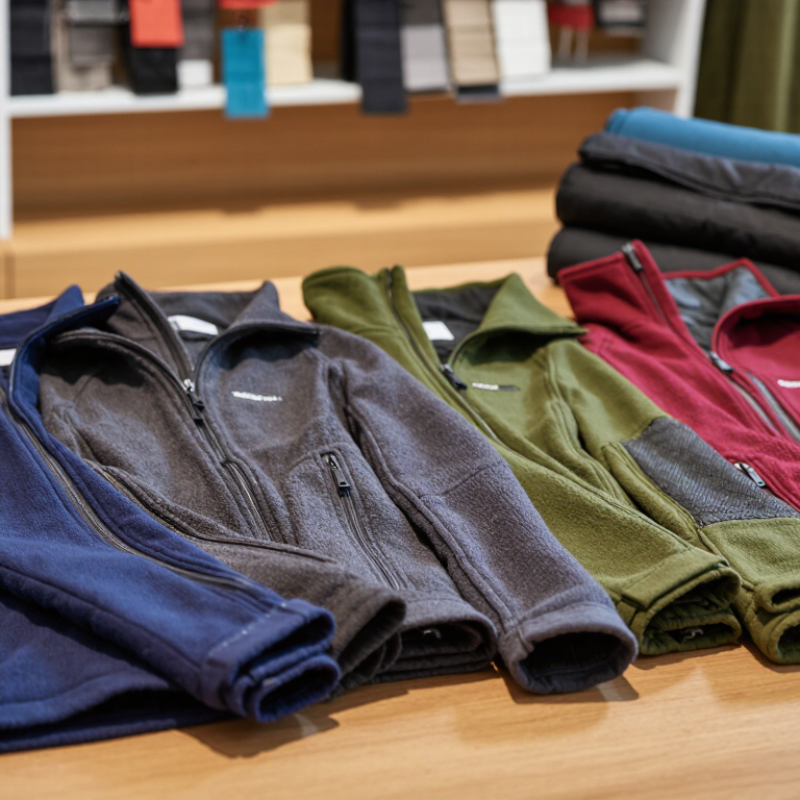
How to Source the Best Outdoor Fleece Jackets in 2026

Defining the Key Features of Outdoor Fleece Jackets

How to Source the Best Outdoor Fleece Jackets in 2026

Outdoor fleece jackets should balance warmth, weight, breathability, and durability. Outdoor Industry Association’s 2024 Outdoor Participation Trends Report recorded 175.8 million U.S. outdoor participants in 2023. This growth increases demand for dependable mid-layers, not simply softer fabrics. A useful fleece should dry quickly after light rain or heavy movement. Check fabric weight, commonly measured in grams per square meter. Higher weight can improve warmth, but it may reduce packability. That matters.

Fiber choice also deserves close inspection. Textile Exchange’s 2024 Materials Market Report states that polyester represented about 59% of global fiber production in 2023. Recycled polyester can reduce reliance on virgin resources, but recycled content alone does not prove responsible quality. Ask for chain-of-custody documents, fiber percentages, and production records. Details matter. Examine the fabric surface under bright light. Uneven loops may signal weak construction or early pilling.

Performance testing should guide sourcing decisions. ASTM D3512 can assess random tumble pilling, while ISO 11092 measures thermal and water-vapor resistance. Request test results from recent production lots, not only laboratory samples. Inspect zipper garages, cuff recovery, seam strength, and pocket placement by wearing a sample outdoors. A practical trial exposes problems quickly. I once trusted a high loft sample that compressed badly inside a small pack. It looked excellent on a table. It performed poorly on a trail. Procurement teams should record these failures, too. They often reveal more than polished product sheets.

Comparing Fleece Materials, Weights, and Performance Levels

Sourcing the best outdoor fleece in 2026 starts with fiber, not appearance. Textile Exchange’s Materials Market Report 2024 estimates polyester represented about 57% of global fiber production in 2023. This scale supports consistent supply, but it increases dependence on fossil-based feedstocks. It also raises fiber-shedding concerns. Recycled polyester supplied roughly 14% of polyester production, according to the same report. Ask suppliers for chain-of-custody records, not vague environmental claims. Not always easy.

Material choice changes comfort and field performance. Standard polyester fleece dries quickly and feels soft against a base layer. Grid fleece removes fabric through channels, reducing weight and improving moisture movement during steep climbs. High-loft fleece traps more air around the torso, but wind passes through without a protective shell. Merino-blend fleece can manage odor better, although it often dries slower and costs more. These trade-offs matter during wet, cold hours.

For practical sourcing, 100–150 gsm suits active, lightweight use. Midweight fleece usually falls between 200 and 250 gsm. Heavy fleece can exceed 300 gsm, adding warmth but increasing bulk and freight costs. The Outdoor Industry Association’s 2024 Participation Trends Report recorded 175.8 million U.S. outdoor participants in 2023. That broad market needs different performance levels, not one universal fabric. Test pilling, stretch recovery, and drying time after soaking a sleeve. I once favored softness too heavily; the fabric looked excellent, then compressed under a backpack. That mistake still deserves attention.

How to Source the Best Outdoor Fleece Jackets in 2026 - Comparing Fleece Materials, Weights, and Performance Levels

Fleece Material or Construction Typical Fiber Content Typical Fabric Weight Warmth Level Breathability Drying Speed Wind Resistance Abrasion Resistance Moisture Management Best Outdoor Use Key Sourcing Checks
Lightweight Microfleece 100% polyester, commonly with a brushed surface 100–180 g/m² Medium High Very fast Low Medium Low water absorption; moves moisture away from the skin when knitted correctly Active layering, hiking, running, travel, and mild-weather use Check pilling resistance, fabric recovery, seam quality, and whether the surface sheds fibers after washing
Midweight Classic Fleece 100% polyester or polyester with a small amount of elastane 180–280 g/m² High Medium to high Fast Low Good Retains warmth when slightly damp and generally absorbs little water General hiking, camping, workwear, and three-season outdoor jackets Verify GSM consistency, anti-pilling treatment, collar height, cuff construction, and zipper durability
Heavyweight Fleece 100% polyester with a dense knit and thick brushed pile 280–400 g/m² Very high Medium Moderate Low Good to very good Provides strong insulation but may feel warm during high-output activities Cold-weather casual wear, camp layers, belay jackets, and low-intensity activities Check packed volume, garment weight, pile density, seam bulk, and whether the fabric compresses permanently
Grid Fleece Polyester, sometimes blended with elastane for stretch 120–220 g/m² Medium to high Very high Very fast Low Medium Open grid channels reduce contact area and improve vapor movement Fast hiking, ski touring, climbing, cycling, and high-output layering Inspect grid integrity, stretch recovery, snag resistance, and the stability of the inner surface after laundering
High-Loft Fleece Polyester pile, often with a smooth or woven outer face 220–350 g/m² Very high Medium Moderate Low to medium Medium Traps substantial air for warmth but can hold more moisture than thin fleece Cold-weather jackets, relaxed outdoor wear, and stand-alone midlayers Measure loft before and after washing, test shedding, and assess pile recovery after compression
Bonded Fleece Fleece inner face bonded to jersey, knit, or woven outer fabric 250–450 g/m² High Low to medium Moderate Medium Good More structured and protective, but the bonding layer can reduce vapor transfer Commuting, light workwear, travel, and variable-weather casual use Test delamination, bubbling, edge stability, wash durability, and flexibility at elbows and shoulders
Stretch Fleece Polyester with approximately 5–15% elastane or mechanically stretchable construction 180–320 g/m² Medium to high Medium to high Fast Low Medium Good comfort and movement; elastane may retain more moisture than polyester alone Climbing, hiking, skiing, mobility-focused workwear, and active travel Check four-way stretch, recovery after repeated extension, elastane percentage, and seam elongation
Recycled-Polyester Fleece Recycled polyester, usually from post-consumer plastic waste 100–350 g/m² Depends on construction Depends on knit density Generally fast Low unless tightly woven or laminated Medium to high Performance is broadly comparable to conventional polyester when yarn and finishing quality are equivalent Lower-impact versions of most fleece jacket categories Request chain-of-custody documentation, recycled-content verification, pilling data, and fiber-shedding test results
Merino-Polyester Blend Fleece Typically 30–60% wool blended with polyester or nylon 180–320 g/m² High High Moderate to fast Low Medium Wool can buffer humidity and reduce odor buildup; drying is slower than polyester-only fleece Multi-day trekking, cool-weather travel, and odor-sensitive activities Confirm fiber percentages, shrinkage control, colorfastness, odor claims, and protection against moth damage
Fleece with Durable Water-Repellent Finish Usually polyester fleece with a water-repellent surface treatment 180–350 g/m² Medium to high Medium Moderate Low to medium Good Resists light drizzle and surface moisture but is not waterproof without a membrane or seam sealing Changeable shoulder-season weather and light precipitation Measure spray rating before and after laundering; verify finish chemistry, re-treatment instructions, and hand feel
Fleece-Lined Softshell Woven stretch face fabric with a fleece or brushed-back inner layer 280–500 g/m² High Medium Moderate Medium to high Very good Offers better weather protection than open fleece but can feel less breathable during intense exertion Hiking, outdoor work, commuting, and windy shoulder-season conditions Check hydrostatic resistance, air permeability, stretch recovery, face-fabric abrasion, and seam construction

Note: Fabric weight is shown in grams per square meter (g/m²). Performance varies with yarn type, knit density, brushing, finishing, garment design, and laundering. Fleece alone is generally not waterproof and provides limited wind protection unless combined with a tightly woven outer layer or membrane.

Evaluating Jacket Construction, Fit, and Weather Protection

Sourcing the best outdoor fleece jackets in 2026 starts with careful construction checks. In field inspections, I turn each jacket inside out and examine the seams. Flat stitching reduces rubbing under a backpack. Reinforced shoulder panels can also improve durability. Loose threads suggest rushed production. A dense fleece usually feels warmer, but fabric weight alone cannot prove performance. Ask for fiber details, recovery tests, and washing results. Real evidence matters.

Fit directly affects warmth, movement, and comfort. Try the jacket over the base layer you normally wear outdoors. Lift both arms. The hem should stay near your waist, while the cuffs should cover your wrists. A hood should turn with your head without blocking vision. Check pocket access while wearing gloves. Small details matter. I once chose a jacket with excellent fabric but narrow shoulders. It looked efficient on paper and felt restrictive on a climb.

Weather protection requires realistic evaluation. Fleece resists light wind poorly unless it includes a tighter outer face or a wind-resistant layer. Test the surface with a gentle spray, then inspect whether moisture beads or quickly soaks in. This is not a full rain test. Zipper guards, adjustable hems, and close-fitting cuffs help preserve warmth during gusts. Breathability also deserves attention, especially during steep ascents. A jacket that traps sweat can feel colder later. Specifications help, but hands-on testing reveals weaknesses that product sheets often miss.

This sourcing benchmark scores outdoor fleece jackets on a 0–100 scale. Construction emphasizes fabric durability and seam quality, fit reflects mobility and layering room, and weather protection considers wind resistance, moisture management, and surface water repellency.

Assessing Suppliers, Certifications, and Production Standards

Sourcing outdoor fleece jackets in 2026 requires more than comparing factory prices. Supplier evaluation should begin with traceable evidence. Request current ISO 9001 or ISO 14001 certificates, audit dates, production scopes, and corrective-action records. A certificate is evidence, not proof. Verify it directly with the issuing body.

Textile Exchange’s 2024 Materials Market Report recorded 124 million tonnes of global fiber production in 2023. Polyester represented about 57% of that volume. This makes recycled polyester a practical sourcing option, but claims need documentation. For recycled fleece, check Global Recycled Standard transaction certificates and chain-of-custody records. Ask for fabric test reports covering pilling, abrasion, colorfastness, shrinkage, and thermal performance.

Inspect sample seams under bright light. Small defects often appear there first. Laboratory results can still miss factory-floor inconsistency.

Tips: Compare three suppliers using the same specification sheet. Request a pilot run before bulk production. Confirm fabric weight after washing, not only before washing. Check chemical testing against the destination market’s requirements. Also ask how rejected rolls are handled. This question is often overlooked. Supplier scores should include lead time, defect rate, worker safety records, and response quality. Cost matters, but the cheapest quote may hide unstable materials or weak inspection controls. My own sourcing view is cautious: even a well-documented supplier deserves repeated review, because production teams, mills, and subcontractors can change.

Selecting the Best Sourcing Strategy for 2026 Needs

How to Source the Best Outdoor Fleece Jackets in 2026

Selecting the right sourcing strategy matters more than chasing the lowest unit price. For small seasonal orders, a qualified sourcing agent may reduce communication gaps and inspection costs. Larger buyers can work directly with factories, gaining better control over fabric weight, fit, and production schedules. A dual-source plan is safer when weather-driven demand changes quickly.

Request samples in at least two fleece weights, such as 200 and 300 GSM. Check warmth, stretch recovery, pilling, zipper movement, and seam strength after washing. Ask suppliers for recent test reports, fiber-content records, factory audit details, and clear minimum order quantities. I have seen attractive samples fail after repeated washing, usually because the finishing process was rushed. That mistake is easy to miss.

Tips: Compare landed cost, not just the factory price. Include freight, duties, inspections, packaging, and possible rework. Keep one approved sample with dated measurements. Require written tolerance limits for sleeve length, chest width, and color. A small pre-production batch can reveal problems before a full order, although it may increase the initial cost. Do not trust perfect promises. Verify them with records and physical checks.

FAQS

What makes a good outdoor fleece jacket?

It should balance warmth, weight, breathability, and durability. A quick-drying fabric helps after sweat or light rain. Higher fabric weight adds warmth but reduces packability. That matters.

Which fabric details should buyers inspect?

Request fiber percentages and production records. Recycled fibers may reduce virgin resource use, but they do not guarantee quality. Inspect the surface under bright light. Uneven loops can suggest weak construction or early pilling.

How can fleece performance be tested?

Request recent test results from actual production lots. Check pilling, thermal resistance, water-vapor resistance, seam strength, and zipper function. Do not rely only on laboratory samples. Real wear reveals more.

What construction details improve jacket durability?

Turn the jacket inside out and examine every seam. Flat stitching can reduce rubbing under backpack straps. Reinforced shoulders may handle repeated pressure better. Loose threads suggest rushed production.

How should buyers check the jacket’s fit?

Wear the jacket over a normal outdoor base layer. Lift both arms and check whether the hem stays near your waist. Cuffs should cover your wrists without restricting movement. Try the pockets with gloves.

Does fleece provide enough weather protection?

Standard fleece usually resists wind poorly. A tighter outer face or wind-resistant layer can improve protection. Test the surface with a gentle spray. This is not a full rain test.

Which samples should sourcing teams request?

Request at least two fabric weights, such as 200 and 300 GSM. Compare warmth, stretch recovery, pilling, zipper movement, and seam strength after washing. Keep one approved sample with dated measurements. Small differences become expensive later.

How can buyers reduce sourcing risks?

Compare total landed cost, including freight, duties, inspections, packaging, and rework. Use written tolerances for sleeve length, chest width, and color. A small pre-production batch can expose defects early. It may cost more initially. Perfect promises need verification.

Conclusion

Sourcing the right Fleece Jacket Outdoor in 2026 begins with defining the features required for each use case, including warmth, breathability, softness, durability, stretch, pocket design, and ease of care. Buyers should compare fleece materials, fabric weights, surface finishes, and performance levels to determine whether a jacket is best suited for lightweight layering, active outdoor use, or colder conditions. Construction quality also matters, from seam strength and zipper performance to pattern design, fit, mobility, and protection against wind or light moisture.

A reliable sourcing process should include careful supplier evaluation, production capability checks, sample testing, and verification of relevant certifications and manufacturing standards. Buyers can then select a sourcing strategy based on order volume, customization needs, target pricing, lead times, and quality-control requirements. By balancing product performance, responsible production, supplier reliability, and market demand, businesses can build a practical 2026 sourcing plan that delivers consistent outdoor fleece jackets and supports long-term product value.

Isabella

Isabella

Isabella is a dedicated marketing professional with a sharp focus on driving brand growth and engagement through strategic content creation. With an extensive background in digital marketing, she combines her passion for storytelling with her keen understanding of industry trends to deliver......