Explore our certified cold-climate apparel lines engineered for global OEM and ODM distribution.
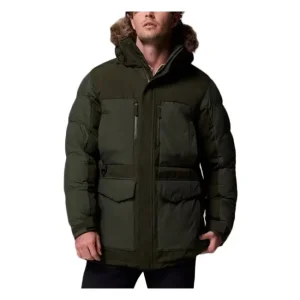
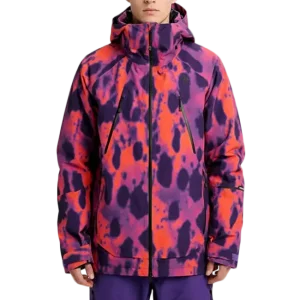
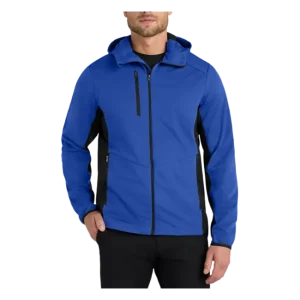
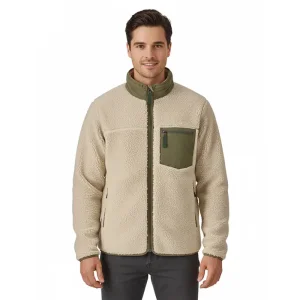
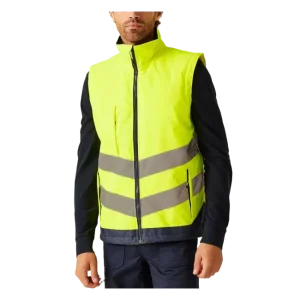
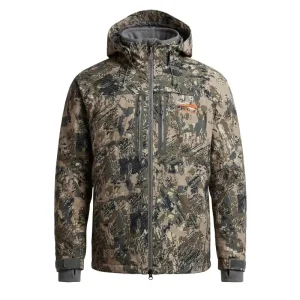
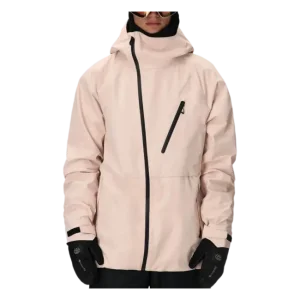
The global market for technical outdoor apparel and professional cold-weather outerwear is undergoing a structural transformation. Driven by stringent European environmental standards, expanding occupational safety directives, and escalating consumer demand for extreme-weather performance, global procurement teams can no longer rely on conventional cut-and-sew apparel factories. Today's commercial success demands manufacturing partners capable of delivering CE Certification under the EU Personal Protective Equipment (PPE) Regulation (EU) 2016/425 alongside verifiable supply chain sustainability.
Within the European Single Market and adjacent global regions, thermal protective garments used in professional, industrial, or high-risk alpine environments fall under specific Harmonised European Standards. Navigating the compliance landscape requires an intricate understanding of mechanical performance, thermal insulation coefficients, and down plume integrity.
Specifies requirements and test methods for performance thermal ensembles (jackets and trousers) designed to protect against environments below -5°C. Evaluates effective thermal insulation ($I_{cler}$), air permeability ($AP$), and water penetration resistance ($WP$).
Governs protective garments worn in moderate cold environments (-5°C and above). Measures thermal resistance ($R_{ct}$), air permeability, and optional water penetration resistance to ensure microclimatic comfort during active physical exertion.
Classifies technical industrial down jackets into Category II risk levels. Mandates rigorous Type-Examination certification by an accredited EU Notified Body, ensuring factory production control (Module C2 or D) compliance.
To assist brand directors and sourcing specialists in technical auditing, the table below outlines the requisite laboratory performance benchmarks for CE-marked down outerwear:
| Performance Parameter | Test Standard | Commercial Benchmark | Technical Impact & Significance |
|---|---|---|---|
| Thermal Insulation ($I_{cler}$) | EN 342 / ISO 15831 | $\ge 0.310 \text{ m}^2\cdot\text{K/W}$ | Prevents hypothermia under stationary exposure to extreme sub-zero conditions (-20°C to -40°C). |
| Hydrostatic Head (Waterproofness) | ISO 811 / JIS L1092 | $\ge 15,000 \text{ mm H}_2\text{O}$ | Ensures complete liquid barrier protection during heavy rain or melting snow exposure. |
| Water Vapor Permeability (MVTR) | JIS L1099 B1 / ISO 11092 | $\ge 10,000 \text{ g/m}^2/\text{24h}$ | Prevents internal condensation build-up and chilling during active physical labor. |
| Down Penetration Resistance | BS 12132-1 / EN 12132 | $\le 5 \text{ plumes / 100cm}^2$ | Evaluates down-proof membrane coating and needle thread seal to stop fill migration. |
| Air Permeability Class | EN 342 (Clause 4.3) | Class 1 to Class 3 ($< 5 \text{ mm/s}$) | Determines windproof efficiency; critical for preserving thermal microclimate in arctic winds. |
Combining modern industrial automation with stringent CE quality assurance systems.
The thermal efficiency of a CE-certified down jacket relies on two key factors: Down Loft Stability and Shell Membrane Integrity. Down feathers function by trapping still air inside complex microscopic filaments. However, moisture ingress or down migration through stitch holes can drastically reduce thermal protection. Modern OEM/ODM factories address these issues using advanced structural engineering.
Traditional needle stitching pierces both the outer shell and down-proof lining, creating thousands of micro-holes through which cold air enters and down escapes. Modern high-frequency ultrasonic heat welding bonds the fabric layers directly. This creates completely stitch-free baffle channels that eliminate cold spots, boost wind resistance, and enhance down-proofing.
Constructed by bonding an outer face fabric (e.g., 50D/70D Recycled Ripstop Nylon), a waterproof/breathable hydrophilic membrane (TPU/ePTFE), and an inner protective mesh or tricot lining into a single integrated layer. This setup ensures maximum abrasion resistance, prevents delamination under sub-zero flex tests, and delivers superior weatherproof durability.
Every lot of down fill processed in our partner facilities is certified under the Responsible Down Standard (RDS), verifying ethical animal welfare practices from farm to final garment. Outer shells use Global Recycled Standard (GRS) certified post-consumer recycled polyester and nylon with PFC-free DWR treatments.
Achieving CE compliance requires strict process management at every stage of manufacturing. Below is our standard six-stage OEM/ODM quality control workflow:
Hydrostatic testing, down cleanliness ($>450\text{mm}$), fill power verification, and OEKO-TEX Standard 100 chemical testing on all incoming trim lots.
3D CLO digital fit modeling to calculate precise seam allowance, thermal expansion factors for down fill, and mechanical stretch tolerance.
Fully automated, air-driven micro-weighing down filling machines ensure weight accuracy within $\pm 0.1\text{g}$ per chamber, preventing thermal voids.
Application of 13mm–22mm hot-melt waterproof tape across all needle seams using continuous hot-air welding equipment at controlled temperature profiles.
CE-certified outdoor down jackets serve diverse operational needs across global commercial, industrial, and consumer markets.
Environment: North Sea platforms, Northern European transport corridors, Greenlandic mineral exploration.
Technical Configuration: Heavy-duty 3L nylon face fabric with an EN 342 Class 3 rating, 800 FP goose down fill, extended drop-tail hem, heavy-duty 2-way YKK Vislon AquaGuard zippers, and integrated internal face guards.
Environment: Alpine ski rescue teams, lift operators, high-altitude commercial guiding enterprises in the Alps & Rockies.
Technical Configuration: Articulated raglan sleeve construction, RECCO® passive rescue reflectors, helmet-compatible three-way adjustable storm hood, and high-visibility reflective elements adhering to EN ISO 20471 / EN 14058.
Environment: High-end outdoor retail chains across Western Europe, North America, and East Asia.
Technical Configuration: Matte-finish recycled 20D nylon face, welded stitchless baffle geometries, PFC-free fluorocarbon-free DWR, lightweight packability, and tailored ergonomic blocks.
As regulatory frameworks like the EU Ecodesign for Sustainable Products Regulation (ESPR) take effect, the technical apparel manufacturing industry must evolve rapidly. Key advancements driving our production technology roadmap include:
Integrating monolayer graphene nanostructures into down jacket lining fabrics increases heat retention by up to 30%, promotes even heat distribution, and provides permanent anti-static and anti-bacterial protection.
Engineering garments made entirely from a single material family (e.g., 100% Polyester face, membrane, thread, and zippers). This design approach allows end-of-life down jackets to be mechanically recycled without tedious disassembling.
Integrating low-voltage flexible carbon-wire heating elements with intelligent micro-thermostats. Powered by compact power banks, these systems provide customized warmth in extreme conditions while complying with CE Low Voltage Directive standards.
Key technical considerations regarding CE certification, OEM/ODM terms, and manufacturing lead times.
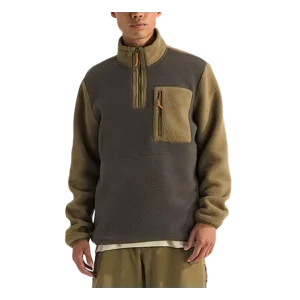
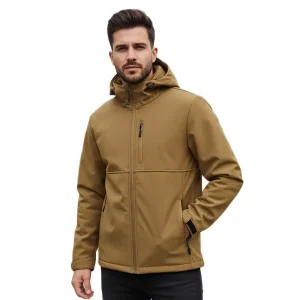
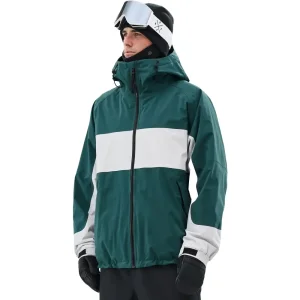
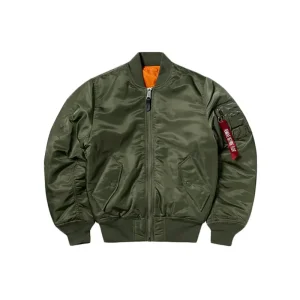
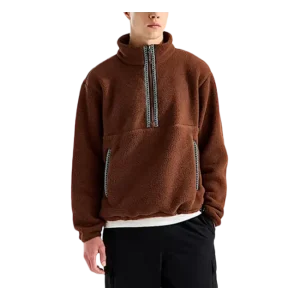
Complete your seasonal procurement with our comprehensive range of specialized softshells, pullovers, and extreme cold-weather parkas.
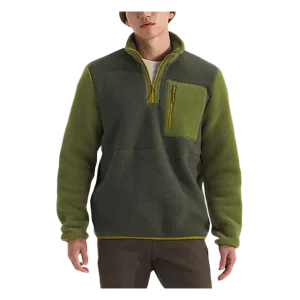
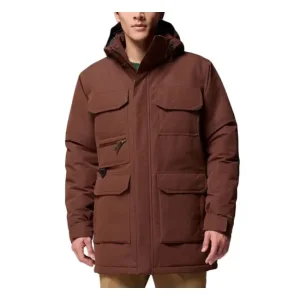
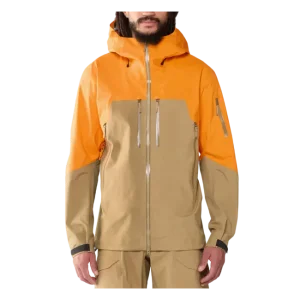
Submit your tech packs, target price points, or compliance criteria. Our senior engineering team provides comprehensive feasibility reviews, material cost estimations, and lab sample dispatch within 24 hours.