Precision-engineered technical shells, alpine ski wear, and thermal insulation gear built to international safety standards for commercial and industrial supply chains.
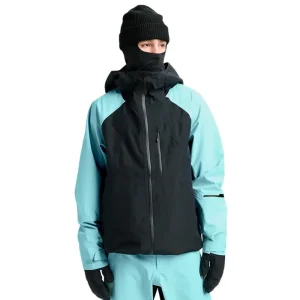
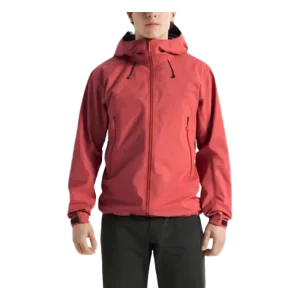
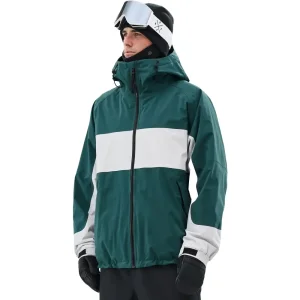
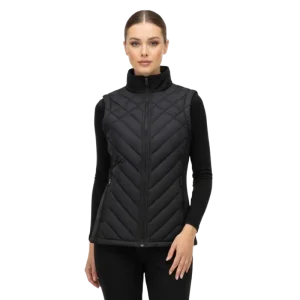
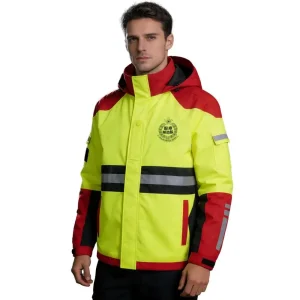
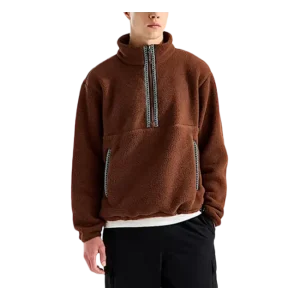
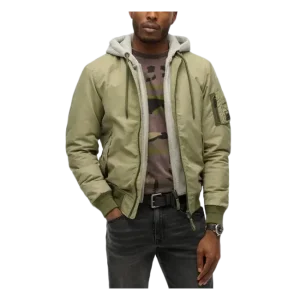
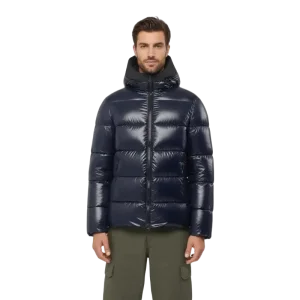
Analyzing the global procurement shift toward standardized CE-certified survival outerwear across military, search-and-rescue, commercial offshore, and premium technical outdoor sectors.
In modern industrial procurement, the sourcing of high-performance outdoor survival apparel has evolved from simple bulk garment manufacturing into a highly technical engineering discipline. Commercial enterprises, professional rescue squads, offshore energy operators, and high-end outerwear brands require verifiable performance metrics backed by European Conformity (CE) certifications under Personal Protective Equipment (PPE) Regulation (EU) 2016/425.
Global demand is driven by three distinct macro-economic pillars:
| Buyer Category | Primary Technical Requirement | CE & ISO Benchmark | Material Architecture | Quality Check Threshold |
|---|---|---|---|---|
| Alpine & Expedition Brands | Extreme Breathability & Waterproofing | EN 343 Class 4:4 | 3-Layer Nylon 6,6 / ePTFE Membrane | Hydrostatic Head >20,000mm H2O |
| Industrial Maritime & Energy | Thermal Immersion & Flame Resistance | ISO 15027-1 / EN 342 | Nomex Outer / Closed-cell Buoyant Foam | Thermal Insulation (ICL) >0.310 m²K/W |
| Emergency & Rescue Fleet | High Visibility & Mechanical Abrasion | EN ISO 20471 Class 3 | High-Tenacity Cordura® 500D Panels | Retro-Reflector Wash Life >50 Cycles |
| Tactical & Polar Operators | Sub-Zero Extreme Thermal Retention | EN 342 Temperature -40°C | 800+ Fill Power RDS Goose Down / Micro-loft | Stitch Leakage ≤0.1 Down Fluff/dm² |
Navigating the rigorous testing protocols mandated by Notified Bodies to ensure global market compliance and verifiable wearer protection.
Classifies garments by waterproofness (Water Penetration Resistance, Wp) and water vapor resistance (Ret). Class 4:4 represents the highest engineering threshold, requiring waterproof ratings exceeding 13,000 Pa after pre-treatment, flexing, and fuel/oil exposure testing.
Specifies performance requirements for garments designed to prevent hypothermia in environments down to -40°C. Measures thermal insulation parameters (Icle), air permeability (Class 1 to 3), and liquid water penetration resistance under controlled wind-tunnel environments.
Mandated for emergency survival jackets used in low-light industrial environments. Sets strict spatial surface area ratios for fluorescent yellow, orange-red, or red background fabrics paired with micro-prismatic retro-reflective tape certified for 50+ wash cycles.
A true CE marking is backed by an official Type-Examination Certificate issued by an accredited European Notified Body (such as SGS, Intertek, TUV, or Centexbel). Industrial survival jacket suppliers must maintain continuous factory production control (FPC) to guarantee that every batch matches the certified laboratory prototype.
Deconstructing the multi-layered textile engineering, membrane chemistry, and thermal baffle construction behind professional-grade protective jackets.
Our flagship survival jackets employ a tri-laminate composite structure. The outer shell consists of high-tenacity Nylon 6,6 treated with C0 DWR. The middle layer houses an expanded Polytetrafluoroethylene (ePTFE) or bio-based hydrophilic Polyurethane (TPU) membrane containing 1.4 billion micropores per square centimeter. The inner layer utilizes a lightweight tricot mesh that shields the membrane from body oils, salt, and abrasion.
To balance weight and thermal resistance, we combine 800+ Fill Power Responsible Down Standard (RDS) goose down with hydrophobic synthetic micro-matrix insulation (PrimaLoft® Gold equivalent). Down baffles are positioned along core organs for maximum heat retention, while quick-drying synthetic insulation lines high-moisture zones such as cuffs, underarms, and storm hoods.
Traditional needle punctures introduce water entry points. Our automated lines utilize ultrasonic bonding to fuse fabric edges, followed by hot-air application of 3-ply micro-seam tape (13mm to 22mm width). This guarantees 100% waterproof integrity even across complex 4-way seam junctions and articulated elbow joints.
Survival outerwear incorporates active and passive location accessories. Built-in RECCO® Advanced Rescue Technology transponders reflect directional radar signals from search helicopters. Furthermore, heavy-duty YKK AquaGuard® water-repellent zippers and integrated internal harness anchor loops allow rapid emergency extraction.
How our Foshan manufacturing facility translates complex buyer technical packages into defect-free, batch-consistent outerwear orders.
Translating client tech packs into 3D CLO digital simulations. Computer-optimized marker planning achieves over 88% fabric utilization yield, minimizing waste on expensive membrane textiles.
Multi-ply computerized laser cutting tables slice technical shell fabrics with 0.1mm tolerance. Sealed laser edges eliminate fabric fraying along critical stress zones prior to stitching.
Fully automated, enclosed down-filling chambers weigh down to 0.01g precision per baffle panel. Sealed vacuum lines prevent down feather leakage and maintain uniform loft distribution across the garment.
JIT production lines equipped with German-engineered Adler and Juki sewing machines. Seamlessly integrated with hot-air seam-sealing equipment operating at controlled speed, heat, and pneumatic pressure.
Every 2 hours, randomly selected in-line garment assemblies undergo hydrostatic water column pressure tests (ISO 811) and zip pull-strength fatigue testing (EN 16732) directly on the shop floor.
Final 100% visual and functional inspection under shadowless lighting. Verified against ISO 2859-1 sampling plans before moisture-wicking polybag packaging and carton sealing.
Providing enterprise clients with fully transparent, auditable, and resilient international supply chain solutions from China to major world markets.
With strict regulations banning Per- and Polyfluoroalkyl Substances (PFAS) taking effect across Europe (REACH Annex XVII) and North America (California AB 1817), our raw material supply chain has fully transitioned to bio-based C0 water repellent chemistry, tested to maintain 80-point spray ratings after 20 wash cycles (ISO 4920).
In compliance with upcoming EU Ecodesign for Sustainable Products Regulation (ESPR), we provide batch-specific digital documentation. Every jacket batch includes QR-coded serial traceability detailing fabric origin certificates, Global Recycled Standard (GRS) transaction papers, and OEKO-TEX® Standard 100 toxicological test reports.
Our export department offers flexible shipping terms, including FOB Shenzhen/Guangzhou, CIF, and complete Delivered Duty Paid (DDP) solutions for European and North American destinations. We handle customs classification (HS Code 6201.93 / 6201.40), Certificate of Origin (Form E, Form R) issuance, and import tax clearance.
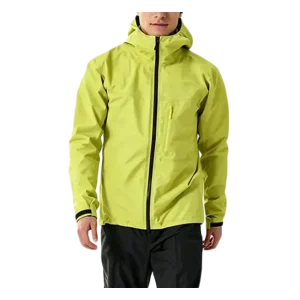
Explore our expanded range of polar grade parkas, quick-dry emergency layers, and high-performance custom shell jackets.
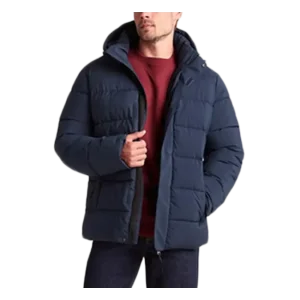
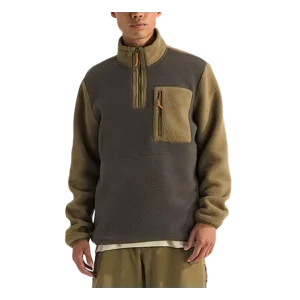
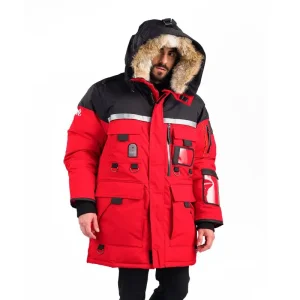
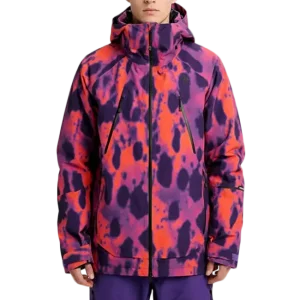
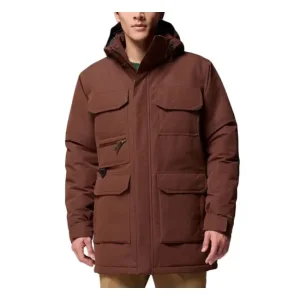
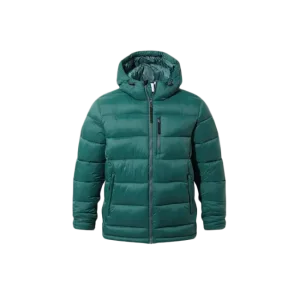
Detailed answers to critical questions asked by global supply chain managers, brand directors, and technical specification officers.
Authentic CE certification for Category II and III Personal Protective Equipment (PPE) requires a official Type-Examination Certificate issued by a recognized European Notified Body (such as SGS Fimko 0598, SATRA 0321, or Centexbel 0493). Every certificate provided by Guangdong Ruiniu Garment Manufacturing Co., Ltd. contains a unique verification number that can be cross-checked directly in the Notified Body's public database.
Furthermore, our technical packages include full laboratory test reports for EN 343 (waterproofness/breathability), EN 342 (cold insulation), and EN ISO 20471 (high visibility). We welcome third-party pre-shipment audits conducted by Intertek, Bureau Veritas, or QIMA to verify factory production control (FPC) consistency.
Our baseline standard MOQ is 100 pieces per style, which can be flexibly allocated across multiple colorways and a full size gradient (S to 5XL). For emerging technical outerwear labels or specialized emergency fleet test orders, we offer 50-piece pilot development runs on selected in-stock 3L laminate fabrics.
Production timelines are managed under strict JIT scheduling:
Down leakage and seam seam penetration are engineered out of our products through a multi-tier structural approach:
1. Down-Proof Down Containment: We utilize high-density 20D/40D down-proof nylon inner linings coated with air-impermeable cire finishes. Down channels are filled using automated vacuum stations calibrated to ±0.01g, eliminating stray down fibers in sewing margins.
2. Needle & Thread Optimization: Sewing lines employ ultra-fine German Groz-Beckert SAN® 6 anti-friction needles paired with hydrophobic expansion threads. Micro-stitches are set at a tight 12 to 14 stitches per inch (SPI).
3. Hot-Air 3-Ply Seam Taping: All stitch lines are sealed with 3-ply polyurethane seam tapes applied under controlled temperatures (380°C - 420°C) and continuous pneumatic roller pressure, exceeding 20,000mm hydrostatic head burst resistance.
Yes. In response to global chemical restrictions (REACH Annex XVII, EU POP Regulation, and California AB 1817), 100% of our active fabric matrix offers PFAS-free C0 durable water repellent (DWR) options. We work with leading bluesign® approved chemical suppliers like Rudolf Bionic-Finish® ECO and Huntsman Teflon EcoElite™.
All finished C0 DWR survival jackets are certified to maintain a Spray Rating of Class 4 or 5 (ISO 4920) before washing and maintain Class 4 performance after 20 domestic laundry cycles at 40°C, satisfying both ecological compliance and extreme field performance requirements.
As a specialized technical outerwear manufacturer, our customization services extend far beyond simple logo application. We offer full ODM pattern engineering to incorporate specialized functional hardware: