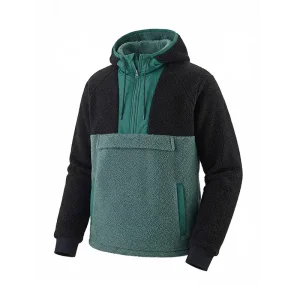
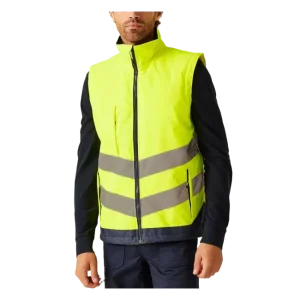
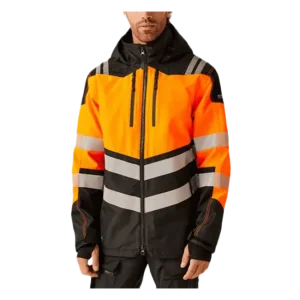
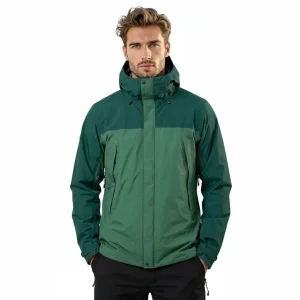
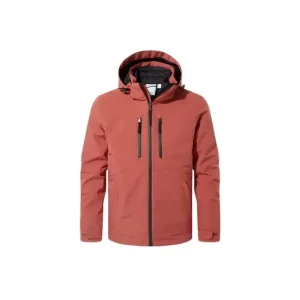
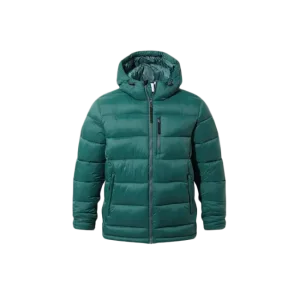
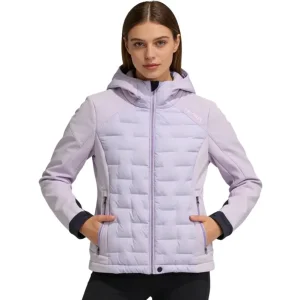
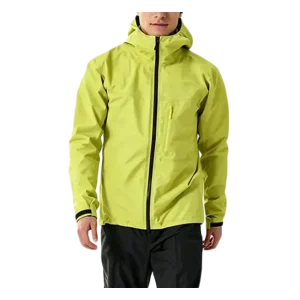
Explore our export-ready production lines engineered for alpine environments, high-visibility safety, and heavy-duty winter utility.
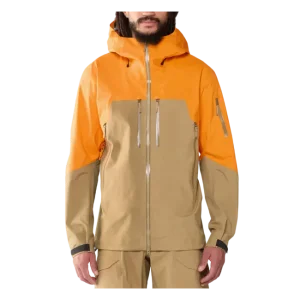
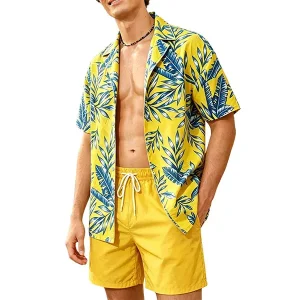
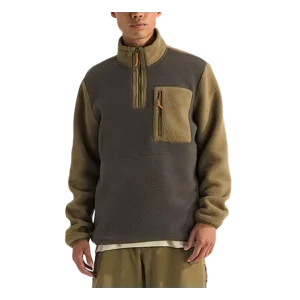
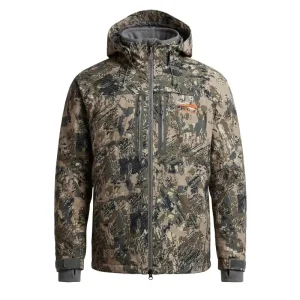
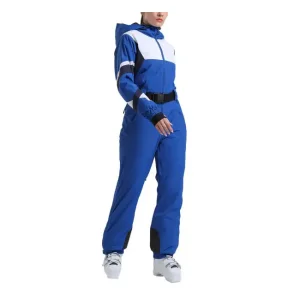
Analyzing market trajectory, membrane technological shifts, and strategic procurement evolution for international outdoor equipment brands.
The global market for technical mountaineering rain jackets is experiencing a paradigm shift driven by extreme weather volatility, expanding participation in high-altitude alpine sports, and stringent environmental regulations regarding fluorinated chemicals. Modern consumers and commercial enterprise buyers no longer view a mountaineering rain shell merely as basic rainwear; it is evaluated as an essential, life-preserving piece of alpine survival apparatus. Technical shells must deliver uncompromised Hydrostatic Head (HH) ratings exceeding 20,000mm H₂O while preserving a Moisture Vapor Transmission Rate (MVTR) above 20,000 g/m²/24h.
From a global commercial standpoint, the outdoor outerwear industry is transitioning away from standard 2-layer or 2.5-layer entry-level raincoats toward fully bonded 3-Layer (3L) hardshell constructions. Professional expedition outfits, tactical teams, and outdoor equipment retailers are demanding higher durability thresholds—specifically targeting elevated tear strength, abrasion resistance against heavy pack straps (measured via Martindale rub tests exceeding 50,000 cycles), and complete zero-leakage seam integrity under continuous storm conditions. Procurement directors in Europe, North America, and East Asia are consequently restructuring their supply chains to align with specialized original equipment manufacturers (OEMs) and original design manufacturers (ODMs) who possess advanced lamination science and micro-seam sealing technology.
Furthermore, regulatory changes across North America (such as California AB 1817) and European Union REACH mandates are accelerating the global phase-out of Per- and Polyfluoroalkyl Substances (PFAS). This requires a complete overhaul of durable water repellent (DWR) surface chemistry and membrane lamination techniques. China's leading mountaineering apparel manufacturing hubs have emerged at the forefront of this green transition, investing heavily in C0 (PFC-free) hydrophobic surface treatments combined with non-porous polyether-ester or expanded polyolefin (ePO) microporous membranes.
Detailed breakdown of structural lamination, membrane thermodynamics, and seam bonding mechanics engineered at our Guangdong production facility.
Constructed from 40D to 70D high-density Nylon 6,6 Ripstop or Recycled Polyester yarns. Engineered to withstand sharp rock face contact, heavy crampon scrapes, and ice axe friction without snagging or delaminating under stress.
Utilizing high-performance ePTFE or bio-based polyurethane membranes featuring billions of microscopic pores per square centimeter. Micro-pores are 20,000 times smaller than a water droplet, yet 700 times larger than a water vapor molecule.
Ultra-lightweight 7D to 15D knitted circular tricot or solution-dyed grid backer. Protects the delicate waterproof membrane from internal abrasion, sweat lipids, and body acid degradation while enhancing next-to-skin comfort.
| Performance Metric | Testing Standard | Professional Alpine Tier | Standard Trekking Tier |
|---|---|---|---|
| Hydrostatic Head (Waterproofness) | ISO 811 / JIS L1092 B | ≥ 20,000 mm to 28,000 mm H₂O | ≥ 10,000 mm to 15,000 mm H₂O |
| Breathability (MVTR) | JIS L1099 B-1 (Inverted Cup) | ≥ 20,000 g/m²/24h | ≥ 10,000 g/m²/24h |
| Evaporative Resistance (RET) | ISO 11092 / EN 31092 | RET < 4.5 (Extremely Breathable) | RET < 9.0 (Good Breathability) |
| Durable Water Repellency (DWR) | AATCC 22 Spray Test | 90 Points after 20 Heavy Wash Cycles | 80 Points after 10 Standard Wash Cycles |
| Seam Tape Adhesion Strength | ASTM D751 Seam Peel Test | ≥ 12 N / 25mm Width | ≥ 8.5 N / 25mm Width |
A critical engineering differentiator of our China manufacturing facility lies in our precision application of 13mm micro-seam sealing tape compared to standard 22mm industry tape. By reducing seam tape width by 40%, we decrease garment weight by up to 15%, enhance fabric pliability in extreme cold temperatures (-30°C), and maximize the total active surface area available for moisture vapor transfer.
Unmatched supply chain integration, automated garment construction technologies, and strict quality control rigor from Guangdong, China.
Located in the heart of Guangdong's textile hub, our factory operates within a 50-kilometer radius of specialized weave mills, membrane laminators, waterproof zipper suppliers (YKK, SBS), and certified trim makers. This proximity slashes material lead times by up to 25 days.
We deploy computer-controlled laser cutters, automated pattern nesting software achieving >88% marker efficiency, ultrasonic seam welding apparatus, and dual-heat hydraulic seam-sealing machinery to eliminate human margin of error during bulk runs.
Unlike rigid traditional suppliers, our flexible modular assembly lines allow us to support emerging technical brands with flexible Minimum Order Quantities starting at 100 pieces per style while maintaining an annual output capacity of over 600,000 garments.
The efficiency of a modern Chinese technical garment factory is defined not merely by labor capacity, but by real-time quality control integration. At our Foshan facility, every single batch of incoming laminated fabric undergoes a 4-Point System fabric inspection alongside hydrostatic pressure testing before cutting begins. During assembly, semi-finished shells undergo mid-line hot-air seam-seal testing at 0.2 MPa air pressure to guarantee zero pinhole defects before final trimming.
Tailoring technical garment features to match extreme real-world environmental exposure across global regions.
Environment: Sub-zero temperatures, gale-force winds, heavy snowstorms, extreme ultraviolet radiation.
Architectural Focus: Helmet-compatible 3-way adjustable storm hood with wire-brim stiffeners, oversized glove-friendly zipper pulls, RECCO® passive rescue reflectors, and drop-tail hem protection.
Environment: Tropical downpours, sustained high temperatures, dense vegetation friction.
Architectural Focus: Extended two-way underarm pit zips with mesh-free backing for maximum cross-ventilation, ultra-breathable RET < 3.5 membranes, and abrasion-resistant CORDURA® shoulder reinforcement panels.
Environment: Deep powder snow, repetitive climbing thermal exertion, high-speed descents.
Architectural Focus: Integrated stretch powder skirt with jacket-to-pant attachment loops, internal goggle mesh stash pocket, pass pocket on lower left sleeve, and laser-cut chin guard breath holes.
Environment: Industrial outdoor operations, search-and-rescue (SAR), tactical field enforcement.
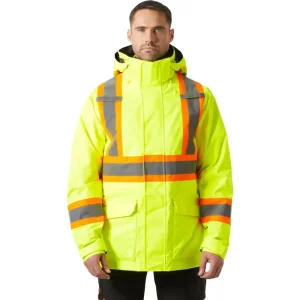
Architectural Focus: Matte non-reflective muted color palettes or EN ISO 20471 high-visibility fluorescent yellow/orange options, velcro arm patch areas, radio clip loops, and reinforced triple-needle side seams.
Aligning technical performance with European Union Green Deal mandates and global eco-responsible sourcing standards.
The global outdoor industry is undergoing its most significant material transformational period in thirty years. As regulatory authorities worldwide enforce prohibitions against long-chain (C8) and short-chain (C6) perfluorinated compounds, the demand for true PFAS-Free (C0 DWR) high-performance hardshells has shifted from an eco-friendly option to an absolute legal requirement for importing into North American and European markets.
Our manufacturing complex has proactively overhauled its lamination partner network to offer fully certified eco-friendly fabric configurations:
100% Recycled Polyester (rPET) face fabrics paired with non-porous Polyester membranes and rPET backing tricot. This allows the entire jacket to be recycled mechanically at end-of-life without complex material separation.
Advanced silicone, plant-based, and hydrocarbon polymer DWR chemistry that achieves Grade 4 water repellency (AATCC 22) while remaining completely free of fluorinated carbon chains.
Complete traceability backed by bluesign® System Accreditation, OEKO-TEX® Standard 100 certification, and Global Recycled Standard (GRS) Transaction Certificates for every production batch.
Essential checklist for brand directors, procurement managers, and technical apparel developers during factory audits.
When selecting a China mountaineering rain jacket factory, professional procurement teams must look beyond initial FOB price quotes. The structural complexity of a seam-sealed hardshell leaves zero room for manufacturing errors. A single missed needle puncture or uncalibrated heat-sealing temperature will lead to garment failure in the field and costly brand recalls.
Expert insights answering common technical, commercial, and logistical queries from international outdoor buyers.
A 2.5-Layer jacket consists of an outer face fabric bonded to a waterproof membrane, with a printed protective coating ("half layer") applied over the interior membrane side. It is lightweight and packable, but offers limited durability under heavy backpack abrasion. A 3-Layer (3L) jacket physically laminates three distinct layers together: a durable outer face fabric, the waterproof microporous membrane core, and an interior protective tricot or mesh backing. 3L constructions deliver superior hydrostatic protection, extreme cold resistance, and enhanced durability necessary for serious alpine climbing and mountaineering.
Our standard production MOQ is 100 pieces per style, which can be split across multiple colorways and a full size run (XS to 3XL). For specialized startup development programs or pilot market testing, we also support 50-piece low-MOQ trial runs utilizing our stock technical fabric program.
We enforce a rigorous 3-tier waterproofing protocol: First, every roll of incoming laminated fabric is tested for hydrostatic head under ISO 811. Second, during inline production, operators conduct hourly water column pressure checks at 0.2 MPa on heat-sealed seams using computerized Suter testers. Third, prior to final packing, 100% of garments undergo visual and tactile inspection by our dedicated QC audit team to ensure zero tape lifting, pinholes, or edge channel leaks.
Prototype and fit sample creation requires approximately 7 to 10 working days following tech pack approval. Bulk production lead times generally range between 30 to 45 days after Pre-Production (PP) sample sign-off and lab dip confirmation, depending on custom fabric lamination and specialized trim delivery schedules.
Yes. 100% of our new development programs can be manufactured using certified C0 (PFC-free) DWR treatments combined with fluorine-free polyurethane or polyolefin membranes. We supply complete transaction certificates proving compliance with California AB 1817 and European Union REACH regulations.
Absolutely. Our experienced ODM design team utilizes 3D CLO digital garment software to transform your sketches, mood boards, or reference samples into fully graded digital patterns, accurate Tech Packs, and Bill of Materials (BOM) cost calculations in less than 5 business days.
From insulated winter parkas and softshells to multi-layer workwear systems tailored to your brand specifications.