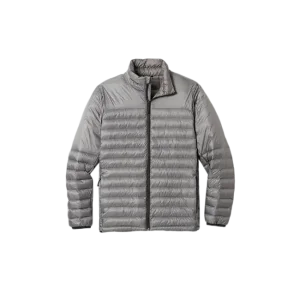
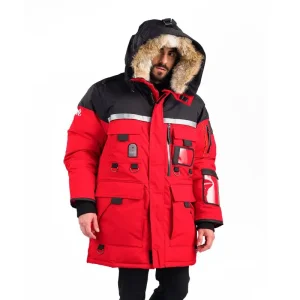
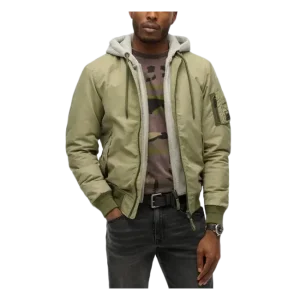
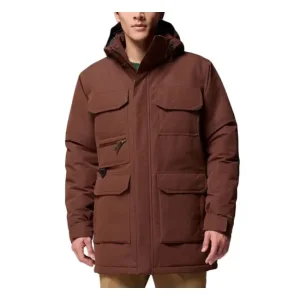
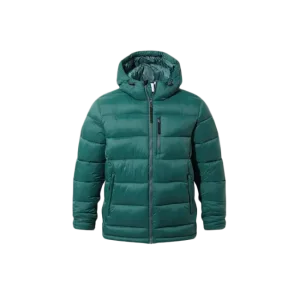
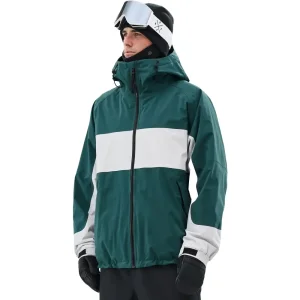
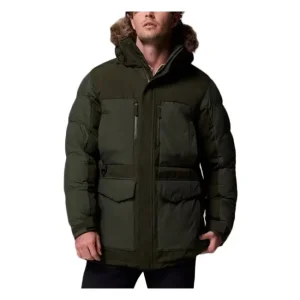
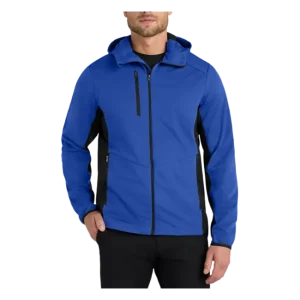
Precision-engineered softshells, insulated down parkas, and speed racing suits engineered for global apparel brands and competitive winter sports teams.
A comprehensive industrial assessment of high-velocity textile engineering, FIS compliance mandates, and the global manufacturing shift toward specialized Chinese technical clusters.
Competitive winter sports apparel—specifically alpine ski race suits engineered for Downhill (DH), Super-G (SG), Giant Slalom (GS), and Slalom (SL)—represents the absolute pinnacle of aerodynamic textile engineering. In high-velocity discipline racing where thousandths of a second delineate Olympic gold from podium exclusion, ski suits act not merely as garments, but as critical biomechanical drag-reduction equipment. The global market for professional ski racing apparel has evolved into a highly specialized sector valued at over $1.4 Billion USD, driven by expanding international winter sports participation, growing national athletic delegations, and rapid expansion across Asian alpine resorts.
Historically concentrated in niche European workshops, the global supply chain for competition speed suits has undergone a structural migration toward advanced China Ski Race Suit Factories and specialized OEM/ODM suppliers. This transition is backed by massive capital investments in automated laser cutting, ultrasonic seam sealing, 3D anatomical body-mapping CAD systems, and in-house wind tunnel simulation test rigs. Today, leading Chinese manufacturers such as Guangdong Ruiniu Garment Manufacturing Co., Ltd. bridge the gap between uncompromising Swiss/Italian aerodynamic performance standards and scalable, cost-efficient bulk production.
Under strict International Ski Federation (FIS) competition rules, race suit fabrics must pass rigorous porosity testing. The fabric's air permeability must strictly exceed 30 liters per square meter per second (l/m²/s) under a 10mm water column pressure test to prevent dangerous vacuum-sealing effects while guaranteeing fair aerodynamic drag across all competitors. Suit manufacturers must apply official FIS Plombe seals after passing certified laboratory testing.
To satisfy international brand procurement directors, competitive ski clubs, and private-label sportswear exporters, Chinese suppliers must navigate complex structural engineering challenges: maintaining uniform fabric stretch under extreme sub-zero tension, integrating removable protective armor without compromising aerodynamic boundary layer airflow, and applying non-restrictive hydrophobic coatings that resist liquid moisture accumulation during high-speed descent.
How modern China ski race suit factories deploy advanced materials science, non-Newtonian fluid armor, and aerodynamic surface texturing.
Integration of d3o-style and shear-thickening polymer pads positioned strategically over limbs and back. Flexible during normal body motion, the pads instantly lock together upon gate impact to absorb up to 80% of kinetic strike force before returning to a flexible state.
Utilizing golf-ball inspired dimpled surface textures on chest, shoulder, and thigh zones. These micro-structures induce controlled microscopic vortex shedding, delaying airflow separation and reducing total aerodynamic drag coefficients (Cd) by up to 4.2%.
High-risk zone reinforcement using Ultra-High-Molecular-Weight Polyethylene (UHMWPE) woven textiles. Offers cut-resistance protection against sharp ski edges during high-speed crashes, fulfilling EN 388 level 4 cut safety standards without restricting four-way flex.
Customized garment architecture matched to temperature extremes, speed velocities, and movement dynamics.
A professional China Ski Race Suit Supplier must maintain dynamic manufacturing lines capable of tailoring suit specifications to distinct athletic environments. Differences in posture, speed, wind force, and ambient temperature dictate completely different textile weights and panel constructions:
Zero-padding or minimal pad pocket options to maximize aerodynamic sleekness. Constructed from tight 3-layer bonded polyester/polyurethane elastane laminates with zero drag points, targeted for velocities exceeding 130 km/h.
Heavy-duty anatomical padding positioned across forearms, shoulders, thighs, and knees to shield racers when violently pushing aside rigid plastic slalom gates. Reinforced seams prevent tear propagation.
Cost-effective, highly durable, growth-adjustable race suits equipped with removable EVA foam pads. Features high UV-protection factors (UPF 50+) and vibrant sublimation dye designs for team identification.
How Ruiniu Garment and leading research institutes are pushing the boundaries of smart winter textiles and environmental sustainability.
Integration of micro-ceramic matrix coatings that decrease skin-to-snow friction coefficient during falls, preventing high-speed friction burns. 100% phase-out of fluorinated DWRs in favor of fluorine-free bio-based hydrophobic finishes.
Seamless embedding of conductive silver yarn pathways into muscle-support zones. Integrated micro-sensors measure racer muscle fatigue, impact g-force, and body core temperatures in real-time via telemetry feeds.
Commercialization of fully recyclable high-stretch polyurethane and circular Nylon 6,6 fabrics. Old race suits can be chemically depolymerized back into virgin-grade yarn without performance loss.
Solving core supply chain pain points: flexible MOQs, certified quality assurance, and seamless technical execution.
Sourcing high-specification apparel from a China Ski Race Suit Factory requires more than basic sewing capacity. It demands a sophisticated partner capable of managing complex material supply chains, maintaining strict AQL 2.5 quality control standards, and protecting proprietary intellectual property.
Accelerate sample turnaround times from weeks to days. Our pattern masters utilize 3D CLO software to simulate dynamic fabric drape, stretch elasticity, and pressure maps on virtual athletic avatars before physically cutting fabric.
Every batch undergoes incoming raw material testing (hydrostatic head, air porosity, color fastness to light/rubbing), in-line hourly patrol checks, and 100% final garment hydrostatic water-column and seam stress inspection.
To assist emerging winter brands and elite ski clubs, Ruiniu provides flexible minimum order quantities starting at just 100 pieces per style, with rapid escalation pathways to handle 50,000+ unit seasonal bulk orders.
In-depth technical answers addressing FIS compliance, custom sublimation, lead times, and factory verification.
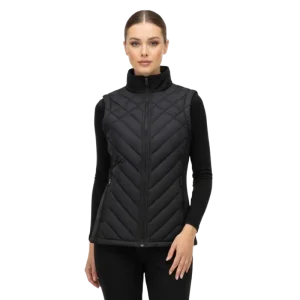
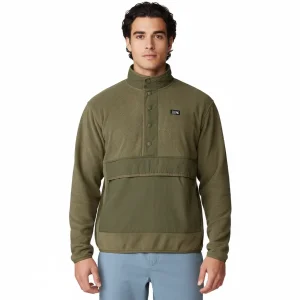
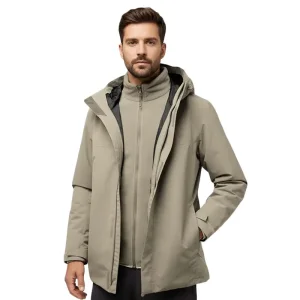
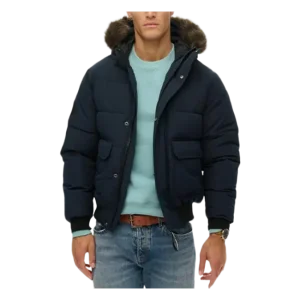
Explore high-altitude parkas, softshells, puffer vests, and multi-functional winter jackets ready for OEM customization.