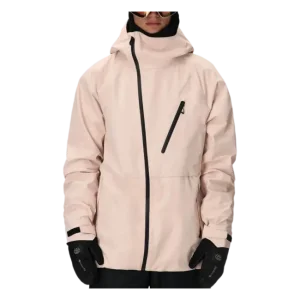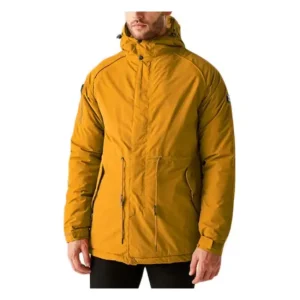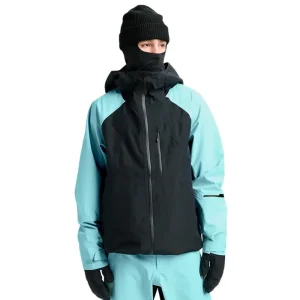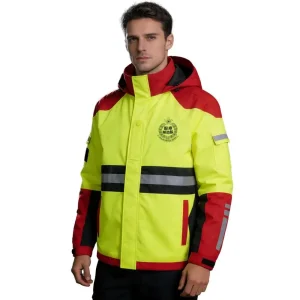

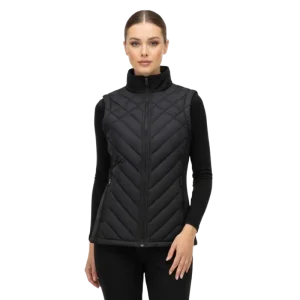
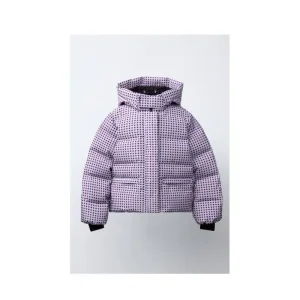
Analyzing the shift toward high-loft synthetic thermal matrices, eco-certified membranes, and China's dominating position in export manufacturing for premium winter sports apparel.
The global market for technical snow sports apparel is experiencing a paradigm shift. Modern winter sports consumers—particularly in North America, Northern Europe, and the rapidly growing Asia-Pacific resort sector—demand women's insulated ski jackets that bridge the gap between extreme alpine weather protection and refined, body-contoured ergonomics. Historically, insulated outerwear compromised mobility for warmth. Today, advanced B2B supply chains in China leverage micro-denier synthetic fibers, stretchable waterproof membranes, and automated seam-taping technologies to engineer garments that maintain high warmth-to-weight ratios without added bulk.
As a leading hub for outdoor apparel manufacturing, China's export infrastructure (specifically within Guangdong's technical garment cluster in Foshan and Nanhai) accounts for a major share of the global supply. International outdoor brands, technical private labels, and resort outfitters rely on China's integrated supply chain resilience. From sourcing GRS-certified recycled polyesters to executing precision laser-cutting and ultrasonic bonding, Chinese factories have evolved from simple cut-and-sew sub-contractors into full-scope ODM/OEM solution providers capable of building technical apparel that satisfies stringent EU and US regulatory and performance metrics.
Deconstructing the structural layers of a high-performance women's insulated ski jacket—from hydrostatic pressure limits to body-mapped thermal zone placement.
Women's physiological thermoregulation requires differential insulation density across core and extremity zones. Our factory engineers employ high-loft synthetic insulation (such as recycled post-consumer polyester or down-alternative micro-staple fibers) mapped specifically to torso warmth requirements:
The outer face fabric utilizes 2-Layer (2L) or 3-Layer (3L) lamination featuring hydrophilic polyurethane (PU) or microporous polytetrafluoroethylene (PTFE) equivalent membranes. Built for harsh alpine environments:
Traditional unisex blocks fail in mobility and fit aesthetics. China's technical pattern masters utilize 3D CLO virtual modeling combined with physical grading to deliver tailored anatomical fits:
From sub-zero resort cruising in the Canadian Rockies to high-humidity snowfall in the Japanese Alps, insulated ski jackets require domain-specific construction engineering.
Designed for recreational and advanced skiers operating within resort boundaries where exposure involves high-speed cold winds on lift rides interspersed with active physical downhill runs.
Engineered for high-exertion touring where moisture vapor release is critical to prevent sweat accumulation inside the thermal cavity during skinning ascents.
Tailored for coastal snow regions (e.g., Pacific Northwest, Hokkaido) characterized by wet, dense snow precipitation near freezing temperatures (0°C to -5°C).
Form-fitting apres-ski aesthetic combined with authentic technical weatherproofing for luxury outdoor retail brands and boutique collections.
Standard manufacturing parameters supplied by Chinese technical factories across different commercial market segments.
| Performance Tier | Outer Fabric Face | Membrane & Rating | Insulation Type & Weight | Seam Sealing Standard | Target FOB Unit Cost |
|---|---|---|---|---|---|
| Entry / Commercial Resort | 100D Polyester Taslan / Oxford | 2L PU Coating (10,000mm / 8,000g) | 100% Recycled Polyfill (100g Body / 80g Arm) | Critically Taped Seams (Hood, Shoulder, Armhole) | $22.50 – $32.00 |
| Mid-Tier Performance | 75D Mechanical Stretch Polyester | 2L Hydrophilic Lamination (15,000mm / 10,000g) | Brand Synthetic Fill (120g Body / 80g Arm) | 100% Fully Taped Seams (13mm PU Seam Tape) | $34.00 – $48.00 |
| Pro Alpine / Backcountry | 50D/70D Cordura® or Nylon 6,6 Ripstop | 3L Microporous Membrane (20,000mm / 20,000g) | Body-Mapped PrimaLoft® / Micro-Down (80g Core) | Fully Sealed + Laser Cut Welded Pocket Flaps | $52.00 – $75.00 |
| Luxury Apres-Ski / Fashion | 20D High-Gloss Nylon or Satin Laminate | 2L TPU Film (15,000mm / 10,000g) | RDS Certified 700+ Fill Power Down / Bonded Baffles | Fully Taped + Ultrasonic Bonded Quilting | $58.00 – $88.00 |
How Foshan and Guangdong garment manufacturing ecosystems deliver speed, technical precision, and cost efficiencies unmatched in global apparel sourcing.
Guangdong’s textile cluster offers immediate proximity to specialized yarn spinners, lamination houses, zipper manufacturers (YKK/SBS centers), and trim vendors. This proximity eliminates raw material lead-time bottlenecks, reducing fabric sourcing cycles from 45 days down to 12–15 days.
Leading export factories operate a 3-tier inspection protocol: 100% fabric testing via 4-point system, in-line seam-sealing pressure tests (ISO 811 water column hydrostatic testers on line), and final random AQL 1.0/2.5 audits covering dimensional stability, color fastness, and zipper cycle durability.
To support emerging technical brands and boutique collections, Chinese exporters offer flexible Minimum Order Quantities starting at 100 pieces per style (split across sizes and colorways). Automated CAD marker pattern cutlines ensure high material utilization (>88%), lowering sample development barriers.
Pioneering smart thermal management, zero-solvent lamination, and circular recyclable synthetic structures in women's technical outerwear.
Integration of ultra-thin flexible carbon-nanotube (CNT) heating membranes embedded directly between the insulation liner and shell. Operable via low-voltage USB power banks with 3-tier smartphone Bluetooth thermostatic control, providing active heat generation across kidney and chest zones.
Traditional ski jackets combine polyester shells, nylon linings, PU membranes, and mixed plastic trims, rendering end-of-life recycling impossible. Next-generation factory tooling uses 100% Polyethylene Terephthalate (PET) construction—polyester face fabric, polyester membrane, polyester insulation, and polyester zippers—enabling circular mechanical recycling.
Encapsulating silica aerogel—the world’s lightest solid insulator—into non-woven synthetic batting. Provides an extraordinary CLO rating of 3.2+ while reducing garment thickness by up to 50%, enabling ultra-sleek, aerodynamic ski racing profiles.
Eliminating traditional solvent-based wet adhesives in favor of PUR hot-melt reactive polyurethane adhesive systems. Ensures zero Volatile Organic Compound (VOC) emissions during production while maintaining superior wash durability and seam bond shear strength.
Navigating environmental certifications, chemical restricted substances lists (RSL), and customs tariffs for seamless export into Western markets.
Exporting women's insulated ski jackets to North America, the European Union, or Australasia demands absolute adherence to evolving international regulatory frameworks. Leading Chinese manufacturing partners maintain dedicated compliance departments to support brand partners with complete audit documentation:
Direct technical answers to critical sourcing, production, and quality assurance questions when partnering with a Chinese ski wear factory.