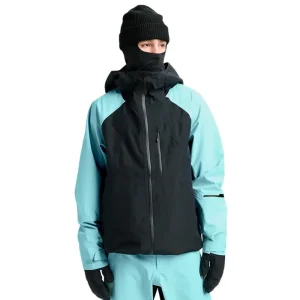
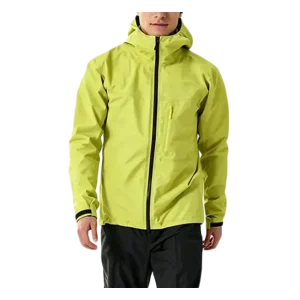
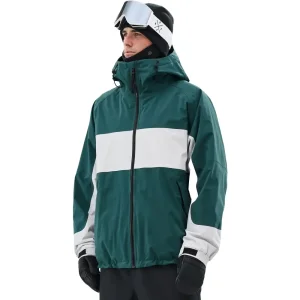
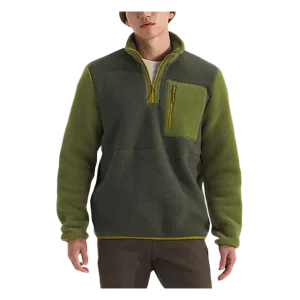
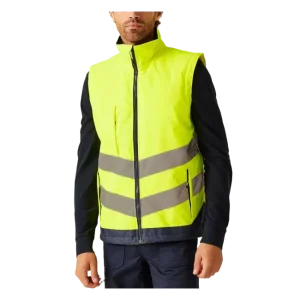
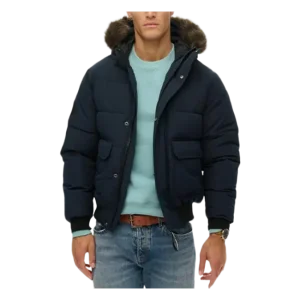
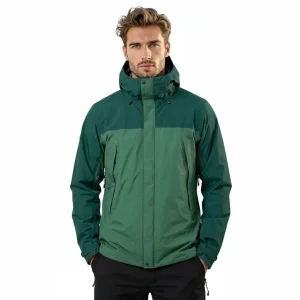
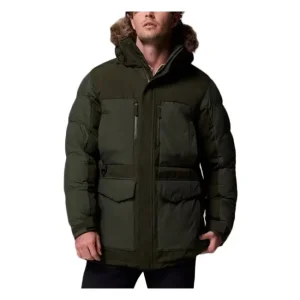
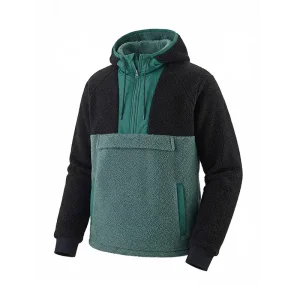
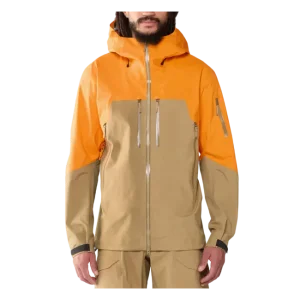
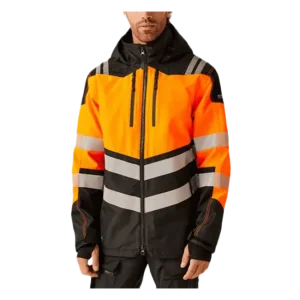
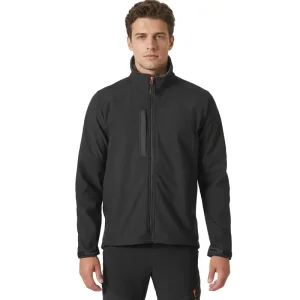
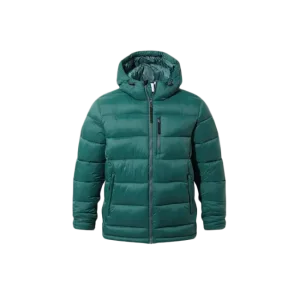
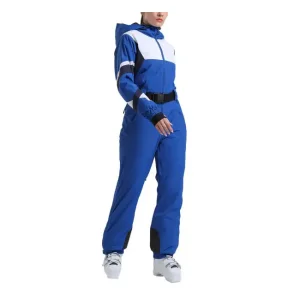
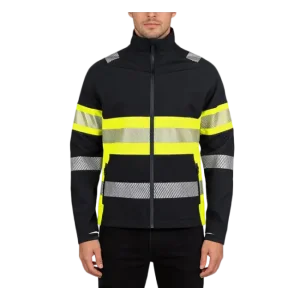
Explore our export-ready technical jackets, custom fleece layers, and workwear built for extreme winter conditions.
An in-depth analysis of technical outerwear fabrication, membrane innovation, and global procurement strategies for modern apparel brands.
The global technical winter outerwear market has entered a transformative era driven by shifting consumer demands, climate volatility, and accelerated material science breakthroughs. Navigating the competitive landscape of High-Quality Men's Ski Jacket Factory & Suppliers requires a comprehensive understanding of raw material sourcing, advanced lamination technologies, seam-sealing ergonomics, and sustainable manufacturing standards. Today’s commercial buyers—ranging from established alpine heritage brands to rapid-scale outdoor D2C labels—no longer look for simple cut-and-sew sub-contractors; they require strategic, integrated supply chain partners capable of executing complex OEM/ODM technical specifications while mitigating global regulatory and logistical risks.
According to recent textile economics research, the global ski wear market is projected to reach over USD 2.8 Billion by 2030, registering a CAGR of 6.4%. This growth is heavily concentrated in high-performance men’s technical shells, hybrid insulation jackets, and resort-to-urban crossover wear. Several macro trends are reshaping how procurement executives select manufacturing facilities in China and across Asia:
Global environmental mandates (including EU REACH restrictions and US state-level legislation) have made non-fluorinated (C0 DWR) durable water repellent finishes an absolute mandatory standard across all export-grade ski jacket fabrications.
Consumers are rapidly moving away from bulky 2-layer coated fabrics toward lightweight, high-breathability 3-Layer (3L) microporous membrane laminates that offer superior abrasion resistance and thermal versatility during backcountry touring.
Leading Chinese factories have adopted 3D CLO and digital pattern rendering, reducing sample iteration timelines from 30 days down to 5 days, while cutting fabric waste by up to 85% during product development.
Furthermore, the convergence of workwear-level durability with technical outdoor aesthetics has expanded the application of men's ski jackets into safety, industrial outdoor maintenance, and lifestyle fashion. Consequently, suppliers are required to hold multi-tier certifications covering both chemical compliance (OEKO-TEX® Standard 100, bluesign®) and ethical labor audits (BSCI, ISO9001).
Why Foshan and the Pearl River Delta remain the world's premier cluster for high-precision technical outerwear execution.
China's dominance in high-performance outerwear manufacturing is rooted in its unparalleled industrial cluster density. Unlike alternative production hubs that rely on imported trims, zippers, and membrane fabrics, China's technical outerwear centers—specifically located in Guangdong (Foshan/Guangzhou) and Zhejiang—offer a fully integrated supply chain within a 50-kilometer radius.
When engineering a premium men's ski jacket, over 30 distinct technical components must come together seamlessly: from 20D–150D ripstop face fabrics, TPU/PTFE waterproof breathable membranes, and heat-sealing tapes, to waterproof zippers, RECCO® avalanche reflectors, cohort cord-locks, and RDS-certified down. Chinese factories leverage localized material ecosystems to achieve rapid component matching, eliminating weeks of transit delay.
| Manufacturing Parameter | China Advanced OEM/ODM Hubs (e.g., Ruiniu) | Traditional / Southeast Asian Hubs |
|---|---|---|
| Raw Material Sourcing Lead Time | 3 to 7 Days (Localized Mill Ecosystem) | 21 to 35 Days (Dependent on Import Clearance) |
| Technical Seam Sealing Precision | Automated Hot-Air Taping (±0.5mm Tolerance) | Manual / Semi-Automated (Higher Leakage Risk) |
| Sample Prototyping Speed | 7–10 Working Days (3D CAD Assisted) | 20–30 Working Days |
| Minimum Order Flexibility (MOQ) | Flexible 100 Pcs/Style (Low Risk Pilot Runs) | Strict 1,000–3,000 Pcs/Style minimums |
| Quality Control Standard | 3-Tier Patrol Audit + 100% Hydrostatic Spot Checks | End-of-line Basic Visual Inspection |
Understanding the engineering layers, hydrostatic thresholds, and thermal mapping required for professional alpine garments.
A superior ski jacket relies on high-density 75D or 150D Mechanical Stretch Polyester/Nylon laminated to a micro-porous membrane. Standards built to withstand arctic storms include:
Water penetration occurring through needle holes is mitigated using 3-layer 13mm/20mm TPU heat-sealing tape applied under calibrated temperature (380°C–420°C) and pressure:
Body-mapped thermal control balances warmth without adding bulk during high-exertion downhill skiing:
Customized OEM/ODM manufacturing blueprints designed to meet distinct regional market demands and compliance frameworks.
Sourcing men's ski jackets requires tailored product localization depending on the geographic distribution channels of the buyer. A one-size-fits-all approach inevitably leads to fit returns or regional regulatory friction. Premium manufacturers offer engineered modifications per market quadrant:
Fit & Slicing: Relaxed freeride block fit allowing for heavy mid-layer stacking. Extended arm lengths and dropped tail hems.
Compliance Priority: CPSIA chemical safety, PFAS-free state laws, and REACH RSL compliance. High demand for RECCO® integration.
Fit & Slicing: Ergonomic, articulated slim-alpine fit tailored for touring and active backcountry movement.
Compliance Priority: Strict OEKO-TEX® 100 Class I/II verification, GRS (Global Recycled Standard) certified shell fabrics, and bluesign® chemical auditing.
Fit & Slicing: Tailored Asian fit blocks with adjusted shoulder ratios and lightweight modular 3-in-1 inner fleece options.
Compliance Priority: GB/T 32614 (Waterproof Garment Standards) compliance and vibrant color-block aesthetics suited for indoor and outdoor ski domes.
Factories specializing in men's ski jackets provide structured pathways tailored to the buyer's internal product development maturity:
Clear, definitive technical responses to the critical questions buyers ask when qualifying a ski jacket factory.
Our standard production MOQ is 100 pieces per style, which can be split across multiple colorways and a full size run (e.g., S to 3XL). For strategic brand development programs, we also accommodate 50-piece pilot runs utilizing curated in-stock technical membranes, allowing emerging labels to validate market demand with minimal inventory exposure.
Prototyping and 3D digital fit samples are delivered in 7 to 10 working days upon tech pack receipt. Bulk production runs typically require 30 to 45 days following Pre-Production (PP) sample sign-off and raw material arrival. Complex 3-layer fully seam-sealed styles sit at the upper end of this timeline to ensure thorough hydrostatic testing.
We routinely build and validate 2L, 2.5L, and 3L jacket constructions rated to 15,000mm–20,000mm hydrostatic head (ISO 811) and 10,000–20,000 g/m²/24h MVTR (JIS L 1099 B1). Every production batch undergoes spot testing on hydrostatic water column meters prior to packing, and official third-party reports (SGS, Intertek, TÜV) are available upon request.
Yes. All natural down insulation utilized in our padded and ski parkas is RDS (Responsible Down Standard) certified with full batch-level chain-of-custody documentation. For synthetic programs, we offer GRS-certified recycled polyfill (3M™ Thinsulate™ or Primadown equivalents) derived from post-consumer ocean plastic bottles.
We utilize fully automated hot-air seam taping machines equipped with laser digital temperature sensors. Every operator follows strict dwell-time parameters based on fabric weight. Furthermore, 100% of taped seam intersections are inspected under 0.15MPa water pressure gauges before lining insertion.
We hold independent export licenses and offer flexible commercial terms including FOB (Shenzhen/Guangzhou), CIF, CFR, and DDP (Delivered Duty Paid) directly to your warehouse. Every shipment includes complete packing lists, commercial invoices, Certificates of Origin (Form E/CO), and fabric compliance declarations.
Browse our complete specialized range of colorblock hardshells, reflective workwear, softshells, and custom insulated suits.