Explore our core engineered garment lines designed for extreme alpine environments, technical snow sports, and professional utility applications.
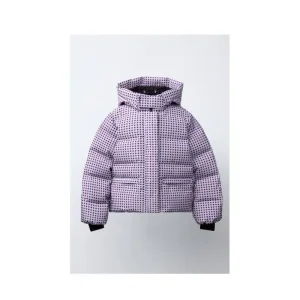
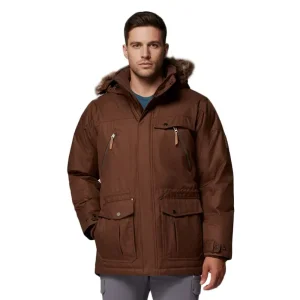
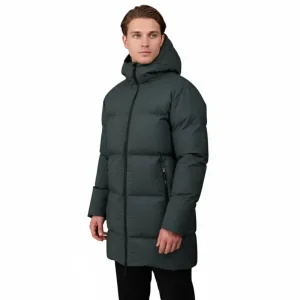
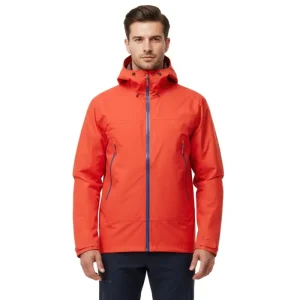
An in-depth executive analysis of global B2B procurement patterns, functional crossover trends, and material innovation paradigms shaping technical outerwear sourcing through 2030.
The global technical softshell apparel market is projected to expand at a 6.8% CAGR, surpassing $4.2 Billion globally. Demand is anchored by shifting consumer preference toward highly adaptable, multi-weather mid/outer layers that eliminate the rigid rustle of traditional hard hardshell jackets while preserving weather protection.
Search intent mining reveals a distinct convergence: end-users no longer divide performance garments strictly between backcountry trekking and urban workwear. High-visibility safety jackets, tactical outer shells, and city commuter coats now mandate technical softshell stretch lamination with 10K hydrostatic head protection.
European Union Green Deal regulations, REACH expansion, and U.S. state-level PFAS restrictions are forcing brands to overhaul DWR (Durable Water Repellent) chemistries. Premier softshell factories must deliver fluorine-free (C0 DWR) hydrophobic coatings that do not compromise spray rating tests.
Understanding the micro-porous membrane chemistry, bonding thermal dynamics, and structural layering required to construct a zero-compromise technical softshell jacket.
At Guangdong Ruiniu Garment Manufacturing Co., Ltd., softshell construction is treated as a precise thermodynamic equation. A softshell jacket must strike an intricate equilibrium: blocking 98% to 100% of external wind shear while actively venting internal vapor pressure generated during high-exertion alpine movement. Achieving this requires specialized 3-Layer (3L) sandwich laminations involving a high-density woven face fabric, a monolithic or microporous polyurethane (PU/ePTFE) membrane, and a inner micro-fleece or grid-fleece backing layer.
| Performance Tier | Layer Architecture | Hydrostatic Head (ISO 811) | MVTR Breathability (JIS L1092) | Target End-Use Application | Key Engineering Highlights |
|---|---|---|---|---|---|
| Level 1: Urban Utility | 2.5-Layer Bonded Polyester | 5,000 mm H₂O | 3,000 g/m²/24h | City Commute & Workwear | DWR treated face, light fleece grid interior, windproof to 15 CFM. |
| Level 2: All-Mountain | 3-Layer Stretch Nylon/Spandex | 10,000 mm H₂O | 8,000 g/m²/24h | Hiking, Trekking & Ski Mid-Layer | 4-way elastic stretch, TPU membrane, C0 PFC-Free DWR, brushed interior. |
| Level 3: Pro Alpine | 3-Layer High-Tenacity Ripstop | 15,000 mm H₂O | 10,000 g/m²/24h | Mountaineering & Backcountry Skiing | Microporous membrane, fully taped seam options, RECCO reflector integration. |
| Level 4: Tactical / Workwear | 3L Flame-Retardant / Hi-Vis Bond | 10,000 mm H₂O | 6,000 g/m²/24h | Industrial Safety (EN ISO 20471) | 3M™ Scotchlite reflective striping, anti-abrasion elbow patches, oil-repellent. |
Traditional full-coverage glue lamination chokes fabric breathability by sealing microscopic pores. Ruiniu utilizes automated PUR hot-melt matrix dot bonding, applying adhesive in a micro-grid pattern that preserves 92% of the membrane's inherent moisture vapor transmission rate (MVTR).
Human body mapping dictates our pattern drafting. We incorporate 12% to 18% Elastane/Spandex blends into 70D/150D mechanical stretch face fabrics, engineered alongside drop-tail hems, articulated elbow darts, and gusseted underarms to eliminate jacket lift during climbing maneuvers.
Where total weatherproofing is required on critical softshell shoulder or hood seams, our manufacturing plant employs automated hot-air seam sealing machines using 13mm to 20mm 3-layer TPU tapes, alongside laser-cut pocket weldings that ensure clean, stitchless aesthetics.
Why leading North American and European outerwear brands trust Guangdong Ruiniu Garment Manufacturing Co., Ltd. for turnkey OEM/ODM production.
Our dedicated 12-technician pattern design department uses 3D CLO software to convert customer tech packs, vector drawings, or physical reference garments into digital 3D prototypes. This reduces sample revision cycles by 60%, delivering physical proto samples within 7 to 10 working days.
High-efficiency automated spreading machines and computer-controlled laser cutters ensure fabric utilization rates exceed 88%. Computerized nesting protects client margin on costly 3L laminates while ensuring zero dimensional variance across bulk size runs (XS to 5XL).
Quality assurance is embedded at every operational stage: 1) Raw Material 4-Point System Inspection upon roll arrival; 2) In-Line Patrol Audits every 2 hours monitoring stitch density (10-12 stitches/inch) and seam tension; 3) 100% Final Garment Audit with hydrostatic pressure spot checks before packing.
Solving the persistent trade challenges of lead-time variability, raw material inflation, and stringent international compliance standards.
While traditional Asian outerwear plants demand 1,000+ pieces per style, Ruiniu supports dynamic mid-tier brands and custom corporate lines with flexible MOQs starting at 100 pieces per style (split across colors and size runs). Pilot program runs of 50 pieces are available for qualified in-stock fabric lines.
We source certified premium trims—including YKK® AquaGuard® waterproof zippers, SBS® customized pullers, Cohaesive™ cord locks, and 3M™ Scotchlite™ reflective elements. Every customer receives a transparent cost breakdown and verifiable mill test certificates (SGS, Intertek, TÜV Rheinland).
Headquartered in Foshan with seamless transit access to Shenzhen and Guangzhou ports, Ruiniu manages complete FOB, CIF, or DDP (Delivered Duty Paid) shipping protocols. Our logistics team handles full customs paperwork, certificates of origin (Form E/CO), and tariff documentation for EU, US, UK, and AU borders.
Tailored structural configurations designed to meet geographic climate demands and industry-specific functional requirements.
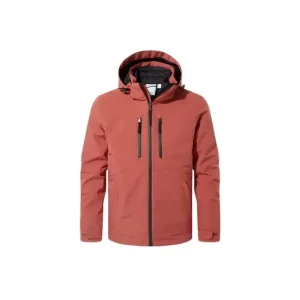
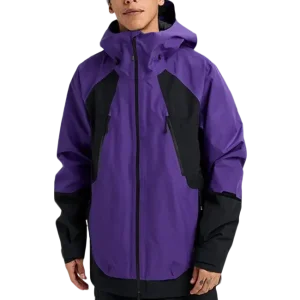
Config: 3-Layer stretch woven outer with 15K/10K microporous TPU lamination. Features underarm pit zips with mesh lining, helmet-compatible storm hood with dual point adjustment, silicone-grip powder skirt, and internal goggle drop pocket.
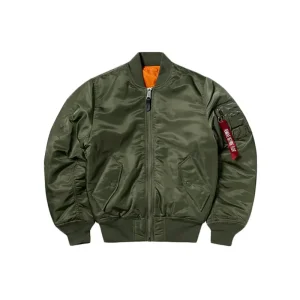
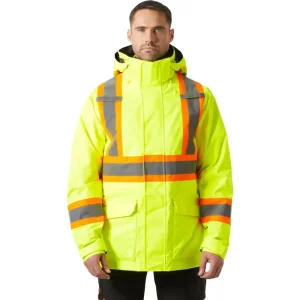
Config: Fluorescent Yellow/Orange softshell face bonded to heavy 300gsm micro-fleece. Compliant with EN ISO 20471 Class 2/3 and ANSI/ISEA 107. Reinforced with Cordura® elbow patches and heat-applied segmented reflective tape for maximum flexibility.
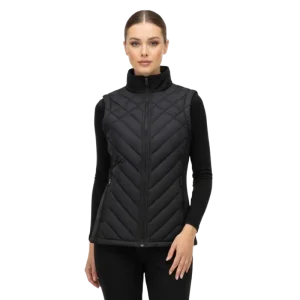
Config: Matte-finish 50D mechanical stretch softshell with clean ultrasonic bonded sleeve cuffs, concealed YKK® AquaGuard® chest pockets, internal headphone wire routing, and PFC-free hydrophobic surface finish for sleek city aesthetics.
Previewing our factory's investments in smart textile integration, bio-based circular polymers, and automated zero-waste garment assembly.
Complete phase-out of legacy C6 chemistry across all production lines in favor of plant-derived plant-based DWR finishes achieving Level 4 spray ratings after 20 wash cycles.
Commercialization of non-petroleum PU membranes produced from sugarcane waste streams, matching conventional 15K/10K hydrostatic and breathability thresholds.
Integration of micro-encapsulated Phase Change Materials (PCM) into fleece linings to absorb excess body heat during exertion and release it during static rest periods.
Mono-material softshells: 100% Polyester face, Polyester membrane, and Polyester backing engineered for direct melt-recycling without manual component separation.
Deployment of vision-guided robotic sewing cells for seam taping and pocket welding, cutting production lead times down to 21 days for standard re-orders.
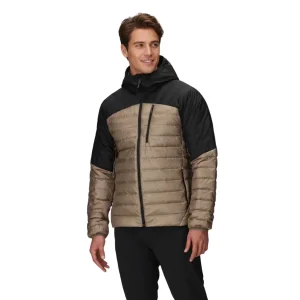
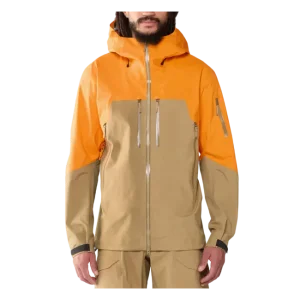
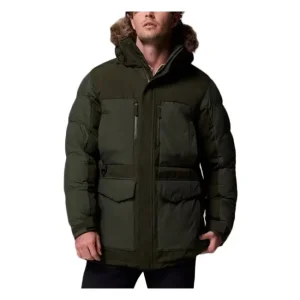
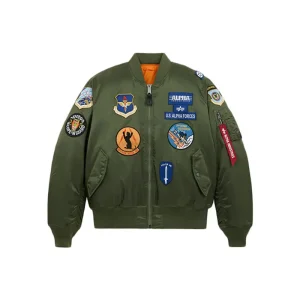
Review additional specialized styles manufactured under strict ISO quality control protocols at our Guangdong production center.
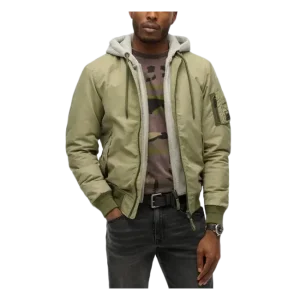
Comprehensive technical and commercial guidance addressing common OEM/ODM buyer inquiries, compliance requirements, and manufacturing workflows.
Our standard production MOQ is 100 pieces per style, which can be flexibly allocated across multiple colorways and a full commercial size run (e.g., S through 3XL). For emerging brand development programs or market testing campaigns using in-stock 3L laminate fabrics, we offer pilot runs of 50 pieces to minimize upfront inventory risk.
Proto samples and CAD 3D virtual fittings are delivered in 7 to 10 working days following tech pack sign-off. Bulk production requires 30 to 45 calendar days after Pre-Production (PP) sample approval and raw material arrival at our Foshan plant. Expedited scheduling is available for repeat seasonal re-orders.
Delamination is prevented through precise temperature, pressure, and PUR hot-melt adhesive dosing control during matrix dot lamination. All incoming fabric batches undergo rigorous lab testing—including 20 continuous commercial wash cycles at 40°C and peel strength testing (ISO 2411)—to ensure long-term structural integrity before cutting.
Yes. We have fully transitioned our hydrophobic chemical pipeline to 100% fluorine-free (C0 DWR) treatments. Our fabric partners hold valid bluesign®, OEKO-TEX® Standard 100, and GRS (Global Recycled Standard) certifications, guaranteeing full compliance with EU REACH regulations and U.S. state-level chemical mandates.
We routinely construct softshells rated from 5,000mm to 15,000mm hydrostatic head (ISO 811) and breathability ratings from 3,000g to 10,000g/m²/24h (JIS L1092 / ASTM E96). Third-party lab reports from SGS, Intertek, or Bureau Veritas are provided upon request with every bulk shipment.
Absolutely. Our in-house design and pattern engineering team converts basic sketches, mood boards, or competitor reference samples into complete manufacturing packages. This includes 3D digital rendering, pattern grading, Bill of Materials (BOM) creation, trim selection, and custom brand packaging development.
We operate under an AQL 1.0 / 2.5 final inspection protocol. Every batch undergoes 100% visual inspection, dimensional tolerance verification, stitch tension audits, zipper endurance testing (minimum 5,000 cycles), and hydrostatic seam-taping pressure tests. Detailed photo and video audit reports are supplied prior to container loading.