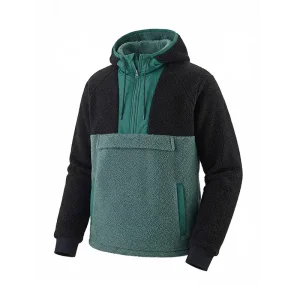
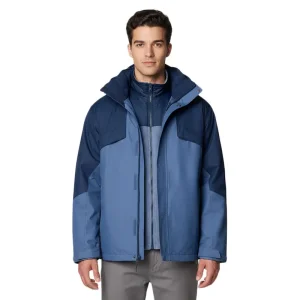
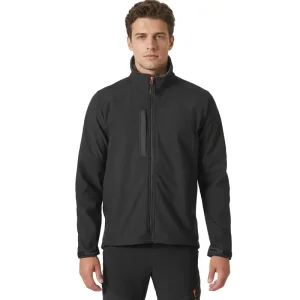
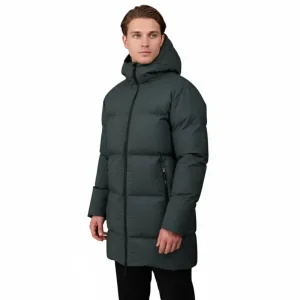
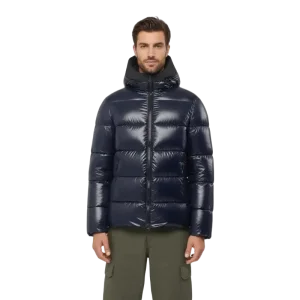
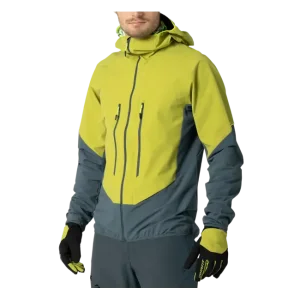
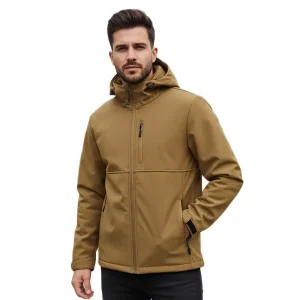
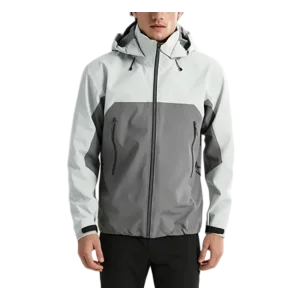
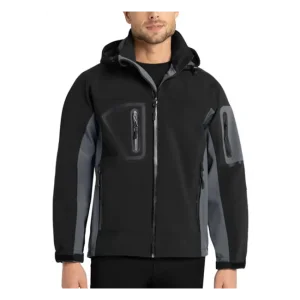
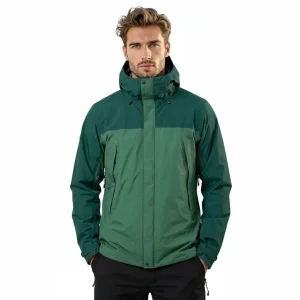
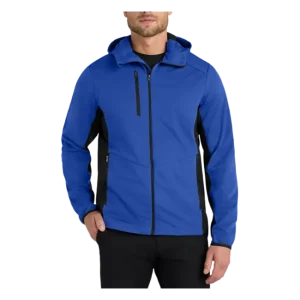
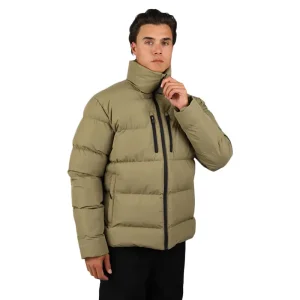
Explore our custom manufacturing solutions built for extreme mountain environments, tactical workwear, and branded outerwear lines.
In high-altitude mountaineering and alpine exploration, a parka jacket is not merely apparel—it is critical life-support equipment. Over the past decade, the global market for specialized OEM mountaineering parkas has shifted from heavy, bulky insulation to high-efficiency, lightweight, and thermally mapped modular systems.
Modern alpine parkas rely heavily on 3-Layer (3L) laminate technology incorporating ePTFE or microporous PU membranes. These constructions bond an outer high-tenacity nylon shell (40D-70D Ripstop), a high-density membrane, and a smooth tricot backing to protect the membrane from body oil abrasion while maintaining a hydrostatic head exceeding 20,000 mm.
Regulatory directives in Europe and North America have forced a rapid transition away from traditional long-chain fluorocarbons. Premier OEM factories must now master PFC-free C0 Durable Water Repellent (DWR) coatings paired with GRS-certified recycled polyesters and bluesign® approved fabric mills without sacrificing wash durability.
The market is moving away from uniform fill weight. Contemporary mountaineering parkas combine 800+ Fill Power RDS-certified goose down in core thermal zones with moisture-resistant synthetic insulation (such as PrimaLoft® or recycled blown fiber) at sweat-prone locations like underarms, hood brims, and cuffs.
Sourcing directors for global outdoor retail brands, commercial rescue organizations, and tactical equipment distributors enforce strict operational criteria when selecting an OEM/ODM manufacturing partner in China.
| Procurement Metric | Industry Baseline | Ruiniu Technical Benchmark | Value to Brand Buyers |
|---|---|---|---|
| Waterproofness (ISO 811) | 10,000 mm H₂O | 15,000 – 25,000 mm H₂O | Prevents water penetration under extreme storm pressure and heavy gear load. |
| Breathability (JIS L1092-B1) | 5,000 g/m²/24h | 10,000 – 18,000 g/m²/24h | Eliminates internal condensation building during strenuous vertical ascents. |
| Down Traceability & Welfare | Self-declared down sourcing | 100% RDS (Responsible Down Standard) | Defensible compliance proof for EU/US retail audits & consumer transparency. |
| Seam Taping Precision | Standard 20mm PVC tape | 13mm / 15mm Micro-tape (Hot Air Welded) | Reduces seam weight, enhances flexibility, and prevents micro-leakage at stitches. |
| Development Flexibility | 1,000 Pcs MOQ per style | 100 Pcs Flexible MOQ (Split colors/sizes) | Lowers inventory exposure, ideal for boutique drops and market testing. |
International buyers require accredited factory audits including BSCI, SMETA, and ISO 9001/14001. Chemical compliance against EU REACH RSL standards must be guaranteed down to zippers, snaps, drawcodes, and thread dyes.
Time-to-market is crucial. Buyers require digital 3D pattern rendering and physical prototype turnaround within 7 to 10 working days, ensuring sample line reviews occur on schedule for biannual seasonal buying windows.
Bulk deliveries must comply with strict AQL 1.5/2.5 visual and technical defect limits. Every piece of waterproof outerwear must undergo hydrostatic pressure testing across welded seam junctions prior to packaging.
Operating from Foshan, Guangdong—the heart of South China's advanced textile manufacturing cluster—Guangdong Ruiniu Garment Manufacturing Co., Ltd. integrates Industry 4.0 production methodologies to solve traditional outerwear manufacturing bottlenecks.
Utilizing computer-aided design (CAD) nesting algorithms, our automatic spreading and single-ply laser cutting systems achieve over 88% fabric utilization efficiency. Laser sealed edges prevent synthetic face fabrics from fraying, which is vital for multi-panel technical parkas.
Down jacket construction requires exact thermal balance. Our enclosed vacuum down-filling stations feature digital weighing accuracy down to 0.01g per baffle, completely eliminating cold spots and preventing down leakage while maintaining a clean factory environment.
Equipped with programmatic hot-air seam-sealing machines, our operators apply 2-layer and 3-layer waterproof tapes at calibrated temperature, pressure, and speed parameters. Every production batch undergoes continuous hydrostatic head testing at 0.2 bar for 2 minutes.
Mountaineering parkas designed and manufactured by Ruiniu are engineered for specialized environments ranging from extreme sub-zero mountain ascents to industrial work environments in arctic regions.
Built for 6,000m+ summits. Key features include helmet-compatible storm hoods with 3-way adjustment, harness-accessible chest pockets, internal mesh drop pockets for freeze-sensitive electronics, and glove-friendly zipper pullers.
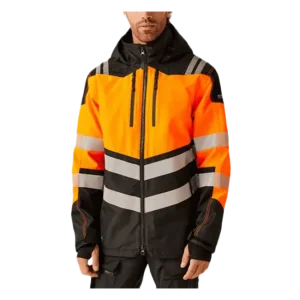
Customized for search-and-rescue teams requiring high visibility and rugged durability. Integrated with RECCO® passive reflectors, radio attachment loops, Kevlar-reinforced elbow panels, and hi-vis reflective elements compliant with safety regulations.
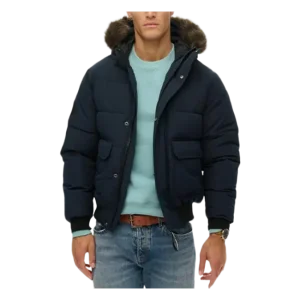
Industrial-grade cold weather parkas engineered for offshore wind turbine engineers and polar oil utility workers. Constructed with flame-resistant or anti-static face fabrics bonded to heavy-duty waterproof membranes and dense synthetic insulation.
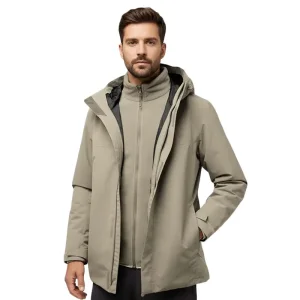
Designed for modern lifestyle apparel brands merging mountain utility with urban aesthetics. Clean bonded seams, hidden magnetic plackets, matte tactile face fabrics, and sleek anatomical tailoring suited for city weather protection.
From technical package analysis to bulk export shipment, our 6-step manufacturing workflow guarantees product repeatability and strict adherence to technical specifications.
Our engineering group reviews your CAD drawings, bill of materials (BOM), target price points, hydrostatic head target, and sizing charts. We identify construction bottlenecks and recommend cost-effective material alternatives within 24 hours.
Our master patternmakers convert concept sketches into digital pattern blocks using 3D CLO software. This allows virtual garment fit testing, stress point mapping, and fabric drape visualization before cutting physical fabric, drastically reducing sampling cycles.
Outer fabrics, membranes, down fills, zippers, and trims are sourced from verified certified partners. Fabrics undergo in-house laboratory testing for color fastness, tear strength, hydrostatic resistance, and DWR spray ratings prior to cutting.
Bulk cutting is executed via automated laser systems. Garments are stitched on JIT lean lines equipped with micro-needle machines to minimize fabric perforation. Waterproof seams are welded using state-of-the-art hot air seam-sealing machinery.
Quality assurance is embedded at every phase: 100% fabric roll inspection (4-Point System), in-line seam seal hydrostatic testing during assembly, and a final 100% audit covering cosmetic appearance, dimensions, and zipper operational checks.
Finished jackets are humidity-controlled, polybagged, and packed into heavy-duty export cartons. We support FOB Shenzhen/Guangzhou, CIF, or DDP delivery terms with complete customs clearance and material certification paperwork included.
Expert answers from our garment engineers regarding technical specifications, fabric selection, order parameters, and custom options for mountaineering jackets.
Discover our broader range of custom softshell, down, rainwear, and insulated jacket solutions manufactured for global exporters and retail brands.