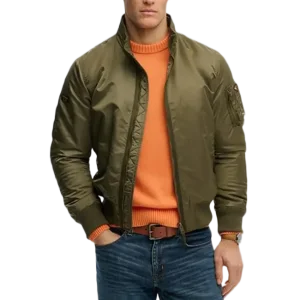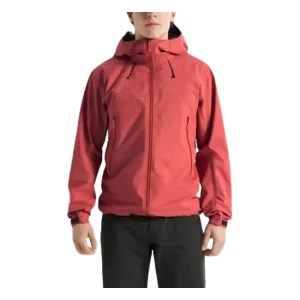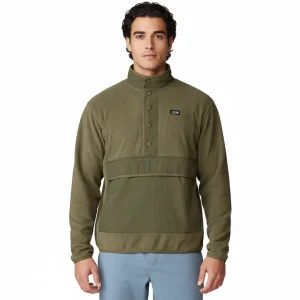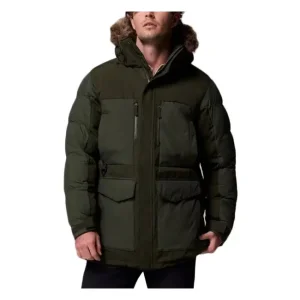
800 Fill Power RDS
Sub-Zero Rated
Ripstop Nylon
Engineered to satisfy Denver's distinct lifestyle: seamless transitions from the high-density downtown business district to sub-zero backcountry adventures in Vail and Breckenridge.
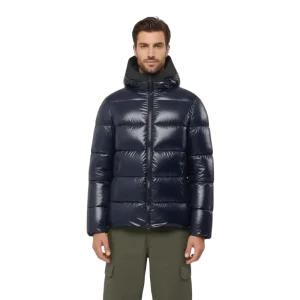
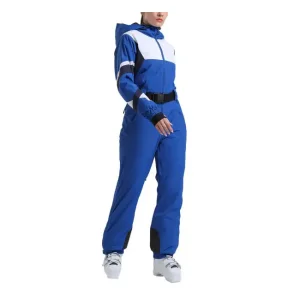
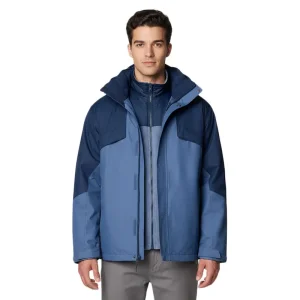
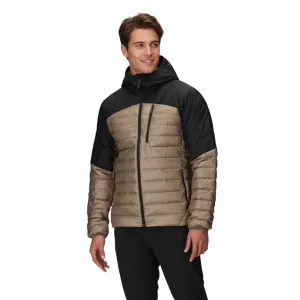
A comprehensive examination of why Colorado's Front Range presents the world's most exacting performance jacket criteria—and how our direct manufacturing infrastructure bridges the gap.
Denver, Colorado is not simply an outdoor retail market; it is North America's proving ground for technical outerwear. Situated at exactly 5,280 feet above sea level with immediate access to 14,000-foot peaks along the Continental Divide, Denver experiences extreme barometric swings, high-altitude UV radiation that accelerates synthetic polymer degradation, and intense diurnal temperature drops exceeding 40°F within single three-hour cycles.
Standard commercial down jackets built for maritime or lowland winter cities fail rapidly under Colorado conditions. High atmospheric dryness causes low-grade feather shafts to become brittle and pulverize into down dust, compromising thermal insulation chambers. Concurrently, rapid transition from dry urban sunshine to freezing precipitation in the nearby foothills requires specialized shell membranes engineered with microporous hydrophobic barriers rather than standard PU non-breathable coatings.
The Colorado activewear market is characterized by sophisticated end-users who scrutinize supply chain ethics, fill-power certifications, and chemical safety. With prominent industry headquarters established across the Denver-Boulder corridor, local procurement teams cannot afford greenwashing or uncertified insulation claims.
Modern Denver consumers demand versatility. A jacket must operate as a sleek corporate commute layer in LoDo (Lower Downtown) and immediately transition to an insulating mid-layer along the I-70 ski corridor to Summit County. Meeting this dual requirement necessitates cutting-edge stitchless baffle bonding, 3D anatomical tailoring, and premium down-to-weight ratios that eliminate bulky silhouettes without sacrificing sub-zero safety margins.
Chamber-mapped duck and goose down fill configurations calibrated for varying thermal envelopes, from active uphill aerobic touring to static sub-zero exposure.
100% compliant with Colorado Senate Bill 22-134 (perfluoroalkyl and polyfluoroalkyl substances in consumer products), utilizing plant-based water repellents.
Welded baffle channels that eliminate puncture holes from sewing needles, achieving 100% feather retention and impervious wind resistance across mountain ridges.
Detailed performance benchmarks illustrating our automated material synthesis, barrier laminations, and animal welfare tracing frameworks.
Modern down jacket manufacturing has transformed from labor-intensive manual sewing to an advanced material science discipline. For Denver distributors sourcing contract production, ensuring consistent thermal efficiency requires verifiable metrics. Below is the technical specification roadmap utilized in our high-altitude production lines:
| Performance Parameter | Laboratory Test Standard | Entry Commercial Tier | Denver Alpine Elite Benchmark |
|---|---|---|---|
| Insulation Down Quality | IDFL / EN 12130 / ASTM D3822 | 550–600 FP White Duck Down | 750–850 FP Traceable RDS Goose Down |
| Down-to-Feather Cluster Ratio | USA-2000 Clarified Method | 80/20 Mixed Composition | 90/10 Pure Cluster Down (Turbidity >1000mm) |
| Shell Hydrostatic Resistance | AATCC 127 / ISO 811 | 3,000mm Hydrostatic Head | 15,000mm to 20,000mm Dual-Laminate Membrane |
| Moisture Vapor Transmission (MVTR) | JIS L 1099 B-1 / ASTM E96 | 3,000 g/m²/24hr | 10,000 to 15,000 g/m²/24hr High-Aerobic Flow |
| Air Permeability / Windproof | ASTM D737 (0.5 CFM standard) | < 5.0 CFM (Resistant) | 0.0 CFM 100% True Windbreak Sealing |
| Surface Water Repellency | AATCC 22 Spray Test | C6 DWR (Spray Rating 80/20) | PFC-Free Plant-Based DWR (Spray Rating 100/30 Wash) |
Natural down boasts the highest warmth-to-weight ratio of any known insulator, yet possesses a critical flaw: moisture collapse. When humid air generated during physical ascent encounters the freezing outer fabric, moisture condenses inside the baffle chambers. Wet down clusters lose loft, eliminating dead air pockets and inducing rapid hypothermia risks.
Our Denver-bound down collections undergo a proprietary nanoscale plasma surfactant wash. This molecular barrier covalently bonds to the keratin filaments of each down cluster, rendering the insulator hydrophobic. The clusters repel liquid droplets while maintaining open vapor transmission channels. Tested down batches withstand shaking in water for over 10,000 minutes without loft failure, ensuring alpine enthusiasts along Loveland Pass and Mount Blue Sky stay reliably warm in sleet, blizzard, or freezing fog conditions.
Eliminating human error through digital weight sensors, German laser cutting tables, and intelligent MES scheduling in Foshan, Guangdong.
Traditional apparel factories hand-pack down, resulting in cold spots, uneven baffle distribution, and widespread down leakage through seams. Our manufacturing facility employs automated multi-station down-filling robots operating in negative-pressure, climate-controlled chambers.
Pre-calibrated digital sensors weigh each chamber charge to an accuracy of ±0.05 grams before pneumatic transfer via smooth Teflon tubes directly into the sealed baffle pockets. This prevents feather breakage and achieves absolute density uniformity across chest, spine, underarms, and storm hoods.
Down leakage is the single most common reason for consumer returns in Colorado outdoor retail outlets. Needle friction during high-speed sewing expands fabric weave gaps, allowing tiny down plumules to migrate outwards.
We solve this through titanium-coated micro-ballpoint needles (#7 to #9 gauge) coupled with continuous water-cooling jets on the needle bar to prevent thermal melting of technical yarn. Combined with multi-layer high-density down-proof liners (380T to 420T calendared Japanese chintz), our constructions eliminate down migration even after 50 continuous commercial wash cycles.
Seamless B2B cross-border supply chain operations designed to protect margins, ensure regulatory compliance, and guarantee prompt delivery to Colorado distribution centers.
Navigating oceanic freight from South China to inland mountainous states like Colorado requires disciplined intermodal scheduling. We maintain direct contracts with major Pacific shipping alliances, directing containers via West Coast ports (Los Angeles/Long Beach or Tacoma) with expedited rail intermodal spurs terminating directly at the Union Pacific or BNSF rail ramps in Denver.
For seasonal replenishments and priority ski resort capsule launches, our logistics team manages air-freight consolidation straight into Denver International Airport (DEN), handling customs documentation, single-entry bond clearances, and domestic warehousing transport across Arapahoe, Adams, and Jefferson counties without administrative friction.
Consumer loyalty in Boulder, Fort Collins, and Denver hinges on verifiable transparency. Every kilogram of duck and goose down processed in our facility is traced through the Responsible Down Standard (RDS), audited by Control Union. We provide lot-specific Transaction Certificates (TC) tracking the animal welfare supply chain to farm level, certifying non-live-plucked and non-force-fed origin.
Furthermore, our dyeing mills operate with bluesign® certification and OEKO-TEX® Standard 100 Class I verification, eliminating heavy metals, formaldehyde, and phthalates. We guarantee full alignment with the Federal Trade Commission (FTC) Down and Feather Products Labeling Guide and Colorado state eco-regulations.
Partner directly with an ISO-certified OEM/ODM factory. Low 100-piece MOQs, dedicated pattern technicians, and express physical sample delivery within 7–12 working days.
Straightforward answers regarding MOQs, testing protocols, custom tech packs, and Colorado retail distribution logistics.
Our standard production MOQ is 100 pieces per style/colorway. For Colorado startup brands or specialized resort pro-shop capsule drops, we offer flexible volume scaling where fabric can be allocated across 2 to 3 colorways to minimize initial inventory exposure.
Every bulk down shipment is tested by independent accredited laboratories (such as IDFL or Intertek) following ASTM D3822 and EN 12130 standards. We issue formal RDS (Responsible Down Standard) Transaction Certificates with each container batch, verifying traceable farm origin.
Yes. Our in-house CAD patterning department utilizes Gerber and Optitex systems to translate your tech packs, tech sketches, or physical reference samples into digital graded size sets tailored specifically for North American athletic and relaxed outdoor silhouettes.
Absolutely. We formulate technical shells using certified C0 non-fluorinated, plant-based water repellents (such as Teflon EcoElite™ or Bionic-Finish Eco®) that fully satisfy Colorado Senate Bill 22-134 regulations while preserving heavy-weather water beading performance.
Prototyping and fit sample turnaround takes 7–12 working days. Bulk production takes 30–45 days following pre-production (PP) approval. Intermodal container ocean shipping to the Denver Rail Ramp averages 22–28 days, while critical replenishment air freight takes 5–7 days.
We combine 3-layer PU seam sealing tapes applied with robotic hot-air pressure welders with specialized #7 gauge water-cooled micro-ball needles. Every garment style undergoes dynamic water column hydrostatic testing and mechanical tumble baffle churn before final packing.
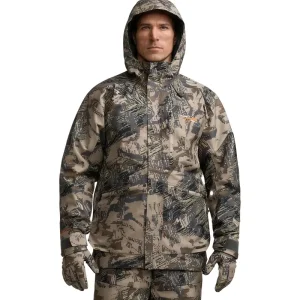
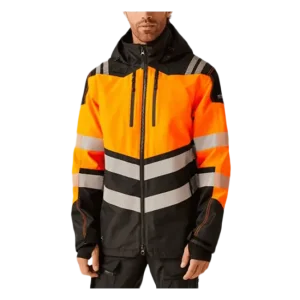
Explore our complete production suite: technical hunting gear, municipal utility safety shells, lightweight polar fleece mid-layers, and severe-weather expedition parkas.