Explore our premier line of CE-certified and JIS-compliant reflective safety padded jackets, custom engineered for severe weather, logistics infrastructure, and heavy construction environments across Osaka Bay and the Kansai region.
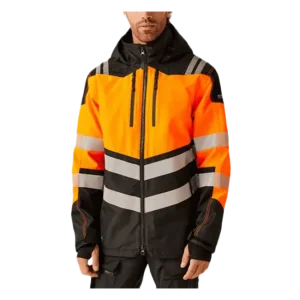
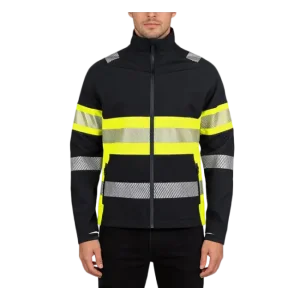
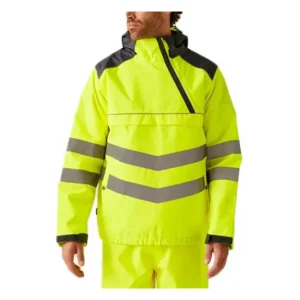
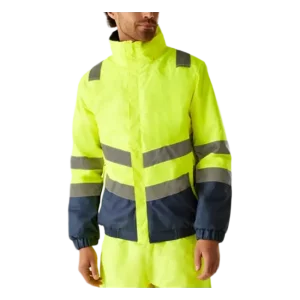
As Japan’s commercial epicenter in the Kansai region, Osaka represents a dynamic interplay of massive port logistics, coastal chemical processing hubs, transportation infrastructure, and intensive preparation for major international developments such as Expo 2025 Osaka, Kansai. The geographic layout—spanning the bustling Osaka Bay area (Nanko and Hokko), the heavy manufacturing belt of the Sakai-Senboku industrial zone, and inland civil engineering sites—exposes industrial workforces to demanding weather patterns.
Winter in Osaka brings cold bay breezes, damp humidity averaging over 65%, and temperatures frequently dipping near freezing. For personnel working outdoor maritime night shifts, cold-chain logistics warehousing, or elevated construction scaffolds, traditional light uniform layers fail to prevent cold stress and worker fatigue. Consequently, the demand for heavy-duty thermal padded jackets integrated with high-visibility reflective safety specifications has surged across Osaka-based enterprises.
Navigating the tension between global standard harmonization (ISO 20471 / EN ISO 20471) and specific Japanese industrial standards (JIS T 8127 Class 2/3) requires specialized technical knowledge from padded jacket factories.
While European and North American markets prioritize high aesthetic contrast and extreme flame retardancy, Japanese buyers emphasize high retro-reflective coefficient retention after repetitive washing, lightweight ergonomic movement, and strict dye color fastness against UV degradation.
Osaka’s coastal humidity and rainy maritime conditions degrade standard glass-bead tapes quickly. Our specialized production lines apply heat-bonded micro-prismatic reflective material (3M™ Scotchlite™ or certified equivalent) that maintains optical reflection even under torrential rainfall.
By partnering directly with our Guangdong-based garment manufacturing ecosystem, Osaka distributors bypass multi-tiered trading agents, achieving a 25–40% reduction in landed cost while securing guaranteed batch-to-batch quality consistency.
Manufacturing high-performance padded jackets demands more than traditional stitching; it requires advanced material science, automated baffle filling, ultrasonic seam lamination, and rigorous quality control. Situated in Guangdong—China’s premier outerwear production cluster—our facilities deliver unparalleled technical synergy to Osaka enterprises.
| Manufacturing Dimension | Traditional Trading / Local Production | Ruiniu Guangdong Factory Direct (Serving Osaka) |
|---|---|---|
| Fabric & Trim Sourcing | Limited local stock; long procurement cycles for specialized membranes. | Direct mill integration for bluesign® & OEKO-TEX® 100 certified 2L/3L waterproof fabrics. |
| Insulation Engineering | Standard polyfill with thermal cold spots and uneven clump distribution. | Automated blow-filling & thermal CLO mapping for body-contoured polyfill & RDS down. |
| Production Velocity | 60–90 days lead time; high vulnerability to seasonal delays. | 30–45 days bulk production; 7–10 days rapid prototyping via dedicated sample rooms. |
| Customization & MOQ | High MOQ thresholds (1,000+ pcs) restricting style flexibility. | Low MOQ starting at 100 pcs per style, accommodating multi-colorway & size runs. |
| Quality Control Framework | Basic end-line visual check; high defect rates in seam taping. | 3-Tier Inspection Gate: 4-Point fabric grading, inline water-pressure test, AQL 2.5 final audit. |
To ensure survival in extreme outdoor and industrial conditions, every component of our padded jackets undergoes rigorous structural design and chemical testing.
We utilize TPU and ePTFE micro-porous membrane laminations bonded to high-tenacity 150D to 300D polyester ripstop shells. The membrane features a pore size 20,000 times smaller than a liquid water droplet but 700 times larger than a water vapor molecule. This guarantees a minimum hydrostatic pressure resistance of 15,000 mm H2O alongside a moisture vapor transmission rate (MVTR) exceeding 10,000 g/m²/24h, preventing condensation build-up inside the jacket during high-intensity physical labor.
For Osaka’s damp winter air, pure down can lose up to 70% of its insulating loft if moisture penetrates the shell. We engineer high-loft down-touch synthetic insulation (60g to 200g body-mapped polyfill) made from GRS-certified recycled hollow fibers. These fibers trap dead air in micro-chambers while remaining hydrophobic. For extreme cold-storage or arctic exposure, we combine RDS-certified 700+ fill power down with hydrophobic outer coatings to prevent loft collapse.
Stitching creates thousands of micro-perforations in the shell fabric. Our automated production line utilizes hot-air seam sealing machines to apply 13mm to 22mm wide multi-layer PU sealing tape over every structural seam. Paired with genuine YKK AquaGuard® or heavy-duty SBS waterproof zippers featuring TPU film coating, our padded jackets eliminate water ingress even under 3-bar pressure washing environments.
Different commercial sectors in Osaka mandate unique mechanical and safety garment properties. We tailor technical specs to match real-world operational challenges.
Environment: Container terminals, high-wind dockyards, cold-storage distribution facilities (Nanko area).
Solution: Windproof 3-layer softshell and heavy-padded parkas with fleece-lined storm collars, storm cuffs, and Class 3 high-visibility retro-reflective tape to ensure operator visibility around automated crane equipment.
Environment: High-altitude scaffolding, muddy ground operations, heavy machinery work zones.
Solution: Heavy-duty 300D Oxford polyester outer shells with polyurethane backing, anti-abrasion elbow/knee patches, bar-tacked stress points, and detachable storm hoods compatible with safety helmets.
Environment: Refining units, chemical processing plants, maintenance night shifts.
Solution: Anti-static grid-woven face fabrics, oil-and-water repellent (DWR) surface treatments, flame-retardant trim options, and non-sparking plastic/covered zips preventing accidental ignition risks.
To satisfy Japanese corporate buyers known for zero-tolerance quality policies, our factory operates a closed-loop quality management system certified under ISO 9001 and ISO 14001.
Every roll of fabric entering our raw material warehouse undergoes automated and manual inspection. We grade flaws based on length and severity, rejecting any lot scoring above 28 points per 100 square yards. Color matching is executed under standard D65 light booths with Delta-E tolerances held under 0.8.
In-house hydrostatic pressure testers subject randomly selected cut panels to continuous water column pressure according to JIS L 1092 Method A/B. Seam slippage and tear strength are tested on digital tensile strength machinery to ensure seam seams hold under 450N of force.
Reflective tapes undergo retro-reflectometer testing before production and after 50 industrial wash cycles (ISO 6330 / JIS L 1096). We guarantee a minimum retro-reflection coefficient of >330 cd/(lx·m²) for silver reflective bands, exceeding standard JIS T 8127 Class 2 requirements.
As sustainability regulations tighten globally and in Japan, safety apparel is undergoing a technological and environmental shift. Forward-thinking Osaka companies are aligning with three major trends:
Transitioning from virgin polyester to Global Recycled Standard (GRS) certified face fabrics made from post-consumer PET bottles. Combined with PFC-free (C0) durable water repellent finishes, brands reduce environmental footprint without sacrificing water tightness.
Integration of flexible carbon-nanotube heating elements powered by low-voltage USB power banks. These active heating pads are embedded between insulation layers, letting Osaka port workers adjust core warmth across 3 temperature settings during night shifts.
Utilizing 3D CLO digital fitting software to model stress points during movement. Articulated elbow gussets, drop-tail hems, and expandable shoulder action-backs prevent jacket ride-up when workers reach overhead or bend down on construction sites.
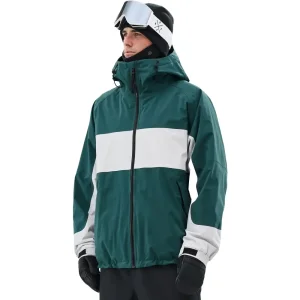
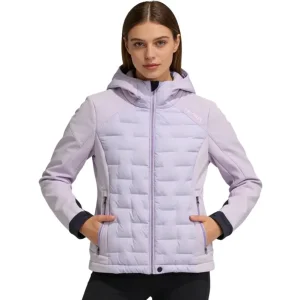
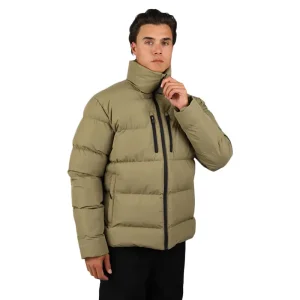
Browse our full range of customizable padded jackets, bomber jackets, softshells, ski wear, and thermal vests. Each design can be tailored with high-visibility reflective striping and customized brand logo applications.
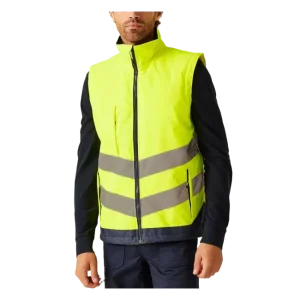
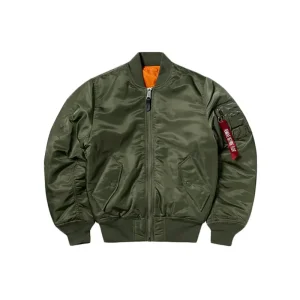
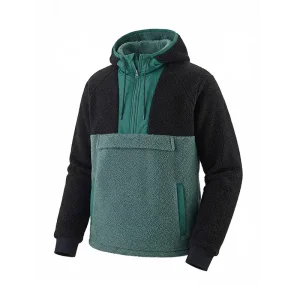
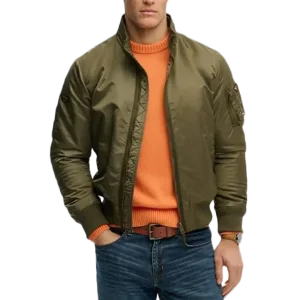
Before issuing a Purchase Order (PO) to an overseas padded jacket manufacturer, verify these critical technical milestones with your supplier:
Request third-party test verification for retro-reflectivity after minimum 30 wash cycles.
Confirm minimum 10,000mm to 15,000mm hydrostatic head test under JIS L 1092.
Verify insulation CLO values (1.5–3.0 CLO) matching Osaka winter low temperatures (-5°C to 10°C).
Ensure 3-layer structural seams use 18mm+ TPU tape with hot-air welded overlap.
Require Grade 4+ fastness under Xenon arc lamp testing to prevent fluorescent dye fading.
Specify YKK/SBS heavy-duty zippers with TPU weather flaps and glove-friendly pulls.
Answers to common operational, regulatory, and logistics queries from Osaka procurement officers and OEM apparel buyers.
Our reflective safety padded jackets are engineered specifically to meet Class 1, Class 2, and Class 3 thresholds under JIS T 8127. We configure fluorescent background fabric surface areas (fluorescent yellow, orange-red) and heat-transfer certified micro-prismatic reflective tape to ensure 360-degree visibility. Third-party testing reports from Kaken Test Center or SGS can be provided prior to bulk delivery.
For standard OEM/ODM orders, our bulk production timeframe ranges between 30 to 45 calendar days following Pre-Production (PP) sample approval. Transit time from our South China port hubs (Shenzhen/Guangzhou) directly to Osaka Port via fast sea freight is approximately 4 to 6 days. Emergency air freight to Kansai International Airport (KIX) takes 1 to 2 days.
Yes. While large factories often require 1,000+ pieces, our flexible production scheduling supports a minimum order quantity (MOQ) of 100 pieces per style. This quantity can be split across standard size runs (S through 5XL) and colorways, allowing Osaka buyers to test market demand or outfit specialized corporate teams without over-committing capital.
Due to the damp coastal air around Osaka Bay, we highly recommend hydrophobic micro-fiber synthetic polyfill (100g to 180g) or GRS recycled polyester filling. Unlike untreated down, synthetic insulation retains up to 98% of its thermal efficiency when damp, dries quickly, and can withstand frequent industrial laundry cycles without clumping.
Every production line features inline hot-air seam sealing units with dedicated operators. We conduct hourly hydrostatic pressure tests on seam junctions using a digital water column tester set to 15,000mm H2O pressure. Final inspections follow strict AQL 2.5 standard criteria before garments enter final polybag packaging.
Absolutely. We provide full customization including computerized embroidery, silicone 3D thermal transfers, reflective chest patches, custom woven brand neck labels, Japanese care labels (JIS L 0001 compliant), and branded zipper pullers tailored to your exact tech pack specifications.
Serving Osaka distributors, workwear brands, and industrial enterprises with high-performance, JIS-compliant, and cost-optimized reflective thermal outerwear.
Send Inquiry Now