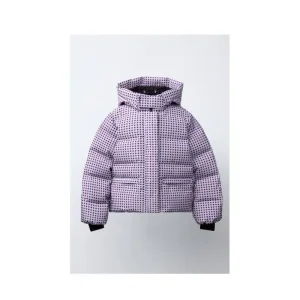
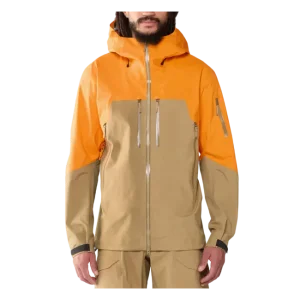
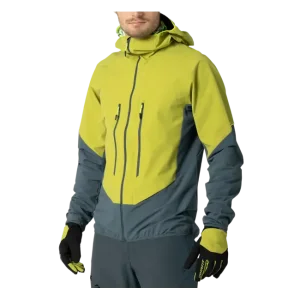
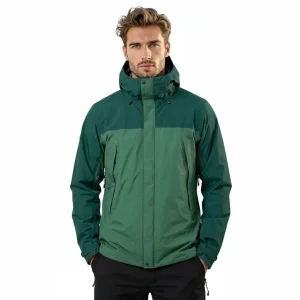
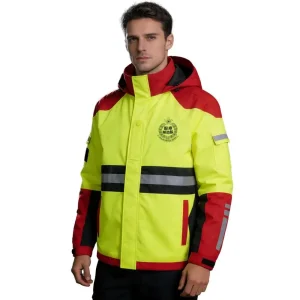
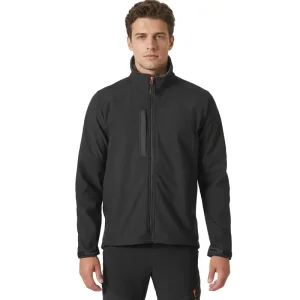
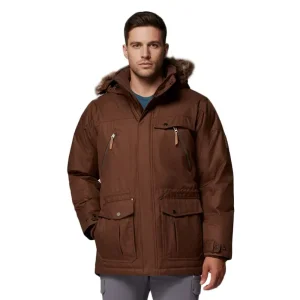
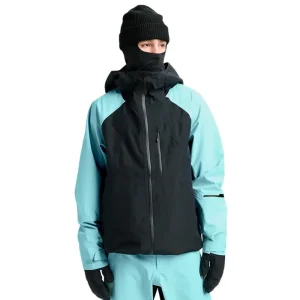
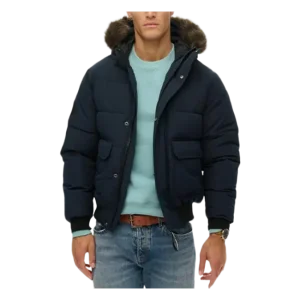
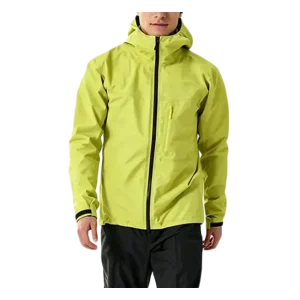
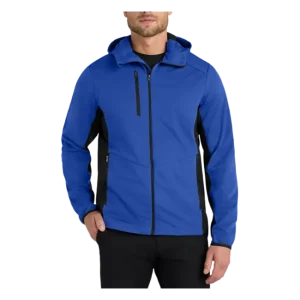
Curated technical outerwear platforms pre-configured for Japanese sizing ergonomics, severe cold resistance, and Japow moisture protection.
The Japanese ski and winter sports market represents one of the world's most sophisticated apparel sectors. Driven by the global prestige of Japanese powder snow ("Japow") across regional hubs such as Niseko, Rusutsu, Hakuba Valley, and Nozawa Onsen, consumer expectations for ski wear combine absolute weather protection, refined Japanese fitting standards (JIS sizing), and eco-conscious component traceability. As leading ski jacket exporters & suppliers serving the Japan market, understanding the nexus between local microclimates and consumer purchasing behavior is essential for B2B brand partners, wholesale buyers, and commercial importers.
Japan’s unique geographic position exposes its mountain ranges to freezing Siberian air masses blowing across the Sea of Japan. This interaction generates immense precipitative loads characterized by exceptionally cold, high-moisture snow at lower elevations and ultra-dry powder at higher altitudes. Consequently, outdoor garments exported to Japanese distributors must meet dual technical criteria: extreme waterproofing capabilities under heavy wet-snow loads and high moisture vapor transmission rates (MVTR) to support aerobic exertion during backcountry touring.
Technical Reality Check: Standard European or North American ski garments frequently fail in the Japanese market due to mismatched sizing proportions (sleeve lengths and chest drops) and inadequate membrane breathability under Japan's high humidity alpine precipitation.
To successfully penetrate Japanese department stores, specialized ski boutiques (such as those in Kanda, Tokyo), and resort retail shops, imported ski wear must be built around rigorous physical parameters. The table below outlines the industrial benchmarks maintained across our OEM/ODM production lines for the Japanese sector:
| Performance Metric | Standard Entry Spec | Japan High-Alpine Spec | Testing Standard / Compliance |
|---|---|---|---|
| Hydrostatic Pressure (Waterproofing) | 10,000 mm H2O | 20,000 mm to 30,000 mm H2O | JIS L 1092 Method B (High Pressure) |
| Moisture Permeability (Breathability) | 10,000 g/m²/24h | 20,000 to 25,000 g/m²/24h | JIS L 1099 Method B-1 (Inverted Cup) |
| Water Repellency (DWR Finish) | Grade 4 (Initial) | Grade 4-5 (PFC-Free C0 after 20 washes) | JIS L 1092 Spray Test |
| Seam Sealing Integrity | 2-Layer Taped | 3-Layer Fully Bonded 13mm/22mm Tape | Hydrostatic Seam Burst Test (>0.3 bar) |
| Thermal Insulation Index | 80g Synthetic Fill | 700+ FP RDS Down or Body-Mapped Polyfill | ISO 11092 / EN 31092 Thermal Resistance |
A primary friction point in technical outerwear procurement is fit mismatch. Japanese outdoor enthusiasts prefer structured, streamlined silhouettes that eliminate excess fabric bulk while allowing unrestricted freedom of movement. Our pattern engineering department utilizes 3D CAD dynamic motion modeling tailored to Asian anthropometric databases.
Pre-curved elbow sleeves engineered specifically for pole-planting and snowboarding balance, preventing cuff lift and waist exposure during motion.
Japanese skiers place high importance on tactile feel. We deploy soft-touch, low-rustle face fabrics using micro-denier mechanical stretch nylons.
Integrated RFID IC-card lift pass sleeve pockets, waterproof media internal routing, and magnetic storm flaps engineered for sub-zero glove operation.
Integrating digital pattern making, automated laser cutting, and agile supply chain logistics to deliver uncompromised quality for Japanese importers.
Our Guangdong manufacturing facility utilizes automated computer-controlled spreading and precision laser-cutting tables. This ensures fabric yield efficiency exceeding 88%, reducing raw material waste while ensuring dimensional accuracy tolerances within ±1mm across high-volume production lots.
Waterproofing is only as reliable as its weakest seam. We operate specialized multi-axis hot-air seam sealing equipment paired with automated pressure control, guaranteeing zero water entry along complex 3D raglan and armpit junction seams.
Aligning with Japanese retail sustainability trends and global environmental mandates, our raw material platform features GRS-certified recycled polyester/nylon faces treated with fluorine-free C0 DWR coatings certified under OEKO-TEX® Standard 100.
Every batch undergoes 100% incoming fabric inspection using 4-point grading, in-line real-time seam pressure testing during assembly, and final pre-shipment AQL audits ensuring zero defect pass rates before container loading.
From Hokkaido's freezing powder fields to Honshu resort lines, our outerwear platform is tailored for diverse operational microclimates.
Demands maximum ventilation via dual-direction mesh-backed pit zips, removable powder skirts with jacket-to-pant interlocking loops, and RECCO® passive rescue reflector integration to handle deep snow tree runs.
Focused on 3-layer hardshell durability against dense pine branches, high windproof barriers (<0.5 CFM air permeability), and helmet-compatible 3-point adjustable storm hoods designed for stormy lift rides.
Integrates body-mapped synthetic thermal fill or RDS-certified hydrophobic goose down in strategic core zones, coupled with thermo-reflective inner lining fabrics to retain radiated body heat.
Sleek matte-finish 2.5-layer shell designs featuring hidden magnetic closures, minimal branding surfaces, and packable stowaway structures suited for Tokyo commuter transition into weekend alpine trips.
Explore our export-ready collection. Each style can be fully customized for fabric weights, membrane thresholds, branding details, and Japanese sizing blocks.
Direct technical and commercial answers for purchasing directors, OEM brand managers, and Japanese wholesale buyers.
Our baseline MOQ is 100 pieces per style, which can be split across multiple colorways and a full size breakdown (e.g., S to XXL in JIS sizing). For initial market validation or test runs in specialized boutique ranges, we also support 50-piece pilot runs utilizing our stock technical fabric library.
We work directly with Japanese standardized size charts (JIS L 4004/4005). Our pattern room utilizes 3D CLO software calibrated to Asian dynamic movement profiles, adjusting shoulder slope, sleeve lengths, and chest sweeps specifically for Japanese market specifications.
Yes. We regularly supply third-party test reports from accredited laboratories (such as SGS, Intertek, or QTEC) validating performance under JIS L 1092 Method B (high-pressure hydrostatic testing up to 30,000mm) and JIS L 1099 Method B-1 (inverted cup breathability up to 25,000g/m²/24h).
Proto samples are completed within 7–10 working days. Bulk production requires 30–45 days following pre-production sample approval and fabric delivery. Express ocean freight from Guangdong ports (Shenzhen/Guangzhou) to Tokyo or Yokohama typically takes 4 to 6 days.
Yes. We have fully transitioned our supply chain options to include C0 PFC-free DWR finishes that maintain Grade 4 water repellency even after 20 wash cycles. We also supply GRS-certified recycled nylons and polyesters complete with Transaction Certificates (TC) per order.
We maintain an AQL 1.0/2.5 quality guarantee. In the rare event of a manufacturing defect exceeding agreed tolerances, our technical team conducts immediate photo/sample root-cause analysis within 48 hours and provides compensation via credit, direct replacement, or local rework reimbursement.
Partner with an experienced technical outerwear exporter. Send us your tech packs, design sketches, or benchmark samples, and our engineering team will provide custom quotes within 24 hours.