Premium OEM/ODM technical garments custom-engineered for Irish corporate workwear fleets, construction teams, and outdoor specialists.

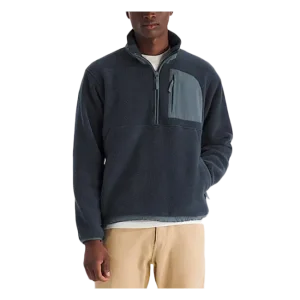
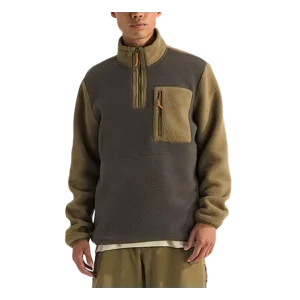

A comprehensive study on performance parameters, compliance benchmarks, and supply chain strategies for Irish corporate buyers and safety distributors.
Ireland’s oceanic climate (Köppen classification Cfb) presents a unique micro-environmental challenge for industrial apparel. Characterized by high relative humidity (often exceeding 85%), persistent Atlantic moisture, and mean cold-season temperatures oscillating between 2°C and 10°C, workwear in Ireland cannot rely on dry insulation alone. Mid-layers must deliver high thermal resistance ($R_{ct}$) while maintaining rapid moisture vapor transmission rates (MVTR) to prevent internal condensation during active physical labor.
Traditional heavy cotton outerwear absorbs water vapor rapidly, leading to evaporative cooling that drastically lowers core body temperature. Consequently, Irish enterprise buyers across construction, maritime logistics, agricultural processing, and renewable energy sectors have shifted decisively toward CE-certified micro-fleece and polar fleece jacket systems engineered with hydro-phobic polyester fibers.
Damp air conducts heat away from the body 25 times faster than dry air. For Irish outdoor workforces, fleece density (ranging from 280 g/m² to 380 g/m²) combined with windproof lining structures provides an essential thermal envelope that preserves body heat under 15-25 knot Atlantic wind conditions.
The global industrial workwear and technical fleece market is undergoing a rapid transition toward high-durability synthetic blends and GRS (Global Recycled Standard) recycled polyester fibers. Corporate ESG mandates across the European Union now require procurement managers to source garments that demonstrate both stringent regulatory safety (CE / Personal Protective Equipment standards) and environmental traceability.
Under EU Regulation 2016/425 for Personal Protective Equipment (PPE), garments designated for protection against cold environments must satisfy EN 14058 standard requirements. Furthermore, occupational general workwear garments deployed in Ireland must comply with EN ISO 13688 for ergonomics, size stability, non-toxicity, and colorfastness under continuous industrial laundering cycles.
Understanding the exact laboratory testing parameters required for seamless EU market access and Irish workplace safety compliance.
| EU / CE Standard | Technical Scope & Testing Metric | Guangdong Ruiniu Factory Benchmark | Irish Market Application |
|---|---|---|---|
| EN 14058:2017 | Thermal insulation ($R_{ct}$), air permeability ($AP$), and resistance to water penetration. | Class 2 / Class 3 thermal insulation ($R_{ct} > 0.19\text{ m}^2\text{K/W}$). | Cold storage, wind-exposed construction sites, outdoor logistics in Shannon & Dublin. |
| EN ISO 13688:2013 | General workwear requirements for ergonomics, aging, sizing, and chemical innocuity. | OEKO-TEX® Standard 100 Class I/II chemical safety & REACH compliance. | Corporate staff uniforms, pharmaceutical logistics cleanroom transition layers. |
| EN ISO 20471 (Optional) | High-visibility warning clothing for professional use (Retroreflective performance). | Class 2 or Class 3 with 3M™ Scotchlite™ / equivalent reflective tape strips. | Irish road maintenance (TII standards), airport ground crews (Dublin/Cork Airport). |
| ISO 12945-2 | Determination of fabric propensity to surface fuzzing and pilling (Martindale Method). | Grade 4.5 out of 5 after 5,000 friction rub cycles. | High-frequency daily wear uniform programs with 2+ year durability lifecycle. |
| ISO 6330 / ISO 105 | Domestic washing colorfastness and dimensional stability (±3% tolerance). | 40°C / 60°C wash tested for 25+ cycles without shade migration. | Industrial laundry processing for Irish utility and facilities management contracts. |
How Guangdong Ruiniu Garment Manufacturing Co., Ltd. leverages advanced industrial automation to deliver unmatched cost efficiency and technical precision.
Our Foshan manufacturing unit operates 3D CLO pattern software and Gerber automated nesting systems, achieving an industry-leading 89.4% fabric marker yield. This drastically reduces material wastage on high-density 320g/m² fleece fabrics, translating directly into reduced FOB unit costs for Irish buyers.
To eliminate seam chafing under heavy workwear outer shells, we utilize flatlock four-needle six-thread stitching and ultrasonic edge sealing. High-filament yarn (144F micro-polyester) undergoes dual-face shearing and anti-static dipping to prevent static charge in dry indoor facilities.
Every bulk lot undergoes raw fabric 4-point system inspection, hourly in-line patrol auditing, and 100% finished product inspection. We guarantee zero dimensional distortion, zip jam free performance (YKK/SBS zips), and strict shade matching under D65 standard light boxes.
Tailored technical configurations engineered to meet the operational demands of key Irish economic sectors.
Irish building sites require thermal mid-layers that easily zip into EN ISO 20471 hi-vis outer shells. Our fleece jackets feature reinforced Cordura® elbow patches, storm collar zip guards, and drop-tail hems to prevent lumbar exposure during overhead bending tasks.
Port operations in harsh Atlantic marine environments demand quick-drying hydrophobic fleece layers. Our synthetic polyester fleece sheds surface moisture while trapping air inside micro-chambers, providing warmth even when humid saltwater mist coats the fabric exterior.
Staff operating within chilled distribution centers (-5°C to +4°C) require lightweight, unrestrictive thermal insulation. Our grid fleece pullovers provide high warmth-to-weight ratio without bulky volume, allowing comfortable movement inside tight refrigerated warehouse aisles.
Ireland’s thriving eco-tourism and outdoor hospitality sectors demand sleek corporate uniforms with subtle brand embroidery. Our refined fleece coats feature softshell side panels, tailored fits, and anti-static treatments designed for premium hotel staff and tour operators.
Meeting Ireland's 2030 Climate Action Plan targets through responsible manufacturing and advanced textile engineering.
We transform post-consumer PET plastic bottles into high-tenacity polyester micro-fibers. A single fleece jacket diverts approximately 24 plastic bottles from landfill systems, delivering identical thermal performance with a 45% lower carbon footprint.
In accordance with upcoming EU chemical bans on per- and polyfluoroalkyl substances, our fleece jackets utilize C0 eco-friendly DWR treatments that achieve Class 4 spray rating without environmental persistent toxins.
By using compact high-twist yarns and double-brushed low-shear treatments, our fleeces reduce fiber shedding during home and industrial laundering by up to 60%, protecting delicate ocean marine life.
Key qualification benchmarks to evaluate when choosing an overseas OEM fleece manufacturer.
Direct technical answers to common questions raised by Irish importers, distributors, and corporate buyers.
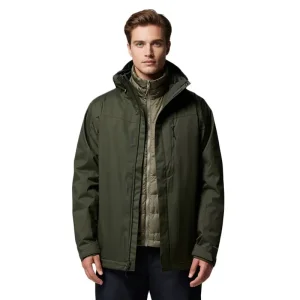
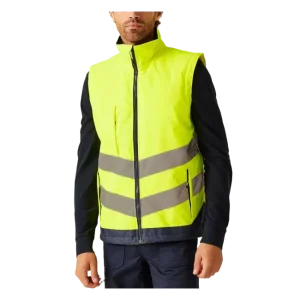
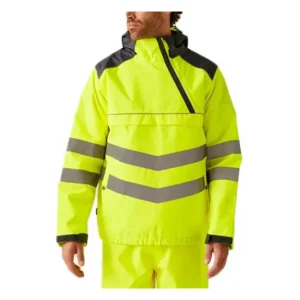
Explore our complete catalog of CE-compliant technical jackets, hi-vis insulation layers, softshells, and weather-proof uniforms.
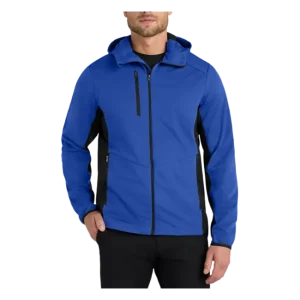
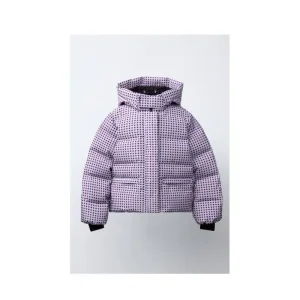


Get direct factory quotes, digital 3D CLO sample renderings, and complete EN 14058 compliance test dossiers within 24 hours.
Send Inquiry Now